
Welcome to Modern Agriculture!

This post may contain affiliate links, which means that I may receive a commission if you make a purchase using these links. As an Amazon Associate, I earn from qualifying purchases.
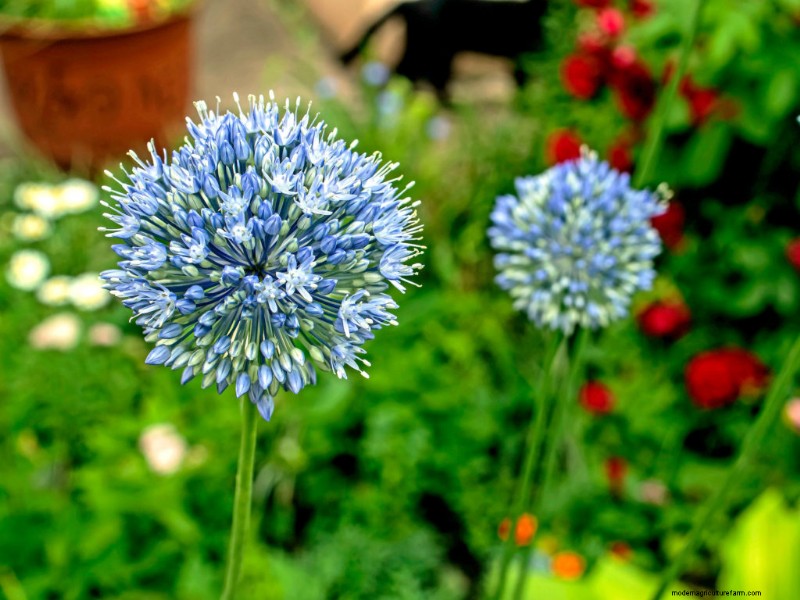
The onion genus, Allium is an enormous group of plants that grow from (mostly) edible bulbs. While many people are familiar with the common garden onion (Allium cepa), shallots (Allium cepa var. aggregatum), garlic (Allium sativum), chives (Allium schoenoprasum) and leek (Allium ampeloprasum), there are plenty of fantastic perennial onion species available these days.
Below are 13 hardy perennial onions that you should consider planting in your garden, not just to add flavor, but to add a colorful feature.
Like other bulbs, perennial onions cope with both extreme cold and extreme heat by going dormant; allowing the leaves to die back so that the plant survives from the energy stored in the underground bulb to re-shoot the following spring. Therefore, how they “behave” will depend on your climate.
Although the common onion (A. cepa) is technically a biennial plant, it is usually grown as an annual by harvesting it in its first year. Garden leek (A. ampeloprasum) is another common Allium annual.
Perennial onions persist for multiple years via their bulbs. In spring, they typically reshoot from the bulb and seed in summer. They include common culinary favorites such as garlic and chives, as well as some well-known invaders like onion grass (A. vineale). Even the common onion (A. cepa) has been cultivated into numerous sub-species, some of which are perennial like potato onion (A. cepa aggregatum).
There are three ways a perennial onion can reproduce:
Sow seed directly into the ground in early spring. Otherwise, sow in late winter and keep them indoors to plant out when the weather warms up. Plant about 5 inches (15 cm) apart and a quarter of an inch (6 mm) deep. Germination takes 2 – 3 weeks and may take over two years to flower. The seed will only stay viable for 1 – 2 years if stored in the fridge.
When a planted bulb is over two years old, dig up the whole plant and tease out the individual bulblets. You can dig them up at any time of the year, but it’s more successful if done during dormancy.
Ideally bulbs and bulblets are best planted in the fall, but in warm climates, bulbs can be re-planted at any time of the year, except in the heat of summer. In cold climates, re-plant approximately six weeks before the first severe frost or snow so that the bulbs have the opportunity to develop roots, but not leaves.
Plant bulbs so that the tips are barely exposed above ground. Mulch planted bulblets in winter to help them overwinter in the ground. Do not plant perennial onions in beds that have been recently manured.
A sunny, free-draining location is ideal. I find perennial onions look great planted in mass throughout the garden.
I do very little for my perennial onions, yet I reap a giant reward from them. In the second or third year I dig them up, divide them out and for most of the year, I re-plant them straight away. Mid to late summer is the only time I don’t re-plant the bulbs due to the heat.
If you have free draining soil that doesn’t have the risk of getting water logged over the winter, then perennial onions don’t need to be dug up for the winter.
In very heavy soils, or if you are worried about pests and diseases, it is common to completely dig up all of the bulbs and store them for the winter. Alternatively, add plenty of organic matter to the soil to improve drainage and break up any clay.
In winter, spread a thick layer of mulch on top to help them through the winter, especially if their tips are exposed above ground. Rake back the mulch in spring to avoid rot and keep them weeded to reduce competition.
You can increase the flavor and aroma by mixing a small handful of sulfur into the soil before planting. In poor soils, feed them nitrogen in spring.
Larvae from onion flies burrow into the bulbs which causes the plant to suddenly wilt. To treat an outbreak, first harvest all of the onions, saving as many as possible. Then purchase nematodes as biological control agents. Hang yellow colored sticky traps to monitor for adults.
Allium species are susceptible to the rust fungus Puccinia porri which effects the foliage. It’s unlikely to impact the bulbs unless it’s a severe outbreak, but it can be unsightly. Disinfect your tools afterwards to minimize spread.
Both pink and white root rot is common when temperatures are above 80 °F (27 °C) and soil moisture is high. Rotting roots turn pink or are covered in white mycelium which causes it to wilt and die back prematurely. Infected onions won’t survive storage so should be either eaten or composted. Reduce water and rotate crops to keep it at bay.
Harvest perennial onions for storage within two weeks of the leaves dying off in summer (or flowers dying off if you want to harvest seed as well). In mild seasons, pull them up as you need them.
Loosen the soil around each plant to carefully pull them out. Leave a portion of the leaves intact when you harvest them and shake to remove any dirt.
Air dry them for 2 – 3 days in a warm, ventilated area until their outer skin is dry and brittle. Then hang them in a dark, cool location (50 – 60 °F) that has decent ventilation and low humidity.
A few different methods for hanging onions are suggested below:
Do not store bruised, damaged or moist onions, as these are more likely to rot.
Bulbs are ideal gifts since they store well and can be used either for cooking or growing. Over the years, I have given away countless perennial onion bulbs to neighbors, friends, and anyone else who will take them; they always get rave reviews by people who are astonished at what a show a planting of onions can put on.
If a wild-harvested bulb doesn’t produce the typical onion or garlic aroma, then it might be a poisonous bulb species. However, onions distinguish themselves from poisonous species by their umbel-shaped flowers. The only exception to this is black garlic (A. nigrum) which never produces a smell. Sulfur-free conditions will produce odorless bulbs, but is unlikely in nature.
Like common onions, all perennial onions are toxic to dogs and cats, as well as for livestock in large quantities. The level of toxicity will depend on the season, age, climate, soil conditions and specie.
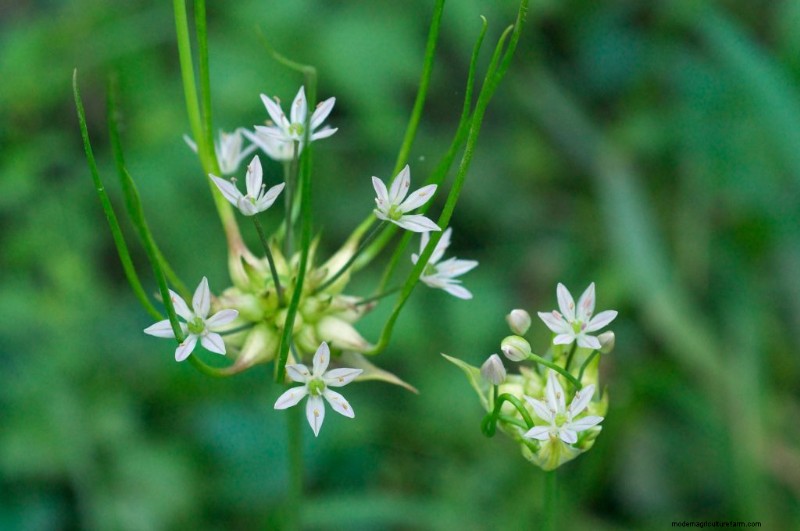
Wild onion or meadow garlic is native to the eastern states of the US. It’s pollinated by native bees instead of European honey bees.
Description: White, pink or purple flowers in a pompom shape on a stem 12 inches (30 cm) tall. It may produce aerial bulbils in ideal conditions.
Edible: Cultivated for the mixture of onion and garlic flavor and smell. Long-term, high consumption may reduce iodine adsorption in the thyroid gland.
Geyer’s onion is a common native on the western half of the US.
Description: Similar to a thick, fat chive but the delicate, small flowers are only loosely clustered in the typical umbel shape. The flowers are usually pale shades of pink and purple.
Edible: The Navaho Nation traditionally cooked them.
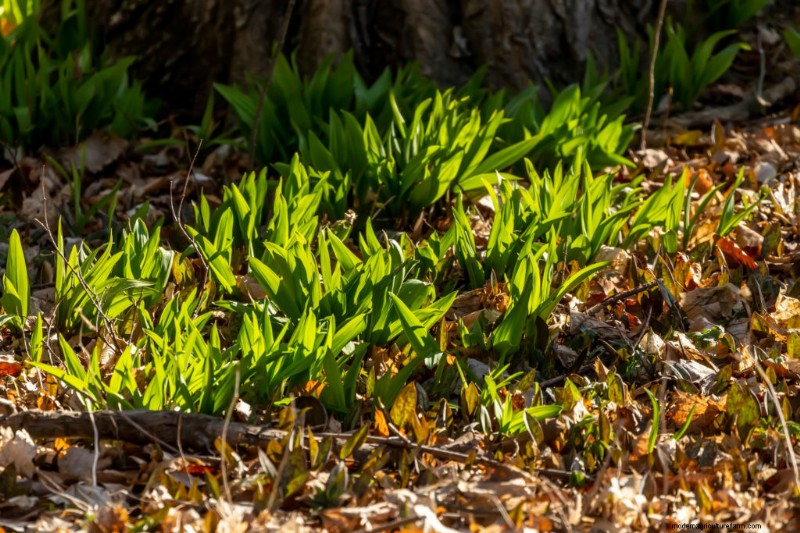
Ramp is a widespread native across the US and Canada.
Description: Small bulbs like chives, but with long, strappy leaves like lily-of-the-valley. Leaves die back as soon as the creamy white pompom flowers emerge. Three seeds per pod which tend to be viable.
Edible: A delicacy in the US and Canada. Tastes like onion and smells like garlic.
Harvest: Protected in Canada so harvest is limited to 50 bulbs per year. Thought to be a species of concern due to over harvesting around Tennesse.
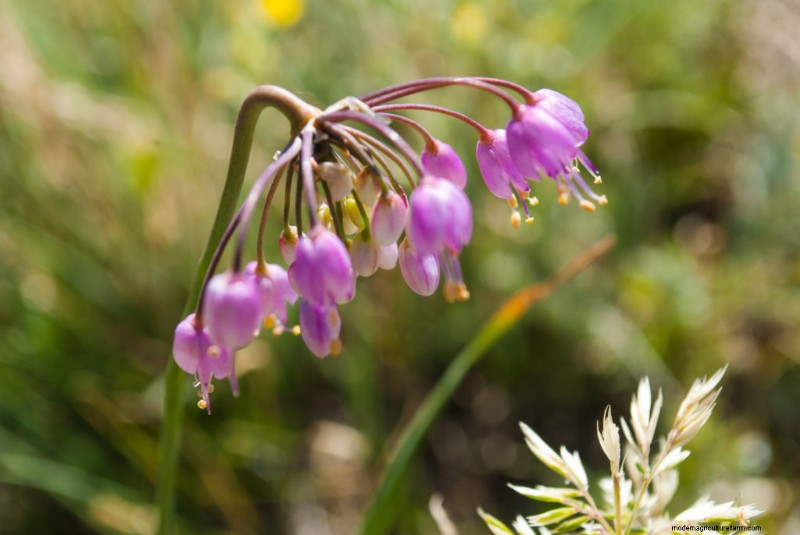
Nodding onion is a common native throughout the northwestern US.
Description: White to pink flowers are loosely held in an umbel giving it drooping appearance (but more upright than A. flavum). Elongated bulbs and leaf base may have a red tinge. Seeds and bulbils are viable.
Edible: Traditionally eaten and used as medicine by numerous Native American Nations.
Prairie onion is native to the US in rocky soil.
Description: Similar to nodding onion, but umbels are more erect. Pale purple flowers on stems over 1 foot (30 cm) tall and 3 inches (8 cm) in diameter. Produces viable seed and aerial bulbils.
Edible: Traditionally eaten and used as medicine by the Chippewa Nation.
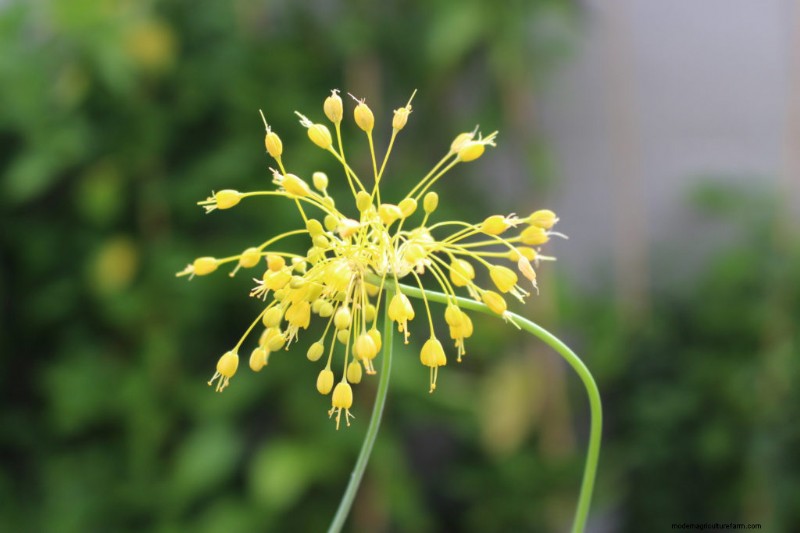
The small-yellow onion originates from the Mediterranean.
Description: Bright yellow flowers are loosely clustered in an umbel shape, giving it a very drooping overall appearance.
Edible: A common ingredient in the Balkans.
Potato onion is one variety within the shallot sub-specie that is worth noting.
Description: Like a heftier version of a shallot.
Edible: Milder in taste compared to onions, but stronger than regular shallots.
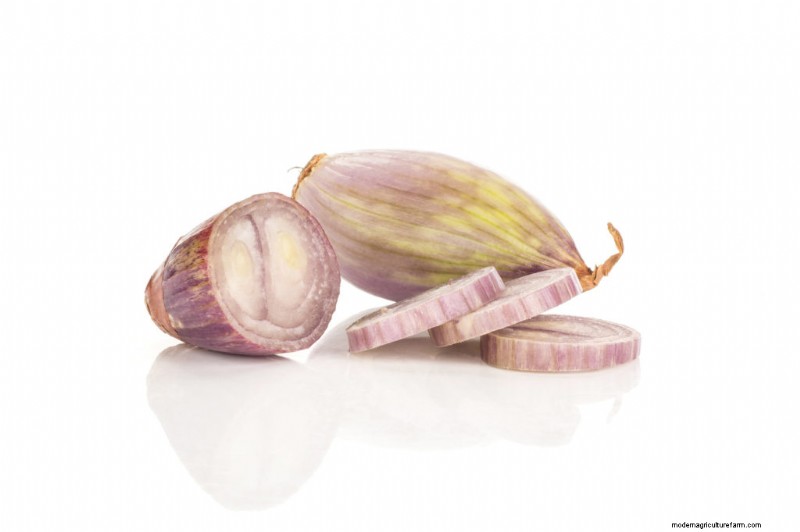
French red shallots are considered the “true shallot” by chefs.
Description: Light grey skin and a pinkish tinge when peeled. White, pompom flowers have a green stripe along each petal on a stem 40 inches (1 m) tall.
Edible: Used for authentic French cooking.
Onion grass or crow garlic is a weed in crops throughout the US, however, this species has been cultivated into an interesting ornamental variety called Allium vineale “Hair”.
Description: Small purple and green flowers surrounded by green tentacles give it a hairy appearance. It reproduces from aerial bulbils.
Edible: A strong garlic taste and aroma.
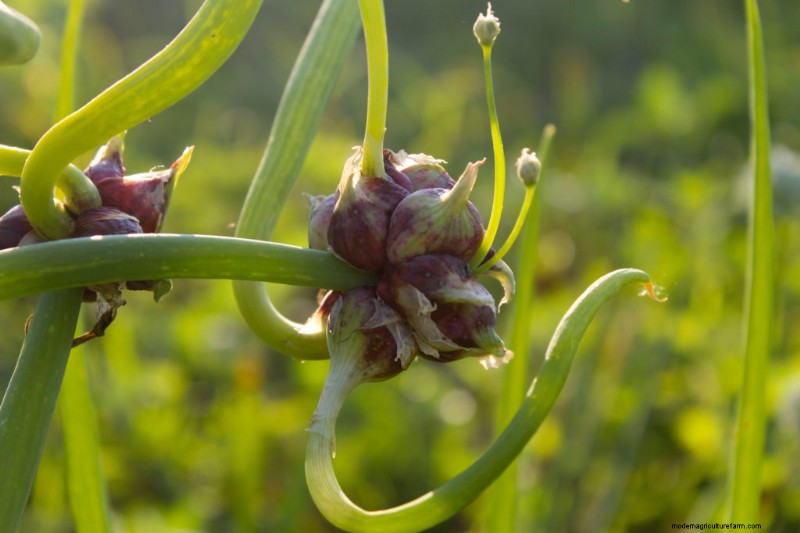
Egyptian onion, tree onion or walking onion is a hybrid between the common onion and the Welsh onion.
Description: Bulbs up to 2 inches (5 cm) big, either round or elongated like chives. Aerial bulbils grow in a tight cluster towards the top of the plant.
Edible: Bulbils have a softer taste, whereas bulbs are much more intense.
The blue globe onion originates in Central Asia.
Description: Bright blue, pompom flower head only about 1 inch (2.5 cm) in diameter but over 1 foot (30 cm) tall after leaves have died back. Bulbils form around the flower head.
Edible: Bulbils tastes and smell softer than the bulbs which are higher in sulfides.
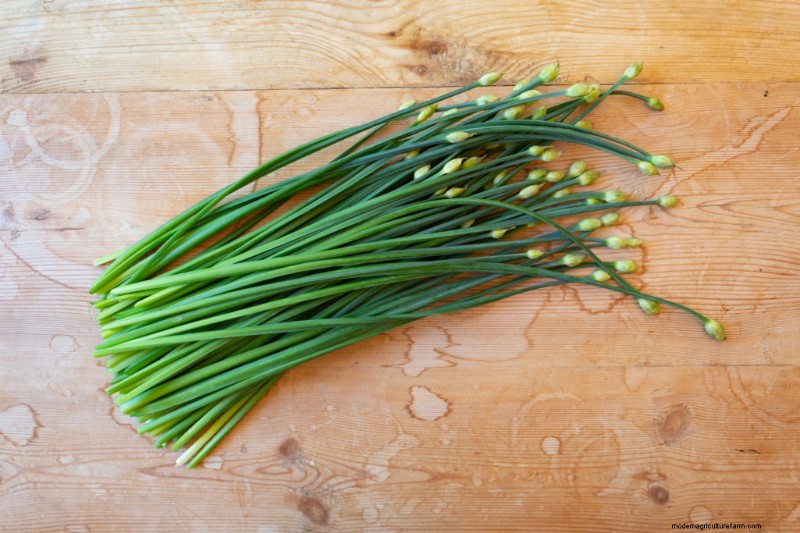
Garlic chives are originally from China.
Description: Umbel flower head about 2 inches (5 cm) in diameter on a stalk up to 20 inches (50 cm) tall.
Edible: A very mild, sweet garlic flavor with a slight chives and garlic aroma.
Altia onions are from southern Siberia and are rare due to overharvesting.
Description: Creamy white pompom flower heads about 2 inches (5 cm) in diameter on a thick, hollow stem 1 foot (30 cm) tall. Seeds are viable.
Edible: A popular ingredient in Russia.
The 13 perennial onions listed above are merely a drop in the ocean compared to the variety of cultivated onion species that are available, so treat your garden to some low maintenance, water-wise plants that know how to put on a good show.
Sources
https://plants.usda.gov/home/Allium
https://en.wikipedia.org/wiki/Allium
https://ag.umass.edu/vegetable/fact-sheets
https://www.missouribotanicalgarden.org/PlantFinder/
https://www.fs.usda.gov/Internet/FSE_DOCUMENTS/Allium_Tricoccum.pdf
http://naeb.brit.org/uses/search/allium
