
Welcome to Modern Agriculture!

Growing tomatoes can feel like a gamble sometimes… To top off or not to top off? Do I top off now or should I wait another week or two? Will the cold weather hit earlier or later than predicted? Will day time temperatures keep the soil warm enough? How do I best avoid a frost-bitten crop of half-ripened or completely green fruit when the weather turns cold?
Getting the most out of your tomato crop means knowing if, when, and how to top off your tomato plants. This requires having a sound understanding of the ripening process as well as your local climate.
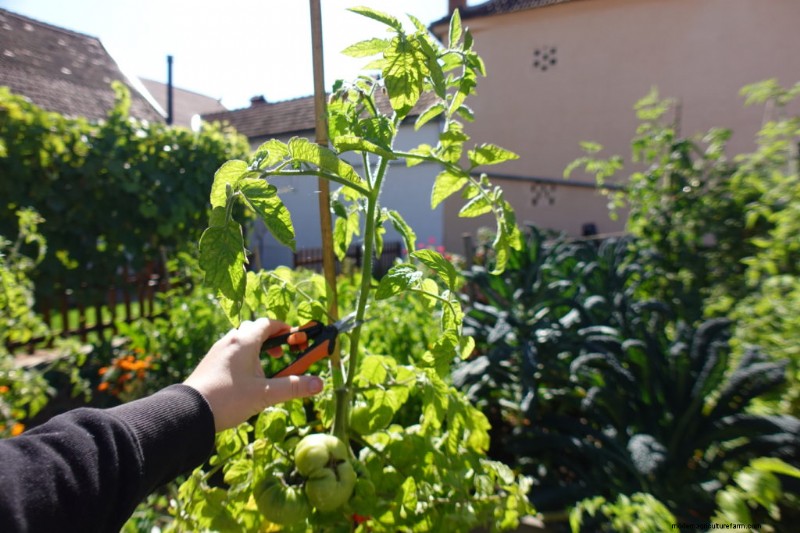
Topping is a type of pruning that is done towards the end of the season to remove any flowers and growing tips. This is common in temperate climates to divert the plants’ energy into the remaining fruit in an effort to ripen them before the cold weather arrives.
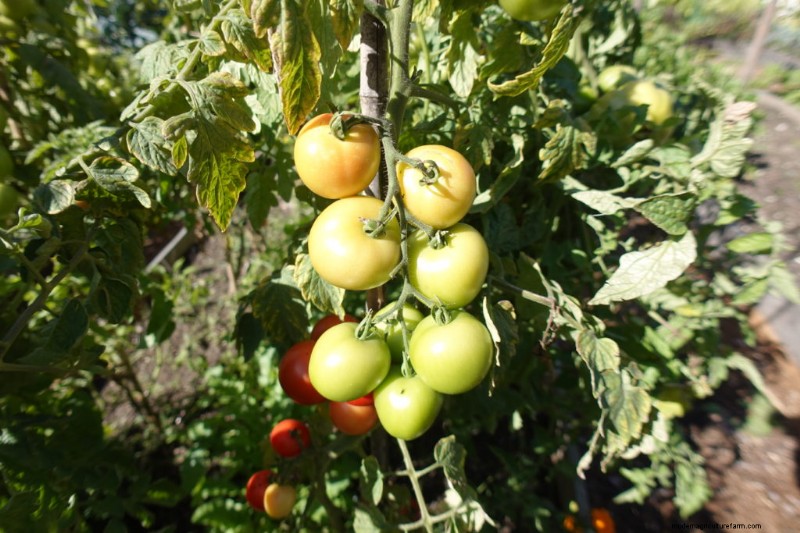
As the weather cools and the season draws to an end, any flowers remaining on the plant will have neither enough warmth nor enough time to develop into mature fruit, so they should be removed so that the plant focuses its energy on the remaining fruit. The primary purpose of topping is to accelerate fruit ripening in preparation for the final harvest before the frost kills the plant.
In temperate climates, topping your tomato plant is pretty much essential unless you are growing in a greenhouse or indoors. The only exceptions to this are determinate or ‘bush’ tomatoes, which have a very short flowering and fruiting period anyway.
Since the reason for topping off tomato plants is to speed up the ripening process, then it’s necessary to understand what factors affect fruit ripening.
Simply look for any flowers and cut them off the plant, including all of the vegetation above the flowers. New growth can also be removed and even white fruit can be removed, depending on when the cold weather is predicted.
In most cases, your tomato plants will survive one or two nights below 55 °F (13 °C), but a weeks’ worth of cool weather on the monthly forecast can help to determine when to top off your tomato plants.
This leaves the plant about 3 – 4 weeks after topping for the remaining tomatoes to ripen before the cooler weather hits. For larger or heirloom varieties, the old farmer’s almanac can provide a predicted date of the first and last frosts for each year, and topping flowers on these varieties should be done about 6 weeks before this date. And if all else fails and you lose the weather gamble, simply pull the entire plant out of the ground before a killer frost and hang the whole plant in a shed to allow the fruit to finish ripening on the plant.
In mild climates, indoors or greenhouses, topping is not necessary since the frost and cold temperatures won’t affect them as much. If given the right conditions, indeterminate tomato plants grow as perennials, but productivity decreases each year.
Determinate or ‘Bush’ tomato plants have usually finished their mass fruiting by mid-summer anyway, so there is usually no need to top off these varieties. Some hardy, determinate varieties which fruit early in the season include ‘Cold set’, ‘Earlirouge‘, ‘Subarctic’, ‘Siberia’ and ‘Bush Beefsteak’.
Below is a quick guide on the three weather triggers that I use to determine when to top off my tomato plants, keeping in mind that heirloom varieties will need a longer lead time.
There is always the risk of topping your tomato plants too early and depriving yourself of those late-maturing fruits, but keeping an eye on the long-range weather forecast and growing a selection of different tomato varieties can minimize this risk.


