
Welcome to Modern Agriculture!

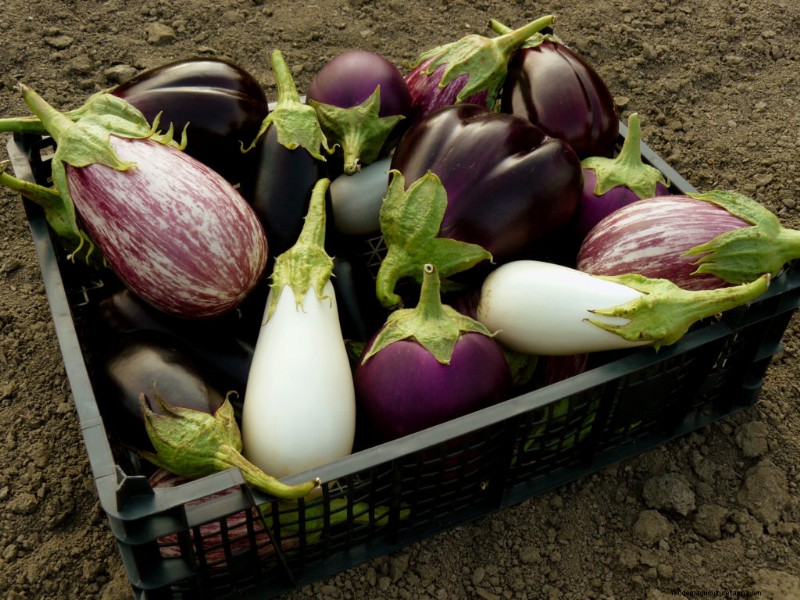
As gardeners, we have all been there. To pick or not to pick? Is it ripe enough? Should I leave it one more day? Or do I take the risk and harvest it now? Valid questions, even for an experienced gardener.
So, to allay any doubts, this article will look at a few general tips to help determine when to harvest eggplants (Solanum melongena), as well as a couple of specific tips for a few popular cultivars.
As the fruit grows, the tips of the calyx “leaves” will peel upwards and away from the fruit. In some cultivars, the skin color will change from greenish-white to purple. These changes are good indicators to start checking your eggplants daily for the most important sign of ripeness in an eggplant: how shiny the skin is.
Don’t let the size of the fruit dictate the best time to harvest. The size of the fruit is influenced by environmental conditions and genetics, not ripeness. Instead, learn to identify the four different stages of ripeness by inspecting the shine of the skin.
Put simply, you can harvest the fruit of most Asian, European and white eggplant cultivars at any stage between maximum shine (stage 2) and waxy glow (stage 3). African varieties can also be picked at the breaker stage (stage 1) and ripened off the vine like a tomato.
Another way to check for ripeness is by lightly squeezing the fruit; the amount of ‘give’ will vary according to the cultivar and the thickness of the skin.
I personally find myself comparing one eggplant to another for their shine to get my eye in first, then the waxy ones get thrown straight into a pan for lunch, while shiny ones get a light squeeze to double-check their ripeness, and then harvested and given to friends and family.
Essentially, determining when to harvest your eggplant will depend on which group the cultivar originates from; European, Asian, White, or African, so this article outlines the signs of ripeness according to these four groups.
The edible seeds are covered in a nicotine alkaloid which gives the fruit (although botanically classified as a berry) a bitter taste. As the fruit becomes over-ripe, these alkaloids are at their peak which causes the bitterness to increase. Therefore, cultivars with fewer or smaller seeds are sweeter in taste.
Many of the European cultivars have thicker skin and either more or larger seeds so are more bitter. They also have a firmer texture than their Asian cousins so when squeezed, they only give a little when ripe. Don’t wait for your eggplants to be the same size as the ones in the supermarket; always let the shine and texture determine the right time to harvest.
Some examples of open-pollinated European cultivars include Black Beauty, Rosita, Bianca, Long Purple and Florida Market.
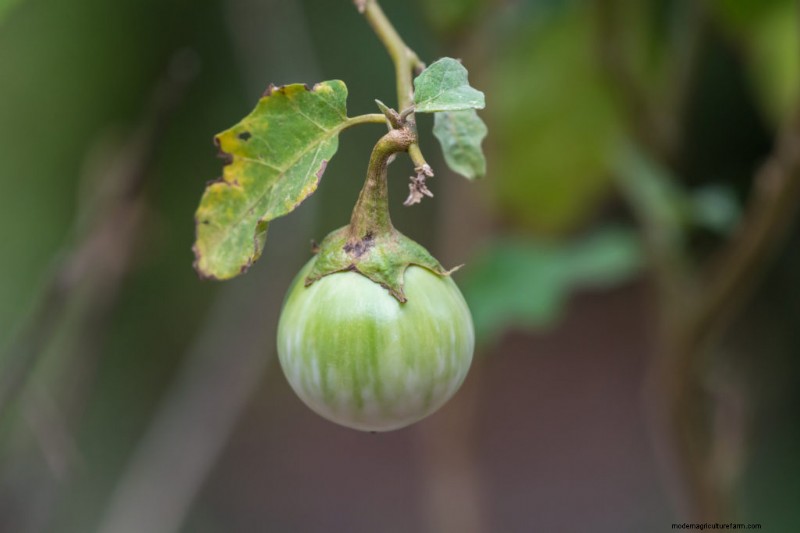
In general, many of the Asian cultivars have very thin skin, so they should be handled carefully. In addition to the shiny or waxy skin, you can also give the eggplant a light squeeze to check its texture. If it’s firm or hard, then it needs more time. If it feels slightly spongey or springy, it’s at its peak for harvest. If you leave an indent or bruise, then it can still be eaten, but its bitter taste will be marginally increased.
There is a much greater variety of Asian cultivars and some of them have specific tell-tale signs of ripeness, a few of which are outlined below.
A number of white varieties from both Asian and European origins are available. They can be picked when the skin is white and still glossy, then left for one day to continue the ripening process indoors. Like the Asian cultivars, the skin of white eggplants is often very thin. The first sign that a white eggplant is becoming over-ripe is the appearance of tiny brown spots on the skin. Next, the calyx starts to brown off and the skin turns a dark creamy or yellow color.
Some examples of open-pollinated white cultivars include Gretel, Casper, Snowy and White Beauty.
There are two popular species of eggplant that are commercially available. Both are much more flexible in their harvest period since these old-world eggplants can be harvested at the breaker stage (like a tomato) and stored at room temperature for 2 – 4 days to complete the ripening process indoors. Harvesting them at this breaker stage will prevent the skin from getting too thick and tough, especially in sunnier climates.
Harvesting eggplants at their optimal growth stage isn’t an exact science, but you can rest assured that these majestic fruits will be edible regardless of picking them early or late. Pick them too soon and you’ll miss out on larger fruits and stronger flavor, or pick them too late and risk a little bitterness. Either way, there’s no wrong way to do it.
If I’ve inspired you to grow eggplants, make sure to check these articles on how to handle eggplant seedlings and potential eggplant problems you may encounter. Happy gardening!

