
Welcome to Modern Agriculture!

The monstera siltepecana has the potential to grow up to eight feet tall and three feet wide with leaves the size of dinner plates.
All you have to do is give it enough water (but not too much), well-draining soil, indirect light, and a bit of fertilizer now and then.
And maybe you could talk to it a little bit too.
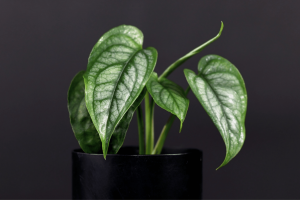 The monstera siltepecana is a tropical plant that thrives on heat and moisture. Related to the philodendron, the monstera likes to climb like a vine and the large green leaves have a silvery hue, which lends to its most common name, silver monster.
The evergreen leaves of the monstera genus are unique because as they get older, the silver markings fade. Also, the monstera siltepecana leaves get larger and start to form holes, lending to its other common name, the swiss cheese plant. Out of the 45 types of monstera, the siltepecana is one of the rarest.
The monstera siltepecana originates in Mexico and other parts of Central America. The tropical plant can be found in warm or hot moist areas, often climbing up the side of a tree. As an epiphytic creeper, it likes to creep up trees or whatever else it can find.
The monstera genus has 47 species and six infraspecific names but the name monstera means abnormal or monstrous in Latin.
Here are some of the common names for the siltepecana.
The monstera siltepecana is pretty easy to take care of. As long as it stays warm, moist, and has well-draining soil, it can thrive just about anywhere. Although it needs light, just like any plant, it will tolerate some shade but not direct sunlight.
The monstera siltepecana does best with bright indirect light. Find a spot that is really bright but does not get direct sunlight for any length of time. It tolerates shade but will not grow as well without sunlight.
Watering monstera siltepecana is important just as with other plants. But since it is a tropical plant, it needs to stay moist. However, you must not overwater it since being soggy will cause root rot.
A good way to determine whether your plant needs watering is to keep the soil slightly moist. This is typically about once a week, depending on the humidity and temperature where your plant lives. And always use your index finger to check the soil before watering.
Be sure your monstera siltepecana has soil that is rich in nutrients with exceptional drainage. A chunky mix of pumice and perlite as well as pieces of bark will keep your plant draining nicely. The soil should also have a pH between five and six.
Using sphagnum moss in the soil to increase humidity is a good idea too. Also, make sure the soil is not too dense because the monstera siltepecana does not like to have its roots covered too much. In addition, keeping air pockets in the soil is essential.
Your monstera siltepecana is happiest in temperatures of 60 to 95 degrees. Do not let your plant get any cooler than 60 because it does not like the cold. To grow outdoors, you would need to live in zones between 10 and 12.
The natural environment for a monstera siltepecana is tropical and moist so it is imperative that your plant gets a high humidity of 60 to 90%. In fact, it will do well in a terrarium, but it really needs something to climb.
To keep your monstera happy, you can try putting a tray of pebbles under the pot to increase the moisture or use a humidifier nearby. You can also put the plants close together to increase the humidity. Another good idea is to spray the leaves every day.
Your monstera siltepecana does not need much food so do not give it any fertilizer in the first six months after potting or repotting. Most potting soil already has fertilizer mixed into it. After that first six months, you can feed your plant once a month with a liquid fertilizer.
Growing monstera siltepecana can be done by stem cuttings and is easy to do for anyone, even if you have never done it before. Cut a length of the stem with at least one leaf behind a node. Root it in water before transferring it to the soil. But sometimes, your plant will tell you when it is time to propagate.
Sometimes the nodes will start growing roots without you even cutting them. Just go ahead and cut those nodes with the roots but you will still need one or two leaves above the node. In this case, you will not even have to root it in water since it already has roots.
If your plant came in a small nursery pot, you should repot monstera siltepecana into a larger pot because they can grow pretty quickly once you start properly taking care of them. Also, if your plant’s roots are coming out of the drainage holes, it is time to repot.
Your monstera siltepecana growth rate depends on the way you care for it. The soil is an important step so be sure to follow the instructions above on what kind of soil mixture you should use. You will also need to give your plant something to climb such as a stick or another hardy plant.
The size of the pot depends on the size of your plant but typically you will want to go up one or two sizes every time you repot. Make sure to loosen up the roots and clean the soil off of them before putting it into fresh soil.
This is the perfect time to add a support stick or gardening rod since you know where the roots are, and you will not have to worry about damaging them. For this, you can get a plant support kit or climber’s cage, but you can also make your own out of a stick or rod of any kind. Just as long as the material you use is natural and non-toxic.
For those who live in a warm climate in zones 10 – 12, you can grow your monstera siltepecana outside. It cannot live outside if it gets colder than 60 degrees though or it may not make it through the winter.
And it will need to have well-draining soil and some shade because it cannot stand too much direct sunlight. For this, you can try letting the plant climb a trellis that is shaded by a structure or having it grow up the side of a tree.
The monstera also needs high humidity so if your area is dry, you will have to take special care to keep your plant moist. You can do this by giving your plant a bath every day, early in the morning, and watering the area around it in the early afternoon.
If you do not live in one of these warm zones, you can always bring your plant in for the winter. Just keep it in a large pot when you put it out and you can bring it in when it starts to get too chilly.
Being out in the fresh air and partial sun can give your plant a boost in growth though so be aware of that before doing this. You will need to acclimate the monstera by putting it out during the day and bringing it in at night for a few weeks.
All plants have their weaknesses and the monstera is not much different than most other potted plants in that regard. But the most common problem with this plant is root rot or dry roots. So, the correct amount of water is essential to your monstera siltepecana’s health.
If your plant’s leaves are turning brown, it is often a sign of too much direct sunlight or not enough water. Direct sunlight can scorch or burn the leaves, causing them to turn brown and fall off. Not enough water or the wrong type of water can cause white leaves.
You have to keep your plant hydrated so check it every day with your index finger. As soon as the top inch of the soil is dry, it is time for some water. But you should not just use water right out of the tap.
Tap water or well water often contains fluoride and chlorine, which are not good for your monstera siltepecana. Salts in the water are good for the plant, but not too much salt so it is best to use filtered water. Or you can let the water sit for 12 hours before using it.
One of the main attractions of the monstera is the holes and slits in the giant green leaves so if your plant is not producing large new leaves with holes, there is a problem. This is usually due to not enough light. Move it to a spot with better lighting but not direct sunlight since that will damage the leaves.
Dried out or curled-up leaves are typically a sign of not enough moisture or humidity. The monstera siltepecana needs its roots to stay moist so make sure you are watering it as soon as the topsoil starts to dry out. But do not overwater or you will end up with root rot.
Humidity problems can be solved by placing a humidifier near your plant. Or you can mist the leaves with water daily, but make sure the water is filtered. Another idea is to put rocks in a tray under the plant, so the moisture builds under the pot.
It is a good idea to cut off the dry or curled leaves so your plant can use its energy and nutrients for the rest of the plant rather than using them to heal the damaged leaves. If they are too dry, they will not recover anyway.
Although the armored or spiky exterior of the leaves keeps most pests away, there are still those who can be persistent enough to bother the monstera siltepecana.
Let’s look at a few of the pests that can bother your plant.
Although fungus gnats are small and do not bother your monstera siltepecana’s leaves or stems, they lay their eggs in the soil and that is where the problem can start. The larvae can damage your plant’s roots, causing the leaves to turn yellow or wilt, and give it a generally unhealthy look.
The adults only live a week but, in that time, they can lay 300 eggs, starting the process all over again only worse. After a few weeks, you could be looking at thousands of fungus gnat larvae eating your plant’s roots.
Getting rid of fungus gnats is as easy as getting rid of the top two or three inches of soil. Then apply a gnat dressing to prevent another infestation. You can also use yellow sticky traps to catch the gnats when they try to lay their eggs.
These tiny pests come in two different varieties: the armored and the soft. They are both just as harmful since they all take nutrients away from your plant. But there are ways to tell them apart.
The armored scale bugs have a shell that you can remove to find the little tan or brown pests underneath. They do not move once they attach to the leaf, but they lay hundreds of eggs to produce larvae that are crawlers. These crawlers move to another site and attach themselves there to start over.
You can find these bugs on the stems and leaf joints usually, but they are also seen on the leaf itself, especially if it is a large infestation. You will notice white powdery spots and the leaves may turn yellow and fall off.
Getting rid of scale bugs can be just as easy as pulling them off with your fingers if there are not many of them. Or, if there is just one or two leaves infested, you can cut them off. Then, apply neem oil or insecticidal soap to kill any stragglers and keep them away.
If you see white threads or webs underneath the leaves of your plant, it probably has a spider mite infestation. These little pests actually feed off the leaves of your monstera siltepecana by piercing them and sucking out the fluid. As they continue to feed, the leaves will turn yellow and fall off.
These bugs are commonly found in hot and dry conditions so if you keep your monstera moist as it needs, you probably will not be seeing many spider mites. But, if you do, they can grow to a large colony and you will then notice the white webs characteristic of these bugs.
The best way to get rid of spider mites is to prune the parts of plants that are infested. Even if it is a whole limb or group of leaves, it is best to get rid of the colonies quickly by removing them completely. You can also use a strong spray of water to remove them and then apply neem oil every three days until they are gone.
There are over 6,000 different species of thrips so it is important to know exactly what they are and what to look for to find out if your plant has them. You cannot usually see them unless you look at the leaves with a magnifier. However, what you can see is the damage they do.
If you are keeping your monstera siltepecana well-watered and moist but the leaves are looking dry or brown, it may have thrips. You may be able to see the larvae though because they huddle together to feed and look like tiny white footballs.
For a small infestation of just a few leaves, you can just prune those leaves and treat the rest of the plant. Or spray the plant with a strong spray of water to knock off the bugs. You can do this outside with a hose or in a shower and then treat the rest of the plant with neem oil or insecticide.
Although there are 47 Monstera varieties, they are not all equally available. The siltepecana is one of the varieties you see the least, which is what makes it such a treasure.
Here are the most common 12 varieties.
Although the other 35 varieties of monstera are not as common, you may be able to find one of them online or at a nursery that specializes in the monstera genus.
These are the other 35 varieties of monstera.
There are several plants that are commonly confused with the monstera siltepecana and other monstera varieties. These include the philodendron bipinnatifidum, philodendron selloum, and the rhaphidophora tetrasperma.
The philodendron bipinnatifidum and philodendron selloum are both very similar to the monstera siltepecana. These both go by the common name of split-leaf philodendron and look alike when they are young. But when they mature, you can tell the difference.
The main difference between the two is that the philodendron does not climb as the monstera does. The leaves are also more of a heart shape than the monstera and do not get the characteristic holes that give the monstera the name swiss cheese plant.
The Mini-Monstera
Rhaphidophora tetrasperma is often called the mini-monstera because of its resemblance to the monstera genus. It is also known as the Ginny philodendron, which is just as bad because it is not in the philodendron family either.
The tetrasperma is from Malaysia and Southern Thailand and is not even closely related to the other two. This plant is easy to grow and does not need a lot of care at all. Similar to the monstera siltepecana, all it needs is some well-draining soil, a spot with indirect sunlight, and some water before it dries out.
Also similar to the monstera, the tetrasperma likes to have something to climb and should be supported well. And it likes temperatures between 55 and 85 degrees although, unlike the monstera, this one can handle lower temperatures for a short time.
The tetrasperma is referred to as a mini-monstera because it looks like a smaller version of the monstera deliciosa. The monstera can reach heights of 15 to 20 feet while the tetrasperma only gets to about four or five feet indoors. However, outdoors the tetrasperma can reach up to 12 feet tall.
An important thing to note about all of the monstera varieties is their toxicity. The monstera has toxic properties that can make children and pets sick if it is ingested. It is even mildly irritating to adults or anyone who comes into contact with the sap as it causes contact dermatitis.
For small children who eat the plant, it is a different story. All parts of the plant are poisonous including the bark, stems, roots, leaves, flowers, and berries. Although it is usually not lethal, it can cause serious symptoms, especially in young children.
Some of these include:
Similar symptoms can also be seen in both dogs and cats that eat any part of the monstera plant. Some of these include whining, rubbing its mouth, drooling, trouble breathing, vomiting, lack of appetite, and diarrhea. In rare cases, it can cause swelling of the upper respiratory system and death.
It is the insoluble calcium oxalates in the plant that causes the trouble. These needle-like crystals cause pain as they get embedded in the mouth, tongue, and throat. These small crystals are also what cause the contact dermatitis and irritation in the skin of anyone who breaks open a leaf or stem.
Oxalates are a poisonous substance that is common in many houseplants including the peace lily, calla lily, philodendron, and pothos. The crystals are big enough to irritate skin and cannot be broken down by the body when ingested. But since the crystals are so painful, it is rare that a child or pet would eat enough for it to be life-threatening.
The oxalate sap that runs down the throat is what can cause the most serious symptoms like trouble swallowing and breathing. This is due to the swelling that occurs when the crystals from the sap get embedded in the throat and upper respiratory system.
Believe it or not, the symptoms in both children and pets are so similar that the treatment is similar as well. The main thing to do is to remove all the plant pieces from the mouth and rinse the mouth out as soon as possible.
If you believe your child has eaten part of your monstera siltepecana, you should call the poison control center right away. The symptoms may seem mild but if your child gets enough of the oxalates in their system, it can cause swelling of the throat and upper respiratory system and this can be life-threatening.
In addition to the swelling and trouble breathing, the diarrhea and vomiting can cause serious dehydration in children, especially those under five years old. It does not take much for a small child to become dehydrated, so it is important to give your child plenty of Pedialyte or other fluids if they are vomiting or having diarrhea.
For the mild symptoms of pain in the mouth, tongue, and throat, experts say that milk helps. The calcium in the milk will bind with the oxalate crystals and reduce the pain right away. But if your child has any of the more serious symptoms mentioned above, it is best to head to the doctor or hospital.
Similar to a child, the best thing to do for your pet is to talk to a professional. In this case, it would be a veterinarian that you should speak to. After removing all of the plant pieces from the mouth, rinse out your pet’s mouth with milk. The milk really helps with the pain from the oxalate crystals.
If your pet is showing signs of breathing difficulty, you need to get them to a veterinarian right away. If your vet is not available, take them to a veterinary hospital. They will need to be intubated to keep them from suffocating if their airway is swollen.
Besides the breathing tube, the veterinarian will also likely give your pet an anti-inflammatory medication like steroids to reduce the swelling. Your pet may also be given a medication that coats the stomach lining to treat gastrointestinal problems like vomiting and diarrhea.
Whether it is your child or your pet who ingested the plant, they will likely be feeling better within a short time of getting treatment. If the symptoms are mild, they may be up and running around in minutes. With more serious symptoms, they may need a day or two of rest to get back to normal.
In this article, we have covered a lot of information about your monstera siltepecana as well as some other monsteras. We even talked about some lookalike plants.
Here are some important things to remember.
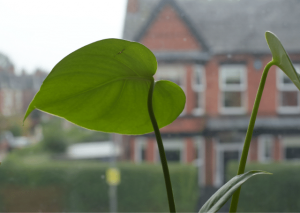 Your monstera siltepecana is a climbing evergreen with heart-shaped leaves that produce holes and slits as it matures.
Although the monstera siltepecana is one of the more difficult to find monstera varieties, its uniqueness makes it worth the extra time. You can often find these plants on eBay, at specialty nurseries, or online monstera growers.
Take a look online today and you can probably find just what you are looking for.


