
Welcome to Modern Agriculture!

If you’re looking for a beginner-friendly yet beautiful houseplant, dischidia ovata could be the plant for you.
In this guide, we’ll explain the ideal growing conditions before revealing several care tips that are sure to keep your dischidia ovata healthy.
Dischidia ovata, also known as the Watermelon Dischidia, is a tropical trailing vine native to Southeast Asia. It produces long vines and dark green, oval-shaped leaves, with white stripes that resemble a watermelon’s rind.
Dischidia ovata is a bit of an underdog among houseplant lovers. It doesn’t enjoy the same popularity as the flowering Hoya plants or even other Dischidia varieties, such as String of Nickels.
However, we’re sure that it will soon rise to its well-deserved fame. So if you’re looking for an indoor plant that combines elegant looks with low maintenance, Dischidia ovata could be the perfect choice for you.
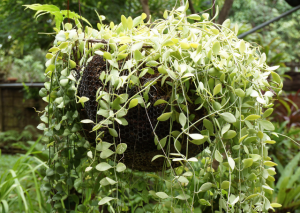 The main thing to remember about Dischidia ovata is that it’s an epiphyte. In its native habitat, Dischidia grows on other plants, such as trees and shrubs.
This means that it takes most of its nutrients from the air, water, and other surfaces around the plant. As a result, it can be susceptible to overwatering, and it needs a lighter potting mix than other plants.
Dischidia is closely related to Hoya plants. If you already have a Hoya in your home, you can use the same growing conditions for both.
Let’s go over the care essentials for Dischidia ovata, just in case.
Dischidia ovata grows best in bright, indirect light. When it’s growing in the wild, this plant will receive dappled sunlight coming down through the forest canopy.
Indoors, the best place for Dischidia ovata is in a room with southern exposure, about 3 feet (90 cm) from the window. It can also withstand some direct sunlight, so if you have an east-facing window, it can safely live on the windowsill as well.
Dischidia ovata isn’t overly pretentious when it comes to temperature and will thrive in most indoor conditions. Ideally, make sure that the temperatures in your home don’t drop below 60 °F (15 °C), or exceed 86 °F (30 °C).
In the wild, Dischidia receives a lot of water from the rain. Since it typically grows on trees, most of the water washes down to the ground. Replicating these watering conditions indoors can be problematic, but we have a few tips that will help.
Try to keep the soil moist, but avoid watering dischidia ovata too much. It can tolerate a brief drought, so if you’re in doubt about whether you should water it, it’s best to skip a day or two. Check the soil with your finger before each watering, and only water when the top inch (2.5 cm) feels dry to the touch. Give your plant a good soak, then allow the water to drain thoroughly and the soil to dry before watering it again.
Although Dischidia ovata doesn’t need too much water, it will grow best when humidity levels in your home are around 70%. This plant doesn’t like having its leaves wet, so avoid misting it, leading to fungal problems. Using a humidifier or even a pebble tray to boost the humidity is the best choice.
Dischidia ovata isn’t a heavy feeder, so it doesn’t need too many fertilizers. Applying an organic, liquid fertilizer once a month throughout spring and summer is more than enough.
The ideal soil for Dischidia ovata should be light, aerated, and well-draining. This plant will not tolerate standing in water, which will lead to root rot and other problems. Use a potting mix that combines orchid soil, cactus mix, and perlite.
Dischidia ovata growth rate is medium, yet it doesn’t need to be repotted too often. It’s better if the plant is a bit root bound in its pot, which prevents the roots from being exposed to too much moisture. On average, repot Dischidia ovata once every 2 to 3 years. Move it to a container about 2 inches (5 cm) wider than its previous one.
There are two ways you can grow Dischidia ovata indoors: as a hanging or climbing plant.
Dischidia grows on tree branches in the wild, so growing it as a climbing plant is closer to its natural habit. You can build your moss pole using a wood or plastic pole covered in sphagnum moss, or buy one. The plant will use its aerial roots to attach itself to the pole as it grows.
Of course, you can also let your Dischidia cascade over the edges of the pot, and it will look just as stunning as a hanging plant. On a similar note, you can also grow Dischidia ovata in a terrarium. This way, the plant will also benefit from a much-needed boost in humidity.
Yes. However, although Dischidia and Hoya plants are related, Dischidia ovata doesn’t produce the same kind of showy flowers as the Hoya plant. The blooms are small and non-fragrant and can range in color from pale green or yellow to red.
Dischidia ovata is very easy to propagate using stem cuttings. The best time to propagate it is in spring and summer, during the plant’s growth season.
You can also propagate it in winter, for example, but bear in mind that the cuttings will take longer to develop roots.
We recommend propagating 3 or 4 cuttings at a time and planting them in the same pot. This way, the mature plant will have a bushy appearance.
Here’s our step-by-step guide on how to propagate Dischidia ovata:
The most common problem with Dischidia ovata is overwatering. This plant will not tolerate having ‘wet feet,’ so make sure that the soil you use is well-draining. Also, cut down on watering if you notice that the leaves are starting to wilt or develop brown spots. This is often a sign of root rot.
Overwatering dischidia ovata can lead to root rot, but there might still be a chance to save it. Take the plant out of the pot, and rinse out the roots in the shower. Use a pair of scissors to cut any roots that are brown, black, and feel soft to the touch.
Repot the plant in fresh soil. The final solution is taking some cuttings and propagating them to create a new plant if it continues to struggle.
Dischidia ovata can struggle if it doesn’t receive the proper amount of light. Too little light can cause the stems to become thin, with wide spaces in between leaves. However, too much light can cause brown spots or your dischidia ovata leaves turning red, which are both signs of sunburn. Make sure that your Dischidia receives at least 6 hours of bright, indirect light each day for healthy growth.
Dischidia ovata is very tolerant to pests and diseases, making it a fine choice for beginner gardeners. As long as you provide it with enough light and not too much water, this gorgeous plant will pretty much look after itself.
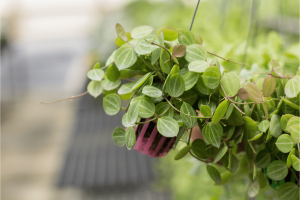 This fantastic plant not only looks great but with this guide, it’s also a breeze to showcase your display of stunning dischidia ovata leaves at home.
Let’s recap the basics:
Now that you know the secrets to growing your dischidia ovata, why not give it a go?

