
Welcome to Modern Agriculture!

Growing pepper from seed can be a fun and easy experience if you follow the necessary guidelines like soaking your seeds overnight before planting them. Whether you have limited space or an entire garden, you can still reap the benefits of sowing your pepper seeds if done the right way. And one integral choice is one of pepper companion plants.
When growing your peppers, don’t just plant them alone. Ever heard of companion planting? It is an old-age planting method that allows you to get the most out of your vegetable garden while growing different plants together.
When growing pepper, you can plant other vegetables, flowers, or even herbs around them (but also refrain from others). Companion planting will not only promote the healthier growth of your peppers but also offer more benefits that we shall discuss later in this article.
Let’s first understand what companion plants are and why they are great for pepper growing.
Companion plants are those that can be grown close to each other and flourish together, usually because of their complementary characteristics like their pest-repelling capabilities, nutritional requirements, and growth patterns.
While companion planting is typically assumed to be a small-scale gardening practice, it also works well for those operating on large-scale farms. Therefore, regardless of your garden’s space, you can still practice companion planting and harvest your peppers in large numbers.
Here are the benefits you will get from growing complementary plants together.
Before growing your pepper with other complementary plants, it is crucial to understand these two steps.
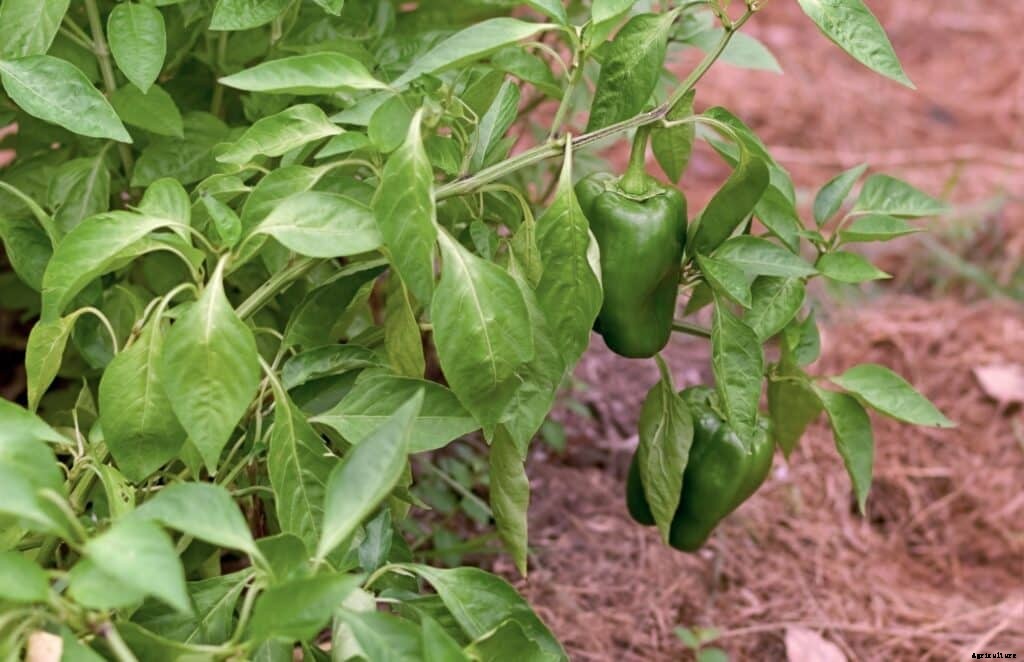
There are several herbs, flowers, and vegetables suitable for growing alongside pepper. The following are the 10 best pepper companion plants.
Despite being a summer herb that flourishes relatively well on its own, combining it with pepper is even better. Basil boosts the flavor of your peppers and also repels many garden pests, including thrips, spider mites, and mosquitoes.
Onions can be grown in small spaces, posing an excellent advantage for pepper companion planting. Their strong smell is a plus in pest deterring since it repels pests like aphids and rabbits.
Dill is a great pepper companion plant due to its ability to attract beneficial insects and repel pests. It is also a great space saver since it can grow well in just a tiny space.
This beautiful flower is a perfect pepper companion plant that keeps pests, whiteflies, aphids, squash bugs, beetles, and other pests away. It also acts as a trap crop, luring aphids to feed on it instead of the peppers.
Marigold is another great pepper companion flower that will attract whiteflies while repelling beetles, potato bags, aphids, and other pests, keeping your peppers clean, healthy, and pest-free.
Oregano is a great herb that deters sap-sucking insects like aphids from your peppers. Its short stature also allows healthy growth without competing for space with your peppers.
Not only will you get another edible herb within the same amount of growing space, but parsley will also provide shade while acting as ground covers for the bare soil. The herb also attracts beneficiary insects such as wasps that feed on destructive insects like aphids.
If you want to increase your pepper’s yield and improve its flavor, this companion plant is ideal. Chives also repel away pests like aphids and other insects.
Tomatoes are excellent pepper companion plants since they deter beetles and soil nematodes. However, keep in mind that these two companion plants can easily transfer diseases amongst themselves, particularly when planted in the same bed one after another. Therefore, plant them close to each other but rotate them to a different area in the next season to avoid passing on overwintering pathogens.
These vegetables give your peppers a living mulch to thrive in. Since they are also grown beneath the soil, they disturb the soil’s composition hence keeping away weeds.
Avoid growing these plants close to your peppers.
For beans to thrive, they need a lot of nitrogen. On the contrary, peppers do well with less nitrogen, and excessive supply can cause stunted production of their pods.
Peppers cannot do well when planted with broccolis since they are heavy feeders and will complete with them for the same nutrients
Cabbages will not destroy your peppers, but they are incompatible since they need different nutrients. Peppers do well with a more acidic pH balance, while cabbages need more neutral soil.
Just like broccoli, Brussels sprouts are heavy feeders and will compete with peppers for the same nutrients.
As an allelopathic plant, fennel releases a chemical that hinders the growth of other plants close to it. Planting it next to your peppers will prevent its growth to maturity and production.
Companion planting is an excellent way to grow peppers in your home garden. Even with a small space, you can easily squeeze in your herb, vegetable, or flower while growing your peppers. With these 10 pepper companion plants, you now have a wide selection to work with. Keep in mind the 5 plants you should not plant close to your peppers since they might choke them, compete with them for nutrients, or release harmful chemicals that may eventually kill them.


