Welcome to Modern Agriculture!
home

5 Types of Irrigation, Why they are Critical to the Success of Your Crops

Irrigation is a method of controlling the amount of water you supply to plants at regular intervals for agriculture.

 In simple words, it is when you supply water to plants to help them grow when there is not enough rain. You can pump irrigation water from rivers, lakes and wells. Or you can allow it to flow to the fields by the force of gravity along pipes or open canals.

There are a number of ways to do this. Read on to know details of the types of irrigation and their advantages and disadvantages.


Contents hide Types of Irrigation Advantages of irrigation Disadvantages of irrigation Importance of irrigation

Types of Irrigation

The types of irrigation are Surface, Sprinkler, Drip, Centre pivot and Manual irrigation.

Now, the details with irrigation advantages and disadvantages.

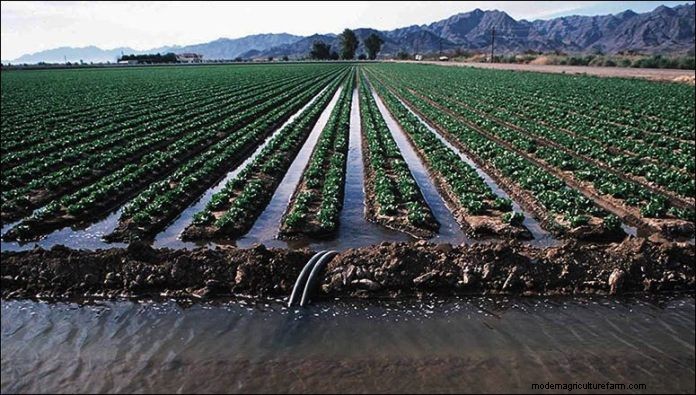
1. Surface irrigation

In surface irrigation, water moves over and across the land. It does that by simple gravity flow to the wetland and infiltrates the soil.
5 Types of Irrigation, Why they are Critical to the Success of Your Crops

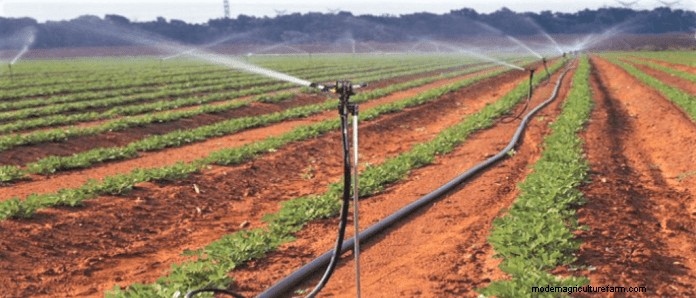
2. Sprinkler irrigation

This is a popular method. Pipes carry some amount of water to the fields. Then sprays it directly over the crops with high-pressure sprinklers. The benefit is that you can control the amounts of water.
5 Types of Irrigation, Why they are Critical to the Success of Your Crops

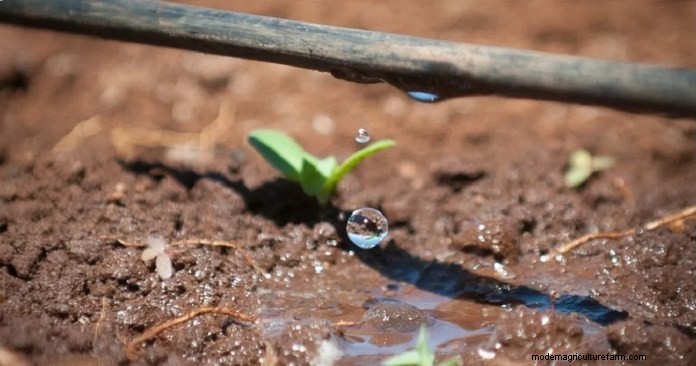
3. Drip irrigation

With this type, the drip lines take water near the root zone of plants and release it drop by drop. This method is the most water-efficient of irrigation.
5 Types of Irrigation, Why they are Critical to the Success of Your Crops

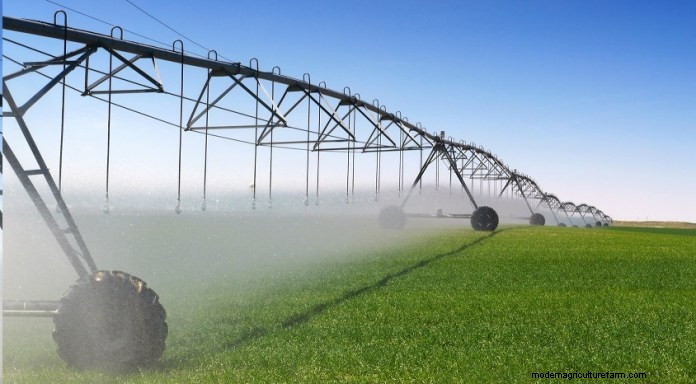
4. Centre pivot irrigation

It involves a self-propelled system. In this system, a single pipeline moves on wheeled towers in a circular pattern.
5 Types of Irrigation, Why they are Critical to the Success of Your Crops

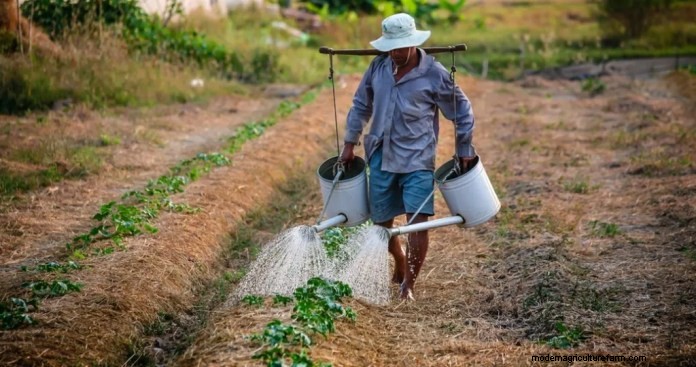
5. Manual irrigation

This type uses buckets or watering cans. We commonly use this method in our backyard farms.
5 Types of Irrigation, Why they are Critical to the Success of Your Crops

Advantages of irrigation

  1. Irrigation makes it possible to grow cash crops. It gives good returns to the farmer. Examples of cash crops are; sugarcane, potato, tobacco etc.
  2. It improves the groundwater storage as water lost due to seepage adds to groundwater storage.
  3. It improves the yields of crops. This means more income for the farmer.
  4. We use it to help the growth of crops during the period of not enough rainfall.


Disadvantages of irrigation

  1. Excessive seepage and leakage of water. These create marshes and ponds all along the channels. The marshes and the ponds after some time become breeding areas for mosquitoes.
  2. It lowers the temperature and makes the locality damp due to the presence of irrigation water.
  3. Excessive seepage into the ground raises the groundwater. And so causes waterlogging of the area.

Importance of irrigation

  1. Irrigation keeps moisture in the soil. Moisture is necessary for the germination of seeds.
  2. Water supplies two essential elements to the crops. They are hydrogen and oxygen.
  3. Irrigation is necessary for the absorption of mineral nutrients by the plants from the soil.
  4. It is important for the growth of the roots of the crop plants.

Modern Agriculture
Planting