
Welcome to Modern Agriculture!

Maize suffers from a number of insect pests that usually leads to a reduction in yield of the plant. In many African countries, the average maize yield per hectare is very low. These insect pests of maize cause damage to the plant and these cause stress to the plant. For maize, threatening organisms are stem borers, nematodes, bacteria, viruses, fungi and weeds are some of the organisms that have a negative impact on the maize plant.
We look at some of the major insect pests of maize and the damages they cause to the maize plant and how they can be controlled or managed.
Contents hide 1 African maize stem borer (Busseola fusca) 2 Aphids (Raphalosiphum maidis) 3 African pink stem borer (Sesamia calamistis) 4 Fall armyworm (Spodoptera frugiperda) 5 African bollworm (Helicoverpa armigera) 6 Grasshopper (Melanoplus spp.) 7 Termites (Microtermes spp.) 8 Integrated Pest Management (IPM) in Maize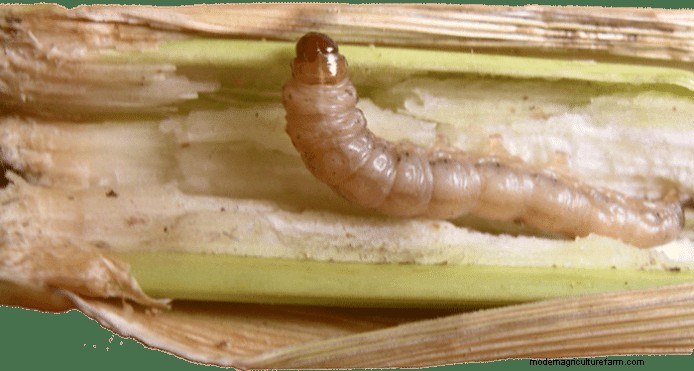
Damage caused
Larvae feed in whorls, cause “small windows” after the leaf grows out, and some leaves are even rolled up.
The larvae tunnel into the stem and inside the stem. Larvae can also tunnel into the ears, leading to direct yield losses. Feeding on kernels may also lead to downgrading of the harvest
Control
Destroy volunteer and alternative hosts to eliminate stem-borer. Crop rotation with groundnut, sugarcane or cotton is very effective against stem-borer.
Grow resistant varieties
Apply Carbonfurn 3G at 3kg per acre.
Damage caused
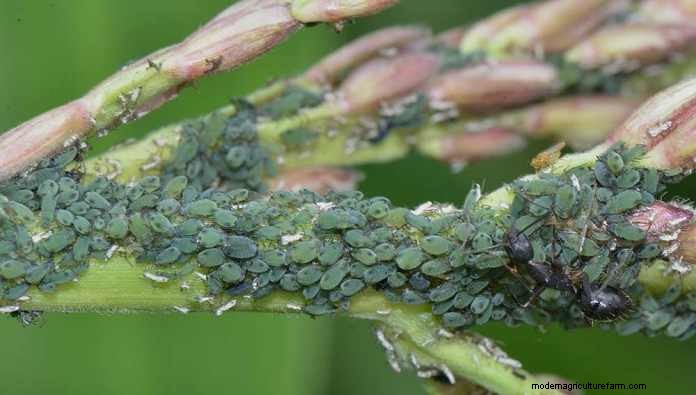
Both nymph and adult suck the sap from the plant especially the leaves. This turns the leaves yellow and in the case of heavy infestation, the plants remain stunted. Their injury causes oozing of sap which crystallizes on evaporation forming a sugary material called sugary disease.
Control
Coccinelids and chrysophiids suppress the population of nature.
However, you need base treatments with dimethoate 2 ml/l or monocrotophos 1.6ml/l or acephate 1g/l.
Damage caused
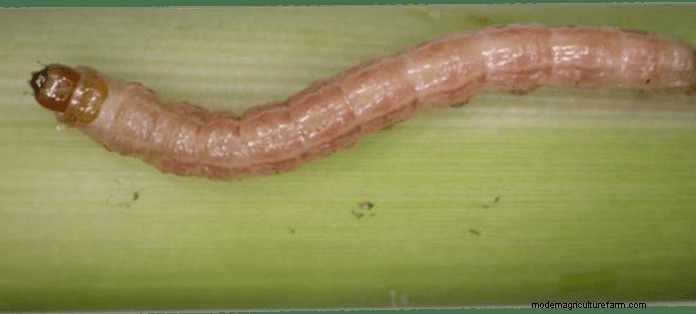
The larvae penetrate the stem shortly after they emerge from their eggs.
The larvae can tunnel into the stem, resulting in broken and/or drying stems, and eventual death of the growing point.
During ear filling, the majority of the larvae are in the ears.
Control
Pull out and destroy by burning dead hearts and affected plant part.
Place granules in the central whorls.
Apply Carbofuran 3G, Carbaryl 5G at 12kg/ha in the leaf whorl three times at 20, 30 and 40 days age of the crop.
Damage caused
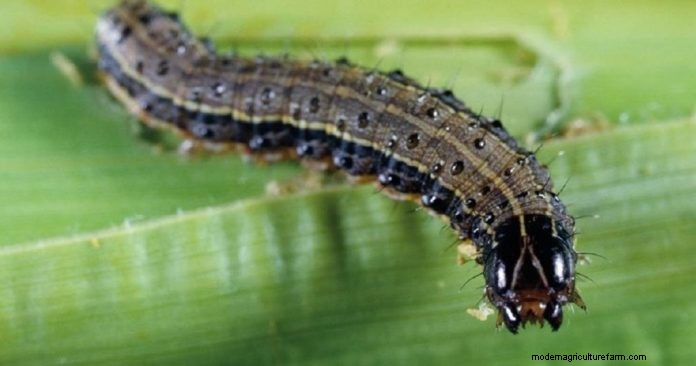
The symptoms of crop damage are very similar to other armyworm species and maize borer damage. Most plants recover from foliar feeding, but when grains consumed by larvae, the damage is more severe. Yield losses of 15-55% and even 100% are reported.
Control
Read on the control of fall armyworm
Damage caused
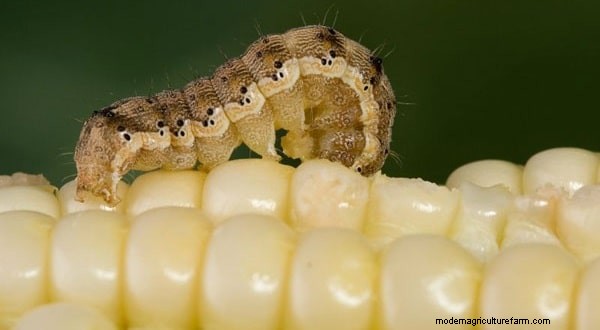
The larvae prefer ears but can also eat large holes through the whorl leaf roll. The presence of faecal granules near the feeding sites is an indication of the presence of this bollworm. Infection can prevent pollination because the larvae feed on the silks of young ears. The larvae can also open the tips of pollinated ears, leading to ear rot when rain enters the ear.
Control
Use thiodicarb, indoxacarb and spinosad to to break their resistance to conventional insecticides.
Apply one of the following on the 3rd and 18th day after panicle emergence; Carbaryl 10D at 25kg/ha, Malathion 5D at 25kg/ha or Phosalone 4D at 25kg/ha.
Damage caused
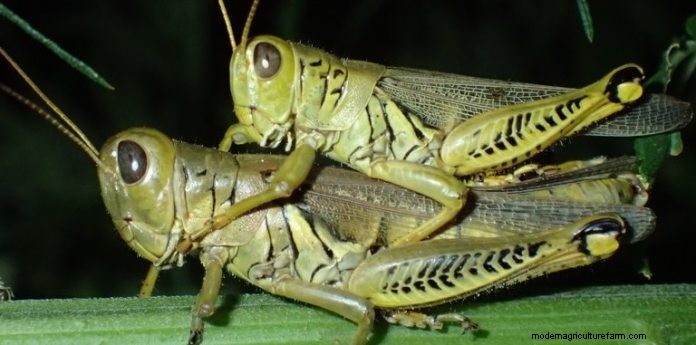
Nymphs and adults feed on corn in any plant growth stage.
The outer rows of corn are usually the first attacked, but as the grasshoppers reach the adult stage they move further into the field eating the leaves, silks and ear tips.
When grasshopper population are high and the damage is severe, they may only leave the leaf mid-ribs, pruned ears and barren stalks.
Control
Scraping field bunds and ploughings to destroy eggs, dusting cabaryl 10D or malathion 5D at 10kg/acre or foliar spraying with fenitrothion 2ml/l was found to be effective in the management of the grasshopper.
Damaged caused
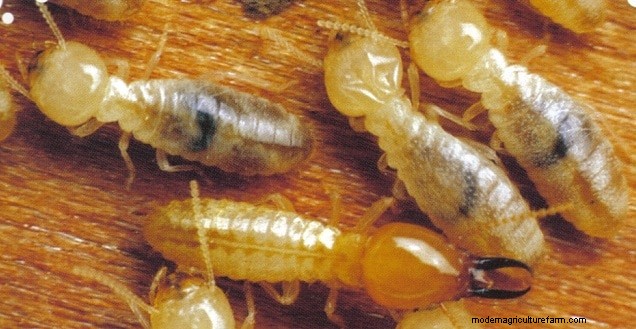
Termites occasionally cause partial or total defoliation of maize seedlings but are principally damaging to maturing or mature plants.
After about three months of plant growth, termites begin to attach the main root system, prop roots, and stems and eventually pack the stems with soil and cover them with tunnels made of thin sheets of soil.
Control
Locate termitarium, dig out queen and destroy it.
Fumigate ant hill with carbon disulphide or chloroform mixture.
Destroy crop residue which form sources of infestation.
Treat seed with chlorpyriphos at 6ml/kg of seed.
Apply chlorpyriphos 50 EC to the soil at 10ml/l as a soil drench at sowing time in termite prone soils.
Maize In Africa – International Plant Biotechnology Outreach.
Pests of maize – Ch. Naga Satyasri

