
Welcome to Modern Agriculture!

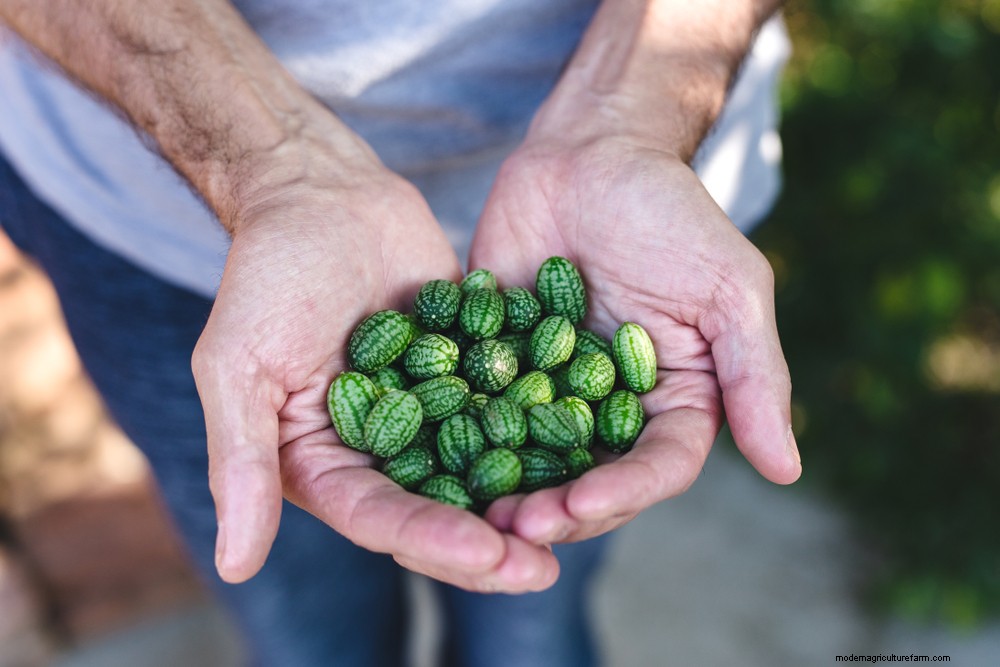
Melothria scabra goes by many names but perhaps cucamelon is the most fitting.
Also known as Mexican sour gherkin, mouse melon, pepquiño, and sandiita which means “little watermelon” in Spanish. Cucamelons do look as if a cucumber and a watermelon had a baby.
The name alone makes me want to grow them.
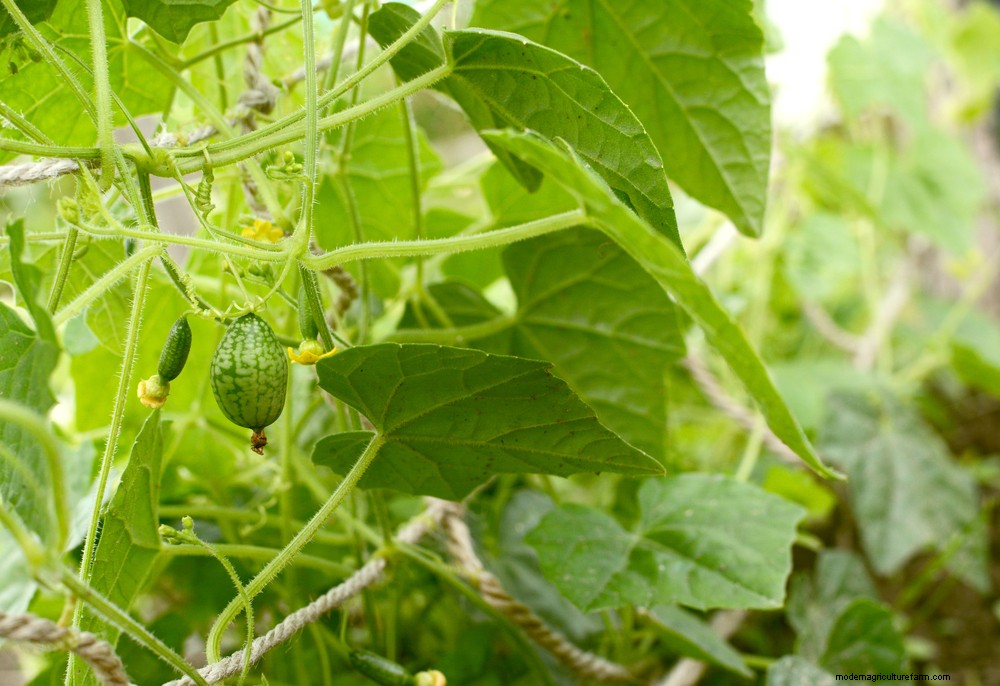
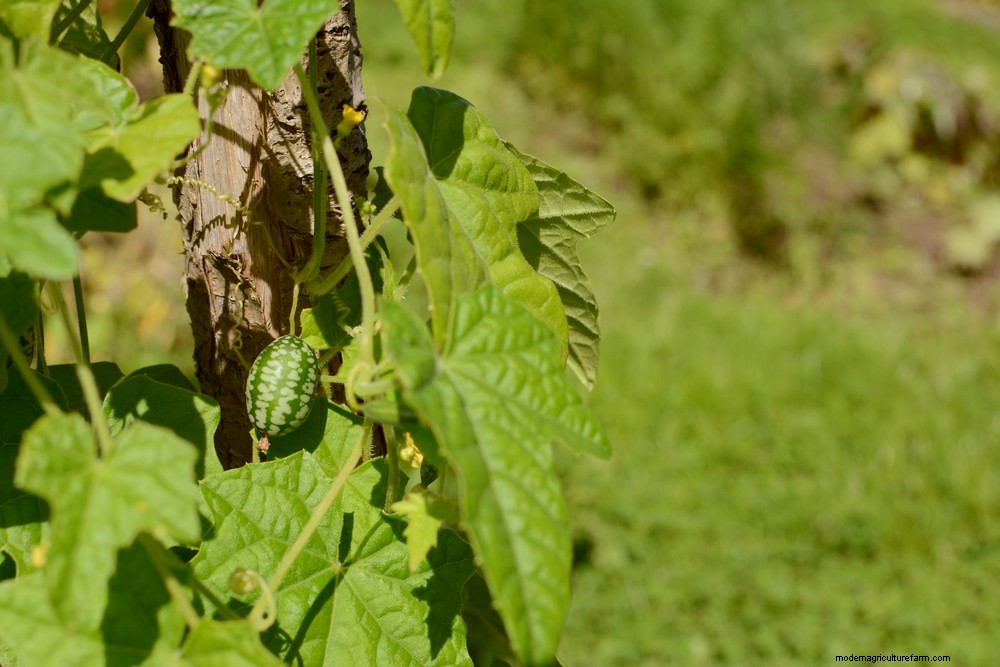
Cucamelon is a vining plant with a growing habit and flavor profile similar to cucumbers. It bears grape-sized fruits that look like adorable miniature watermelons.
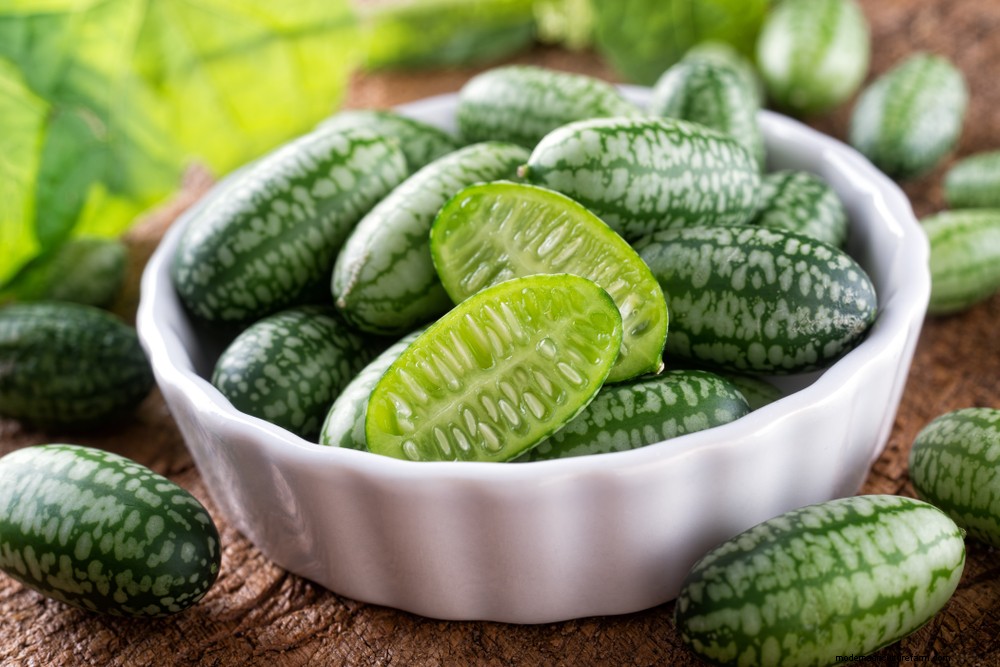
Cucamelon has white flesh that is crisp and crunchy. They can be chopped up and added raw to salads and salsa, sautéed in a stir fry, and pickled whole in brine.
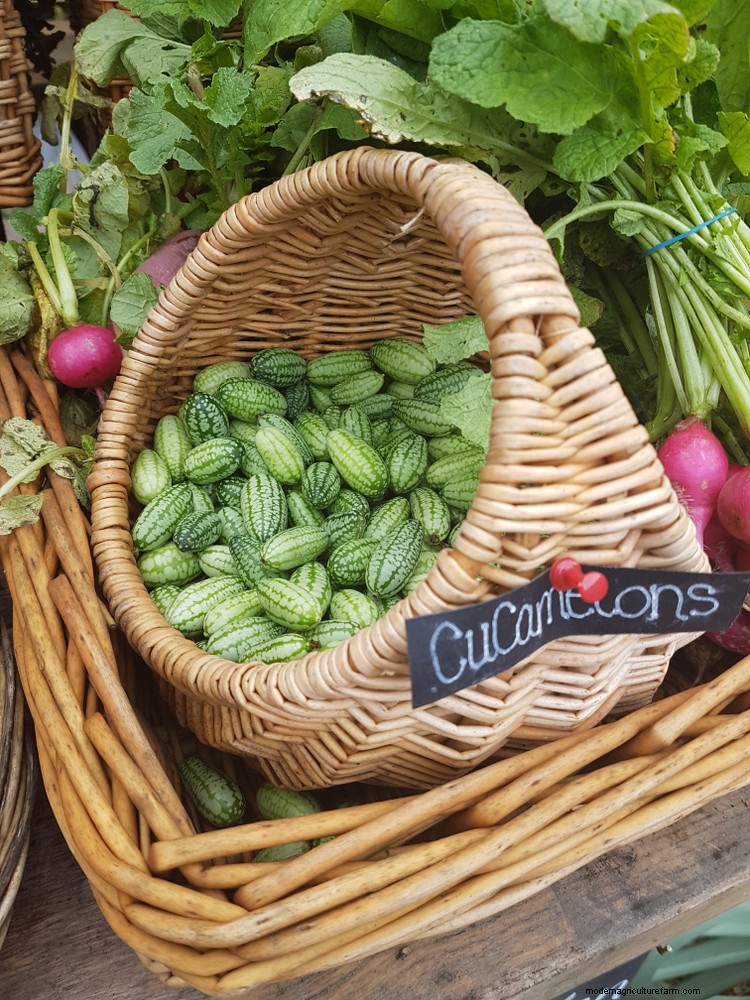
These fun little fruits are seldom sold at the grocery store, though you may luck out and spot them at a farmers’ market.
To enjoy these curious fruits, the best and most reliable source of cucamelons is growing them from seed in the backyard garden. I can guarantee it will be the cutest vegetable you grow.
While cucamelons are part of the larger Cucurbitaceae family, they belong to the Melothria genus, and so they’re not true cucumbers or melons. (That’s okay, they’re so charming, we’ll let it slide.)
Cucamelon plants are native to Mexico and South America and grow most vigorously in warm conditions with plenty of sunshine.
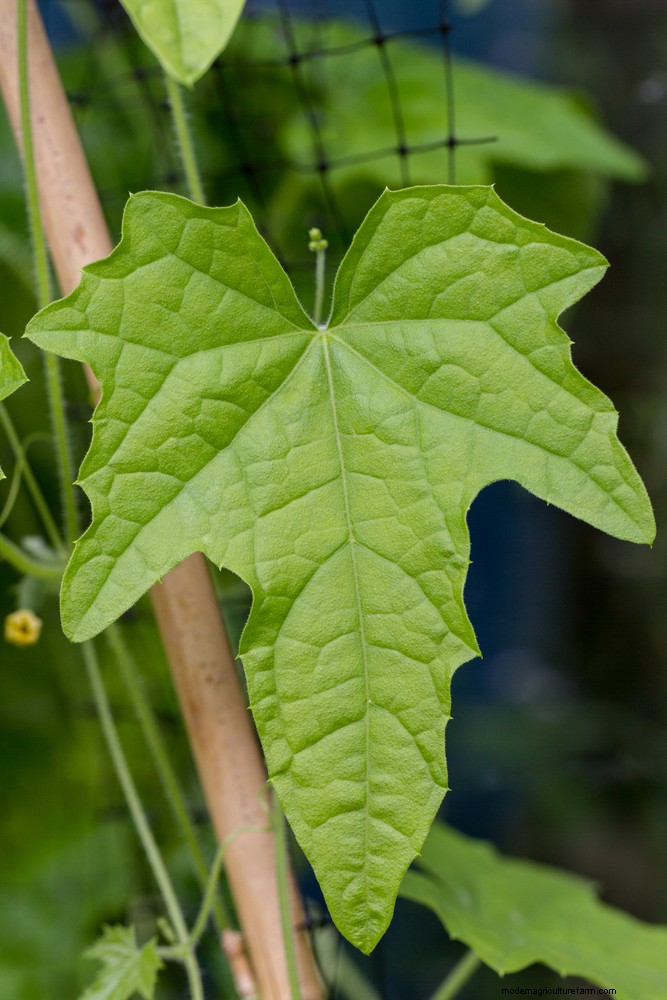
A climbing plant, it bears palmate leaves with curling tendrils that affix themselves to vertical supports. Think cucumber plant only with slightly smaller foliage.
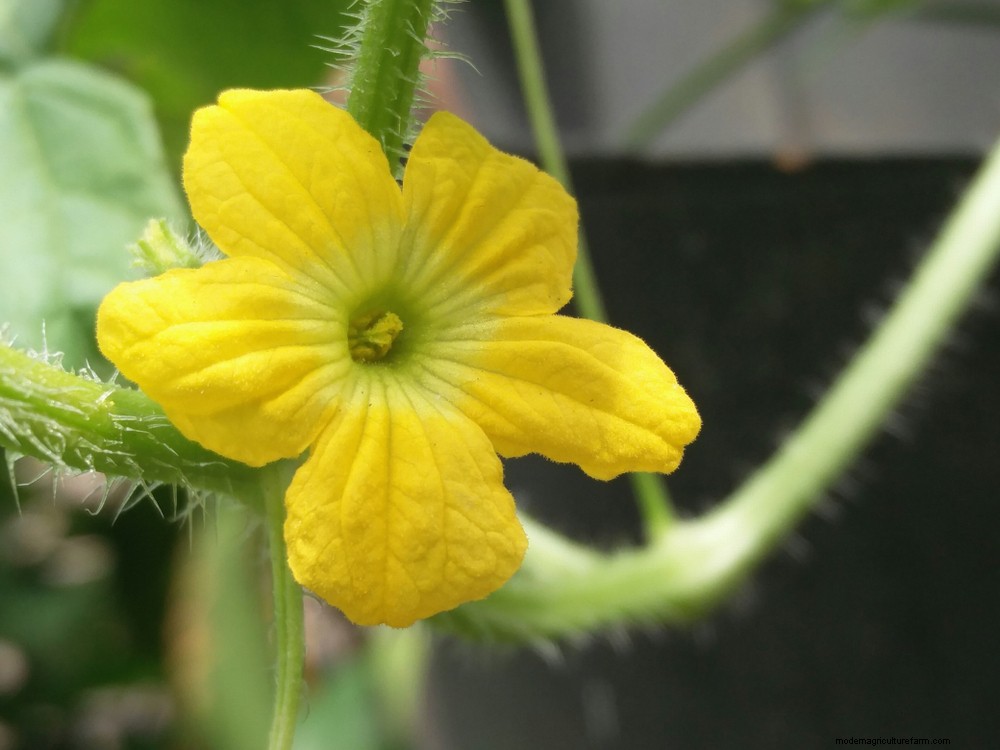
Small bright yellow five-petal flowers are borne in the leaf axils. The flowers produce both female and male blooms on the same plant. These will self-pollinate and develop into oblong light green fruits with mottled skin.
The root system of these plants is made up of clusters of long and tapered tubers. Swelling in size as they age, these tuberous roots absorb and store moisture from the soil, allowing the plant to withstand periods of drought.
Cucamelon is hardy in zones 9 to 11. It’s treated as an annual in cooler climates, but can also be grown as a perennial vegetable (more on that below).
Cucamelons thrive in at least six hours of full sun each day.
It can be planted in loamy, sandy, and chalky soil types, provided it drains well.
Cucamelons have a tuberous root system the stretches deep into the soil. Unlike cucumber and melon plants that have shallow roots and require loads of water, cucamelons are tolerant of drought and have very minimal irrigation needs.
When the weather is very hot, they need just one inch of water per week. During cooler weather, water only when the topsoil is dry.
Due to their water-storing abilities, giving them too much water can waterlog the soil and prevent oxygen from reaching their roots.
Cucamelon benefits from plenty of organic matter in the soil. Work compost into the soil at planting time and fertilize with compost tea throughout the growing season.
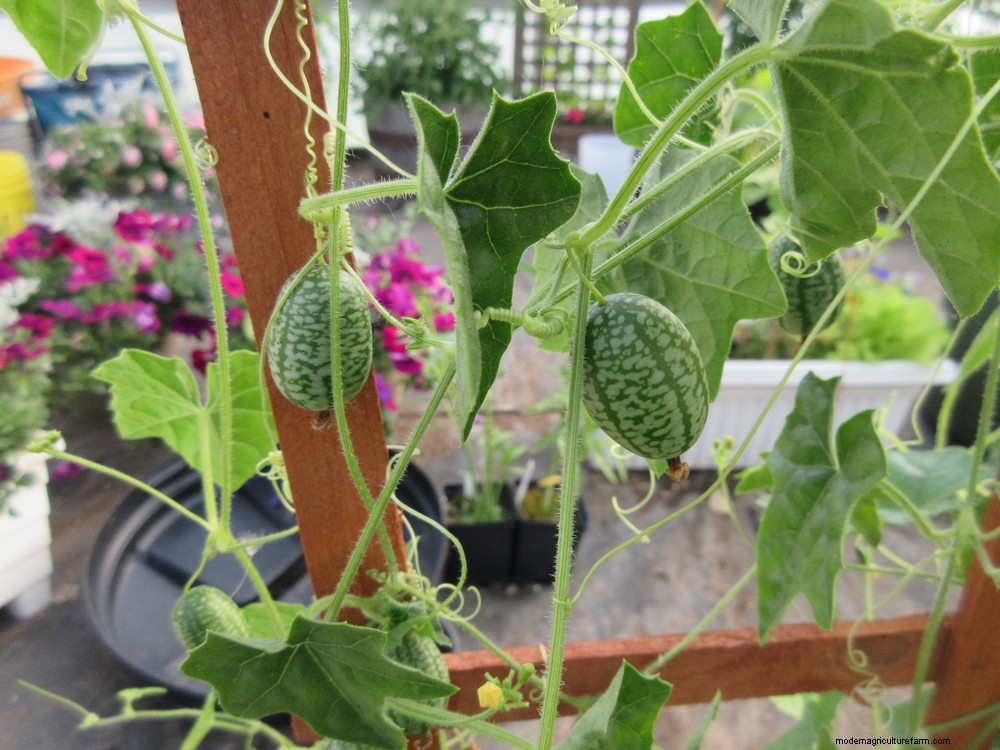
Cucamelon vines can grow 10 feet or more in length each season. It’s easier to see the fruit at harvest time and keep the vines from sprawling across the ground by providing a trellis or cage for them to cling to.
In zones 7 through 10, the seeds can be direct sown into the garden when temperatures are consistently above 70°F (21°C).
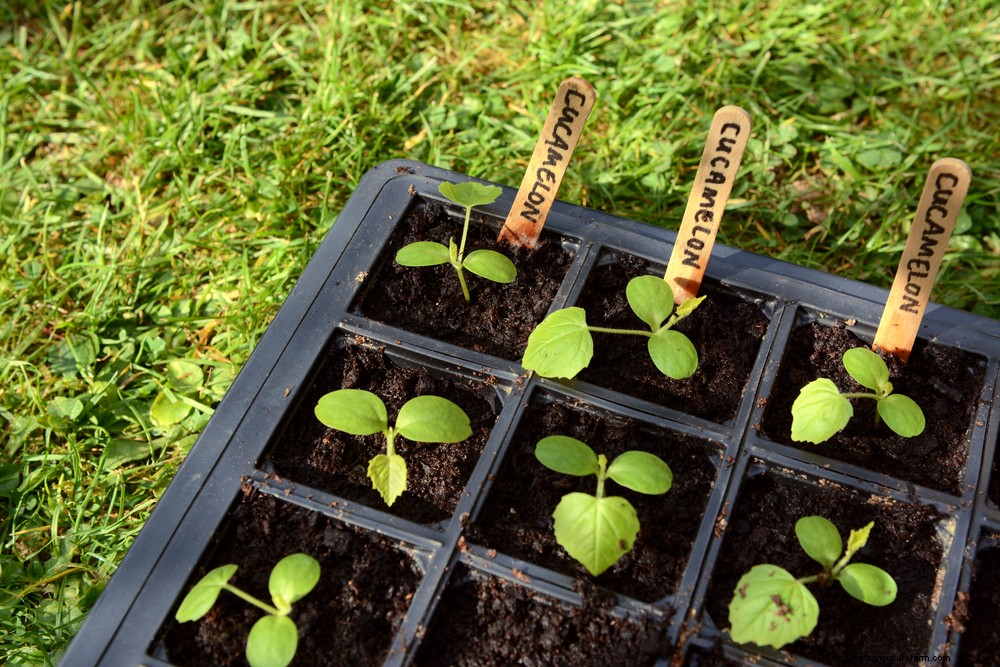
In cooler climates, start cucamelon seeds indoors about 4 to 6 weeks before the last frost date in your area.
When cucamelon plants have become established, they will begin to grow profusely and provide an abundance of fruit from mid-summer until the first frost.
Young and tender fruits, no more than an inch in diameter, are the tastiest. These are best for eating raw.
More mature fruits tend to be seedier, less crunchy, and have a more bitter taste. Use these ones for pickling.
Harvest cucamelon fruits by simply picking them off the plant by hand.
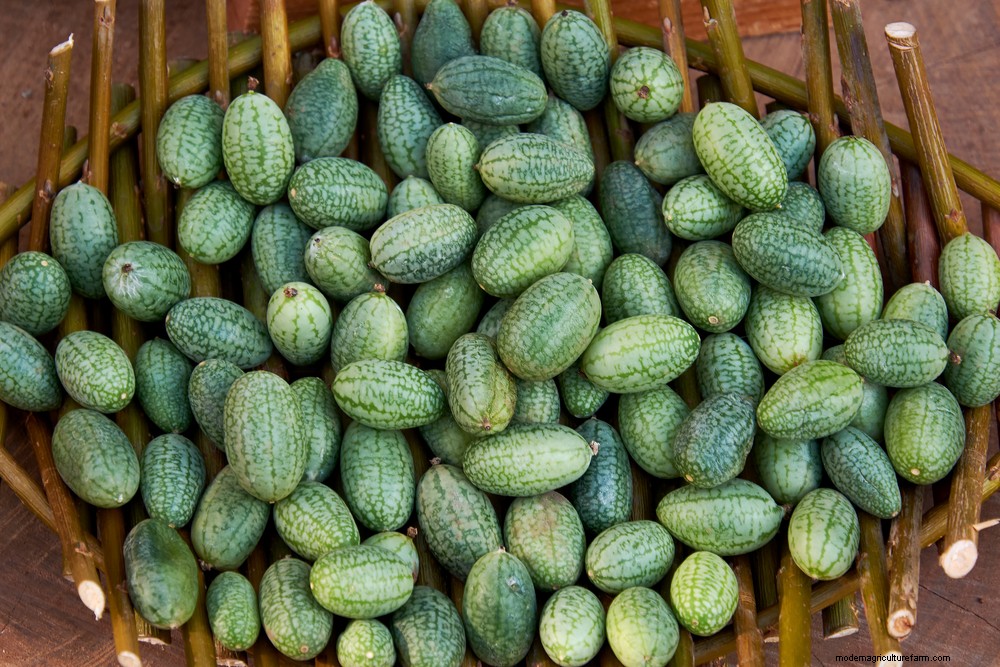
Once plucked off the plant, fresh cucamelons will last around a week in the fridge. Place them in a paper bag in the crisper drawer. Be sure to leave the top of the bag open for air circulation.
Beyond a week, cucamelons can be preserved through pickling and water bath canning. Treat them as you would cucumbers.
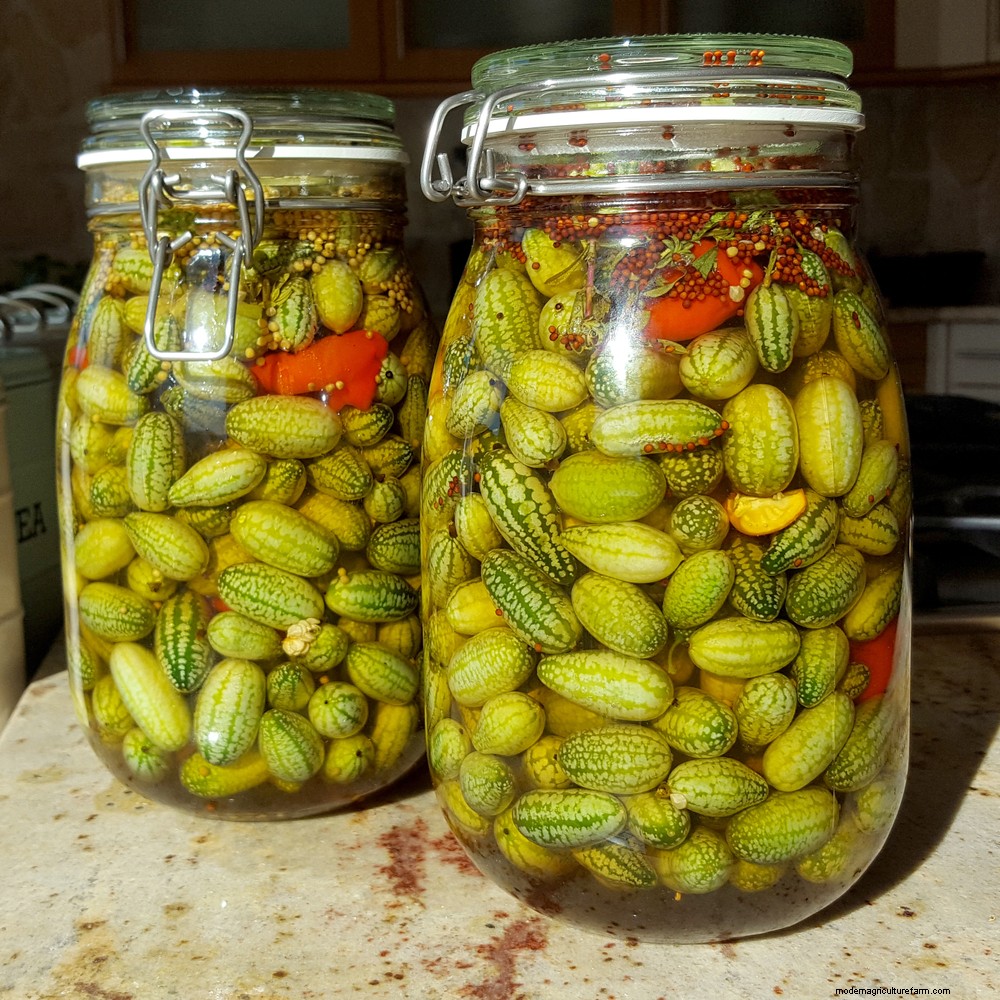
Quick refrigerator pickles will keep for a month or more. Canned pickles will store for up to one year.
Cucamelons can also be prepped into a number of yummy things before being canned. Don’t be afraid to experiment by substituting them in recipes that call for cucumber.
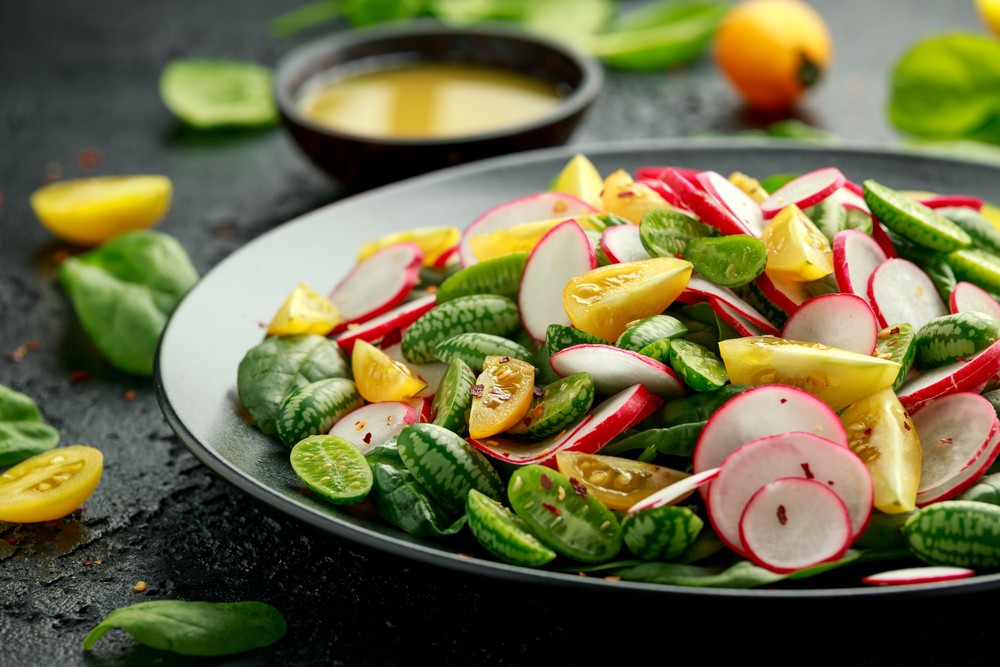
Save some cucamelon seeds each year and never find yourself without cucamelons to grow.
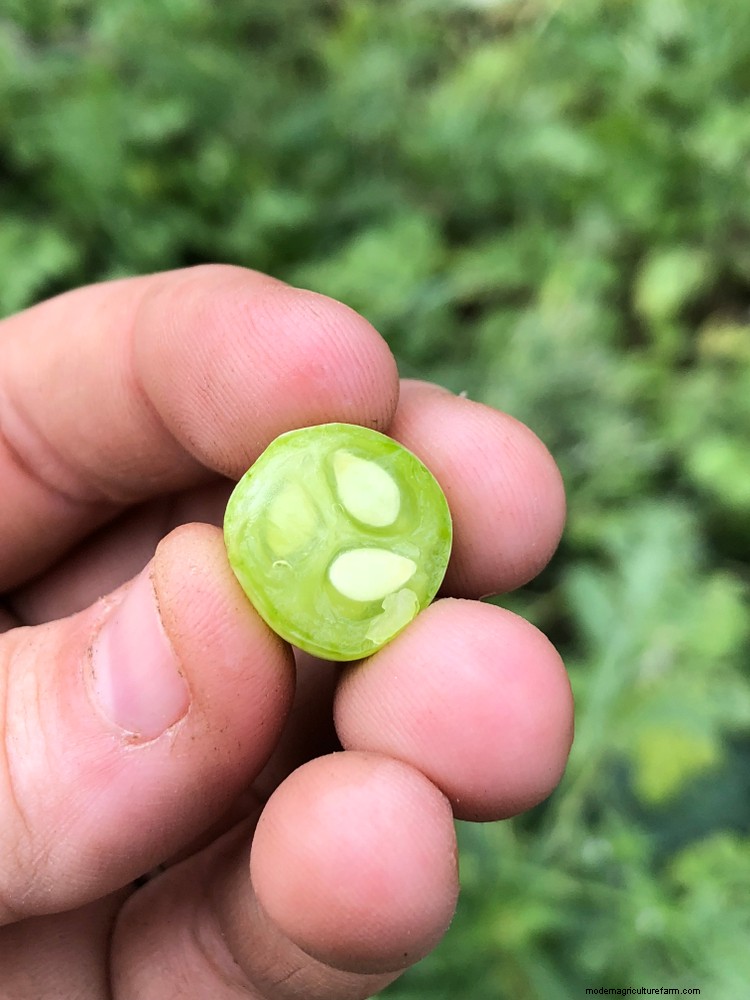
Ripened fruits that have naturally fallen off the plant are the best ones to select for seed saving.
Bring collected fruits indoors and place them on a tray to continue ripening for a few more weeks.
Once over ripened, slice the fruit in half and scoop out the seeds. Place them in a jar of water to ferment for one week.
All seeds that have dropped to the bottom of the jar can be removed and rinsed. Place these on a fine mesh screen or paper towel to dry for a couple weeks in a cool, well-ventilated area.
When the seeds are completely dry and brittle, transfer them to an airtight container. Cucamelon seeds will remain viable for several years.
Gardeners residing in zones 7 and above can overwinter their cucamelon plants by applying a deep layer of mulch over the planting site. Do this in autumn to the depth of 12 inches. Pull back the mulch the following spring when temperatures are above 70°F (21°C).
Those in cooler climes can keep the cucamelon crop going year after year by digging up the tuberous roots at the end of the growing season.
After the plant dies back and before the first frost, remove the vines and dig up the rootstock. Use a garden fork to gently lift the clusters of tubers from the soil. Be careful not to break or puncture them, as they will not reliably resprout if damaged.
Store the roots in temperatures above 50°F (10°C). Keep the tubers completely dry so they remain dormant.
The next spring, plant cucamelon tubers back in the garden. New vines will resprout with zeal.
Cucamelon plants are remarkably resistant to pests and diseases.
Despite their similarity to cucumbers, cucamelon isn’t affected by cucumber beetles, thrips, or leaf spot.
The key to a trouble free crop is to prevent the vines from growing along the ground. Give them plenty of vertical supports to cling to by using A-frame and arbor trellises or teepee style cages.
Cucamelon is a rather rare plant that is not yet on par with the conventional garden crops like carrots, cucumbers, and beans.
It can be difficult to find seeds for sale locally at nurseries and garden centers.
Until this crop goes mainstream, you can order seeds online. Try these non-GMO cucamelon seeds from Seed Needs and Dave’s Garden.


