The following content is all about Sustainable Agriculture / Farming.
Introduction
Sustainable agriculture is also known as eco-farming (as the ecological balance is important) or organic farming (as organic matter is the main source of nutrient management) or sometimes as natural farming. Some others designated it as regenerative agriculture or alternative farming.
Farmers and other agricultural thinkers have established a strong set of guiding principles for sustainability, based on stewardship and economic justice. Producers and researchers are annually increasing the pace of improvements in agroecological systems, making them more efficient and profitable.
Objectives Of Sustainable Agriculture
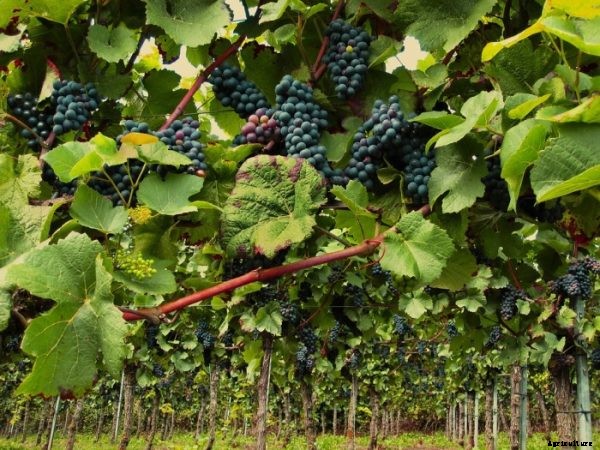
Sustainable Fruit Farming.
The best way to use the resources which are available in nature.
The minimization of non-renewable resources and start using renewable resources.
Protect the health and safety of farmworkers, local communities, and society.
Protect the environment and enhance natural resources.
Increase the economic viability of farming operations.
Every farmer should get sufficient financial reward to enable continued production and contribute to the well-being of the community.
To produce high, good quality, and safe food.
Provide advanced technology, knowledge, and skills in ways that suit local conditions and capacity.
Read this:Importance of Bee Pollination in Agriculture.
What is Sustainable Agriculture
Characteristics of sustainable agriculture
To the maximum extent feasible, organic farming systems rely upon crop rotations, crop residues, animal manures, legumes, green manures to maintain soil productivity and tilth to supply plant nutrients. It looks forward to alternative methods of pest control like pest-resistant cultivars, bio-control agents, and cultural methods of pest control.
Such ecological farming systems are highly productive and they should not be mistaken for a reversion to inefficient and less productive farming methods. It is highly knowledge-intensive, labor-oriented and a complex system integrating several organic recycling processes.
Based on both biological potential and biological diversity, land can be classified into conservation, restoration, and sustainable intensification areas. Conservation areas are rich in biological diversity and must be protected in their pristine purity.
Soils with diminished biological potential are also referred to as waste or degraded lands and they should be improved through the adoption of principles of restoration ecology. The diversion of land suitable for sustainable farming should be prevented by legislation. Such lands should be subjected to continuous soil health monitoring.
Effectiveness in water-saving, equity in water sharing, and efficiency in water delivery and use are important for sustainable management of available surface and groundwater resources. There should be an integrated policy for conjunctive and appropriate use of river, rain, ground, and sea and sewage water.
The components of the integrated nutrient supply system suitable for easy adoption include green manures, crop rotation, and bio-fertilizers. Biodynamic systems that make significant use of compost and humus will help improve soil structure and fertility.
Genetic diversity and location-specific varieties are essential for achieving sustainable advances in agriculture productivity. Genetic homogeneity characteristic of modern agricultural systems only leads to greater genetic vulnerability to biotic and abiotic stresses.
The control of weeds, insect pests, and pathogens is one of the most challenging jobs in the agriculture sector. Therefore, an integrated pest management system (IPMs) needs adoption. The conservation and wise use of genetic diversity is essential for breeding strains possessing multiple resistances to biotic and abiotic stresses.
Similarly, the conservation of natural enemies of pests is important for minimizing the use of chemical pesticides and for avoiding the multiplication of insecticide-resistant pests. Botanical pesticides such as those derived from neem, need popularization. Selective microbial pesticides offer particular promise, of which, strains of Bacillus thuringiensis (BT) serve as an example. Transgenic techniques have made the transfer and expression of BT toxin possible in several crops.
Whole plant utilization methods and preparation of value-added products from the available agricultural biomass are important both for enhancing income and for ensuring good nutritional and consumer acceptance properties. Both producers and consumers will not derive benefit from production advances if there is a mismatch between production and post-harvest technologies.
Organic or biological agriculture
Organic or biological agriculture refers to a specific set of farming practices that are certified or enforced by a third party. Organic certification indicates that the product is grown using certain specific guidelines, often prepared for attaining as much sustainability as possible. They also ensure minimized use of chemicals and thus lowest possible residues in food products.
Efficient use of locally available natural resources includes water harvesting; soil and water conservation (contour cropping, terraces, minimum tillage, grass strips); composting, livestock manures; irrigation scheduling and management; restoration of degraded or abandoned land; rotational grazing; habitat management for pest predators; drainage systems and subsoiling; raised beds; bio-pesticides and bio-fungicides.
Advantages of Organic Farming
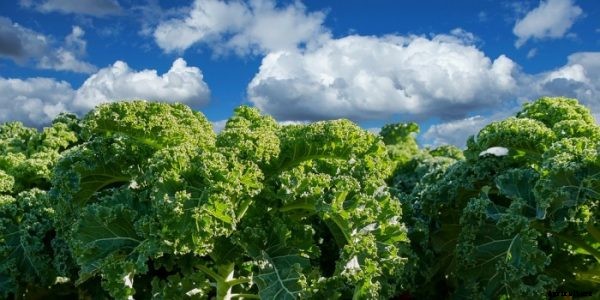
Sustainable Food Growing.
Organic manures produce optimal conditions in the soil for high yields and good quality crops.
They supply all the nutrients required by the plant (NPK, secondary, and micronutrients).
They improve plant growth and the physiological activities of plants.
They improve the soil’s physical properties such as granulation and good tilth, giving good aeration, easy root penetration, and improved water holding capacity.
The fibrous portion of the organic matter with its high carbon content promotes soil aggregation to improve the permeability and aeration of clay soils while its ability to absorb moisture helps in the granulation of sandy soils and improves their water holding capacity.
The carbon in the organic matter is the source of energy for microbes, which help in aggregation.
They improve the soil chemical properties such as supply and retention of soil nutrients and promote favorable chemical reactions.
They reduce the need for purchased inputs.
Most of the organic manures are wastes or by-products, which on accumulation may lead to pollution. By way of utilizing them for organic farming, pollution is minimized.
Organic fertilizers are considered complete plant food. Organic matter restores the pH of the soil, which may become acid due to the continuous application of chemical fertilizers.
Read this:How Soil Acidity Effects the Crop Yield.
Disadvantages of Organic Farming
Maintenance of organic carbon is difficult in tropical agriculture due to high temperature coupled with conventional tillage where the organic carbon is easily oxidized.
The sudden shift to organic farming would reduce crop yields (low yields).
Take time to build up soil fertility and balance the ecosystem. (Organic manure and fertilizer combined and added to field increase yield doubly).
Non-availability of organic manures, crop residues, bio-fertilizers, and bio-pesticides.
Transport of organic manures is difficult due to bulkiness.
Absence of the premium price of organic farming produces in India.
In India, it is recognized that organic farming is expensive and labor-intensive.
Lack of technical know-how (like timely and effective control of weeds, insects, and diseases).
Seek to optimize the use of locally available resources by combining the different components of the farm system, i.e., plants, animals, soil, water, climate, and people, so that they complement each other and have the greatest possible synergetic effects.
Seek ways of using external inputs only to the extent that they are needed to provide elements that are deficient in the ecosystem and to enhance available biological, physical, and human resources. In using external inputs, attention is given mainly to maximum recycling and minimum detrimental impact on the environment.
LEISA does not aim at a maximum production of short duration but rather at a stable and adequate production level over the long term. LEISA seeks to maintain and, where possible, enhance the natural resources and make maximum use of natural processes. Where part of the production is marketed, opportunities are sought to regain the nutrients brought to the market.
Optimizing Nutrient Availability
A very important condition for good plant growth and health and, indirectly, for good animal and human health is the timely provision of sufficient and balanced quantities of nutrients that can be taken up by the plant roots. Nutrient deficiencies and imbalances are the main constraints to crop production, especially in regions with poor and very poor or alkaline soils. There is a constant flow of nutrients through the farm.
Integrated crop or pest in Sustainable Agriculture
IPM management usually has a holistic involvement of inter-related factors, leading to greater impact. IPM practices have greatly reduced pesticide applications and thereby the costs associated with sprays.
In such orchards, one or two sprays per season of pesticide would suffice to prevent fungal diseases that affect fruit quality. Most other diseases and insects that cause fruit blemishes can be ignored, as the external appearance of fruit does not affect juice quality.
In contrast, for fruits sold fresh, the outer appearance must meet consumers’ expectations. In such orchards, pesticide sprays are required only until the economical threshold is achieved. Various prevailing pests (Lepidoptera, whiteflies, aphids, and thrips) were controlled using a biological and integrated management approach.
Greenhouses fitted with 40 meshes insect net successfully lowered whitefly infestation, while 78 meshes could greatly reduce thrips infestation. Moreover, an environment-friendly vector control strategy was developed. Based on experiences in the physical exclusion of pests using insect nets with different mesh sizes, behavior to modifying ultraviolet and absorbing plastic sheets and reflecting mulches were tested.
These materials enhanced the greenhouse microclimate and disrupted the immigration and colonization behavior of thrips. Results suggest that the type of plastic film used for greenhouse covers may influence both the initial immigration/penetration and the dispersion/distribution of certain insects in the microclimate.
The use of bioactive compounds from plants has been viewed as a potential biological/botanical insecticidal approach. The extract of the neem tree (Azadirachta indica) has proven insecticidal qualities. Currently, neem preparations are mainly applied as spray treatment on the crop canopy with varying levels of success in pest control. Furthermore, neem extract has several potential applications on the soil and seed too.
Read this: Integrated Pest Management Strategies.
Crop management practices
(CMPs) With the advent of biotechnological advancements, new disease-resistant hybrids, biological pest control, cultural practices that reduce the incidence of pests and diseases, and better placement and reduced amounts of fertilizers are favoring widespread adoption of CMPs. Instead of broad-spectrum pesticides, insect-specific chemicals and biological insect controls are now commercially available.
In place of overhead or flood irrigation methods, micro-irrigation (sprinklers, drips) could be used to apply water directly to roots.
The goal is to sustain high crop productivity and crop quality in food and fiber production as well as in grass farming.
Strive to keep the soil covered throughout the year, whether with permanent pasture or cover crops and green manures.
Maintain or build soil organic matter levels through inputs of compost or cover cropping. Properly timed or limited tillage.
Irrigation management to crop to reduce erosion and runoff.
Read this:Disease Management In Plants.
Crop rotation in Sustainable Agriculture
Within the mixed farm setting, crop rotation takes place as the second principle of organic agriculture. Besides, the classical rotation involving one crop per field per season, intercropping, mixed cropping, and undersowing are other options to optimize interactions. In addition to plant functions, other important advantages such as weed suppression, reduction in soil-borne insect pests and diseases, complimentary in nutrient demand, nutrient catching, and soil covering can be mentioned.
Green Manuring
The green manure crops when applied improve the physical and chemical properties of the soil. Green manures also increase the fertilizer use efficiency of crops when applied in combination with inorganic fertilizers. Among the green manure crops, special attention is being given to Sesbania rostrata, which bears stem nodules in addition to the root nodules.
Adapted greenhouse systems for humid tropics
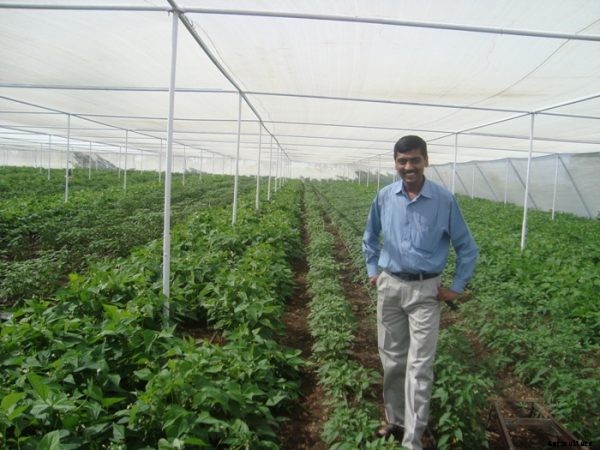
Sustainable Farming in Greenhouse ( Pic Source Wikimedia Commons).
Greenhouses were constructed using regionally available materials. Design calculations considered the need to withstand high wind loads and protect plants by improving air circulation and enabling biological protection. The effect of insect net cladding on air ventilation, temperature, and relative humidity was investigated in relation to their influence on plant yield, quality, and protection. Air exchange rates were calculated for different mesh sizes using climate models.
Bottom Line Of Sustainable Agriculture
Sustainable agriculture is possible and is already being practiced successfully in many places throughout the world. It has excellent potential to boost crop yields and feed the world’s growing population for a century or more without destroying natural resources.
Making people be aware of agricultural sustainability among policy-makers, entrepreneurs and consumers is essential. This can be carried out both in developed and developing countries. Moreover, the required knowledge must be shared with farmers and the right framework conditions must be in place.
In case if you are interested in this: How To Grow Organic Lettuce.