
Welcome to Modern Agriculture!

Here’s a selection of our favourite perennial vegetables, all ideal for ordering and planting into spring soil as it’s warming up or to add to your spring sowing list.
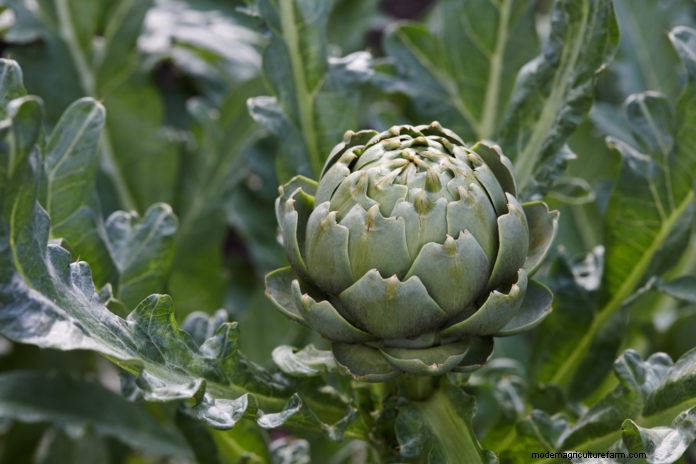
Globe artichokes
As well as delivering plenty of their intricate flower heads, with their hard-won, but all-the-more-delicious-for-it hearts, these handsome plants add a stylish panache to the vegetable garden. They make quite large clumps of their velvety silver-green leaves, and those tight flower heads that don’t get harvested go on to produce attractive purple thistle-like flowers. Watch out for their sap, if you get it on your hands while you’re picking the heads – it’s incredibly bitter if accidentally licked!
Once growing, globe artichokes are pretty self sufficient and easy to please. They need well-drained soil and a sunny spot. Cut back the dead leaves at some point in late winter before the new ones appear, and spread a layer of well-rotted compost or mulch around their bases in autumn.
Asparagus
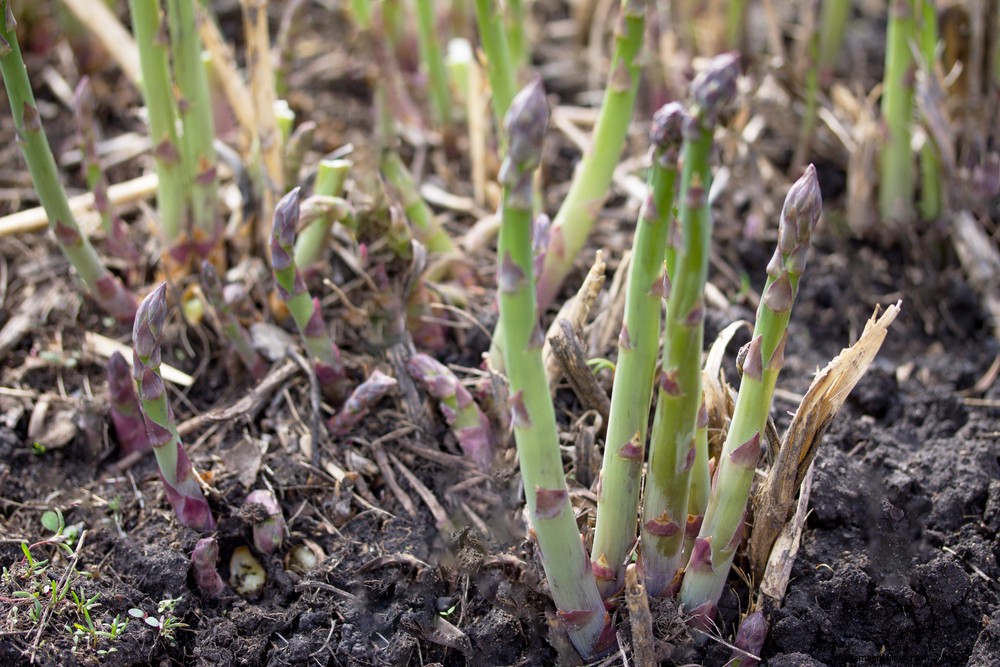
April is the month to plant asparagus crowns – definitely the best way to get a bed of asparagus established. This delicacy needs very free-draining, fertile soil so dig in some manure before planting. The crowns arrive looking a bit like a many-tentacled octopus. Dig a trench in your new asparagus bed and then create a ridge along its base, so the centre of the crown can sit on that with its roots spread out down the sides of the ridge.
If you plant one-year-old crowns, you’ll need to wait two years after planting before harvesting spears. Do this by cutting them off with a sharp knife just below the soil surface.
Cut the foliage back once it has turned yellow in autumn, and mulch the bed.
Pomona Fruits have a good selection of varieties, including exciting new variety ‘Burgundine’ with claret-purple coloured shoots.
Jerusalem artichokes
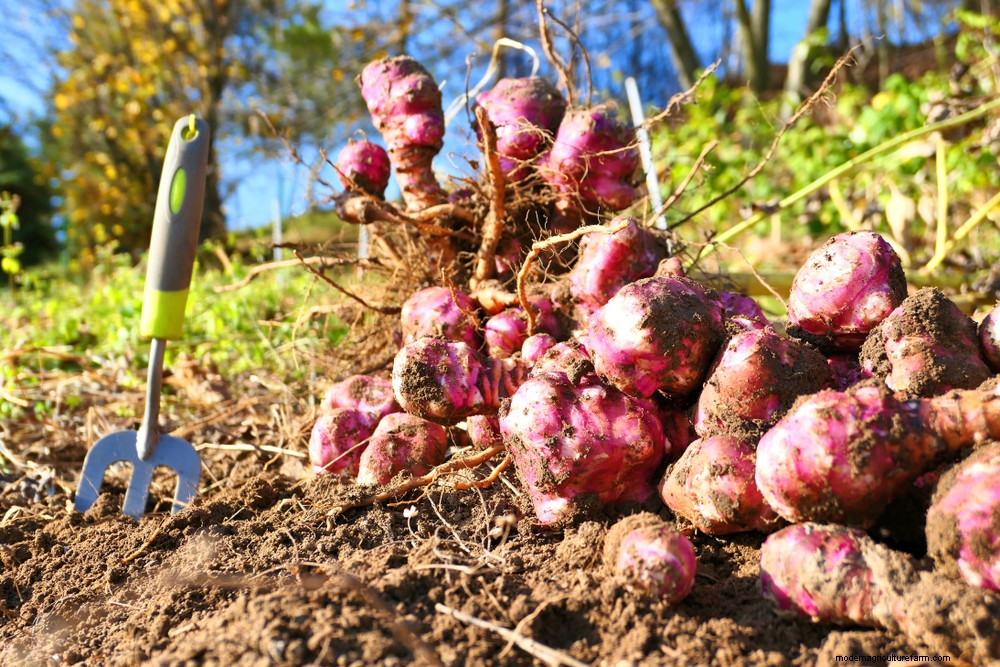
This perennial tuber needs a little bit more attention than perennial vegetables you can leave alone to get on with it. Buy some tubers to plant this spring, then, when you dig up the plants to harvest the tubers in autumn, save some of the best to replant a fresh row for next year.
In a hot summer, you might get some of their pretty sunflower like flowers, and their sturdy stems can form quite a wind-proof thicket for protecting other crops.
The purple-skinned tubers are the nicest. Get them from Pennard Plants.
Rhubarb
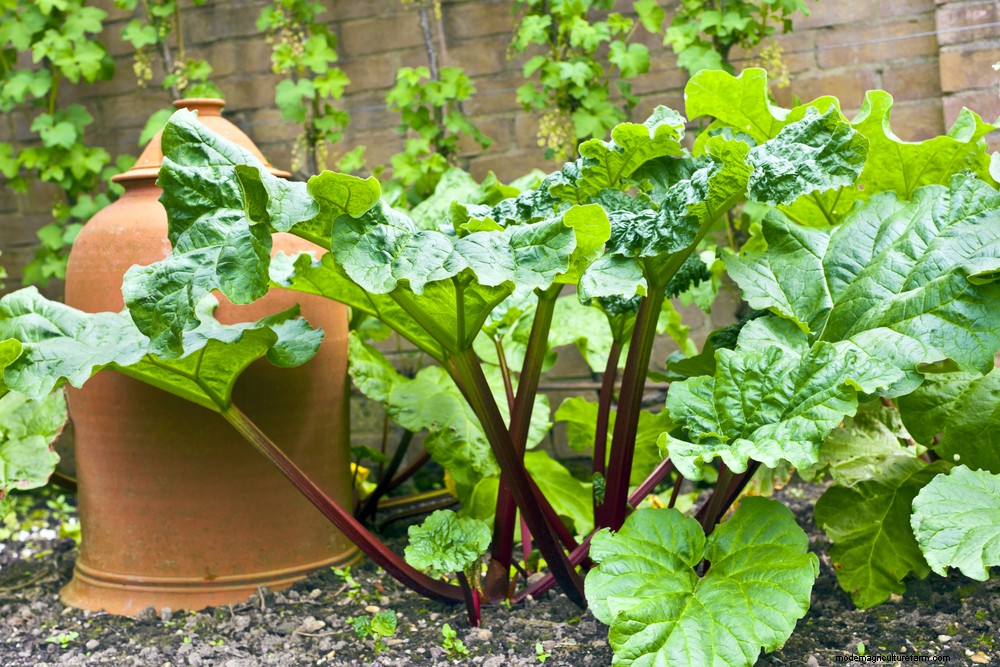
Familiar rhubarb is probably the most commonly grown perennial crop in our vegetable gardens. An exemplary example, it’s reliable, easy-to-grow and tough as old boots. It doesn’t seem to matter how much you neglect it, rhubarb will always produce a crop.
The best thing about rhubarb is its willingness to be dug up and divided, if you want to increase the number of clumps you grow. Tender, pale pink stems of forced rhubarb are a much anticipated late-winter treat – cover clumps with a forcer or bucket to exclude the light and force them into early growth before pulling the pale, delicate stems. Forced clumps need a break for a year to grow without being harvested, so if you have two or more clumps, you can force on rotation.
Good King Henry
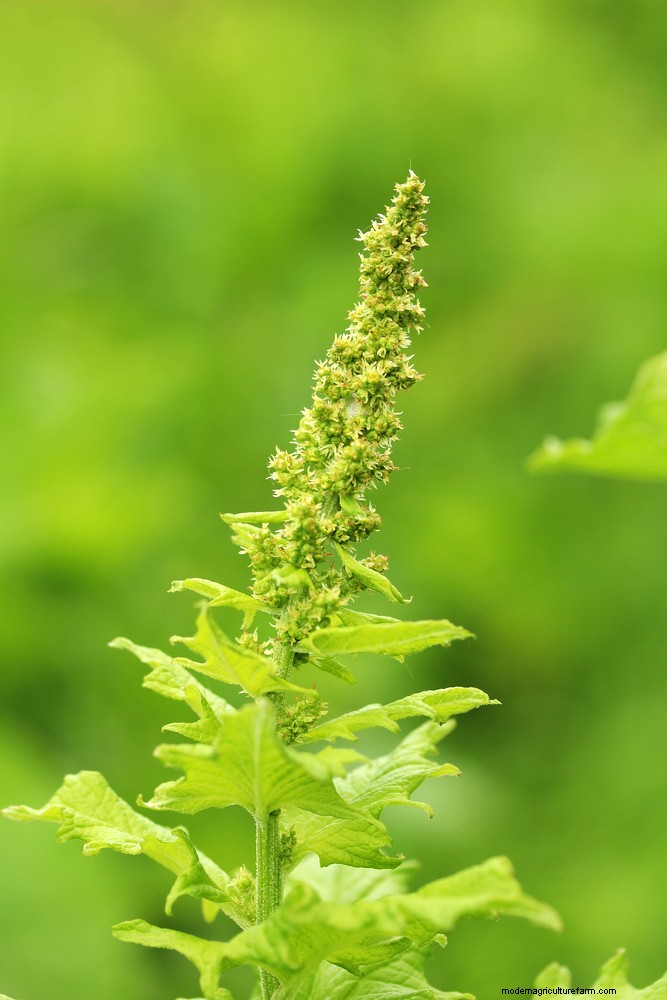
This perennial vegetable was brought here by the Romans, its young shoots eaten as you would asparagus. When they’re around 20cm long, cut them from the plant, remove any leaves and steam them. Later on, the leaves and flower buds can be harvested and eaten, but the stems are the highlight.
Left to self-seed, it can establish quite a colony. If growing plants from seed, remember that the seed needs cold to germinate so either sow it in gritty compost in autumn and leave it outside to germinate in spring or, so in spring by mixing the seed with damp compost and popping it in the fridge for a fortnight before sowing undercover. Pennard Plants can supply.
Salad burnet
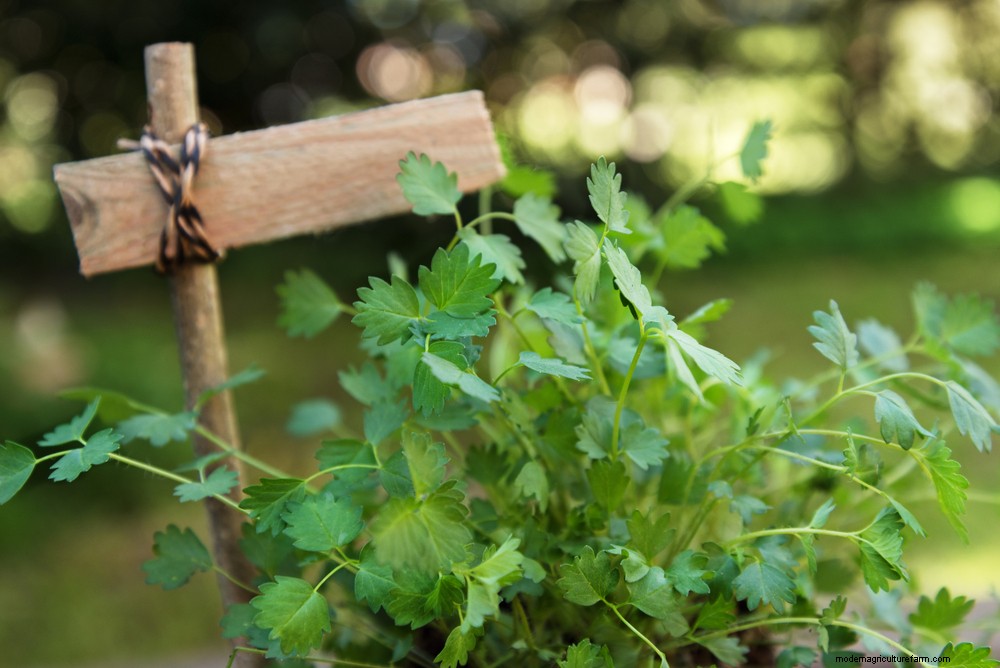
Salad burnet’s saw-edged glaucous leaves emerge in March, followed by incredible pink-red flowers. This low-growing herb occurs naturally in some of the UK’s chalk and limestone grassland, but it takes readily to garden soils, too. The leaves have a cucumber flavour – drop a handful into a jug of water, or Pimms, for a summer refresher.
Start from seed (available from D.T. Brown), directly sown in summer or under cover in modules in spring. It doesn’t like root disturbance so plant out carefully when the risk of frosts has passed. The newest leaves are best for eating and are a succulent addition to salads. Chop tough leaves back in May to encourage the production of new ones.
Don’t forget to sign up for our monthly The English Gardener newsletter, bringing you all the practical gardening advice you need throughout the year. Sign up on the right of this article.
Need plants or gardening kit? Visit our directory of suppliers.


