
Welcome to Modern Agriculture!

Chamomile is an attractive herb that creates beautiful, daisy-like blossoms during much of its budding period. Surprisingly, you can grow chamomile in a greenhouse any time soon because this herb is perfect even for first-time gardeners. It is a bountiful self-seeder and can even spread vigorously in your garden.
The chamomile plant is the collective name of daisy-like plants that belong to the Asteraceae family. The crushed, dried flowers and leaves have been utilized to brew calming tea. The most common of these plants used to make herb infusions are German Chamomile and Roman Chamomile. It was accepted in ancient Greece, Rome, and Egypt as an herbal medicine for illnesses like hay fever, menstrual disorders, swelling, insomnia, muscle spasms, gastrointestinal discomfort, and rheumatic pain.
German chamomile is a seasonal herb that thrives thoroughly and is the plant favorite for those curious in tall-growing flowers. This aromatic mayweed is oftentimes grown for its essential oils and the sweet-smelling flowers that go into your teabag. It is an active self-seeder that is why it is usually baffled as a perennial but it is really an annual herb.
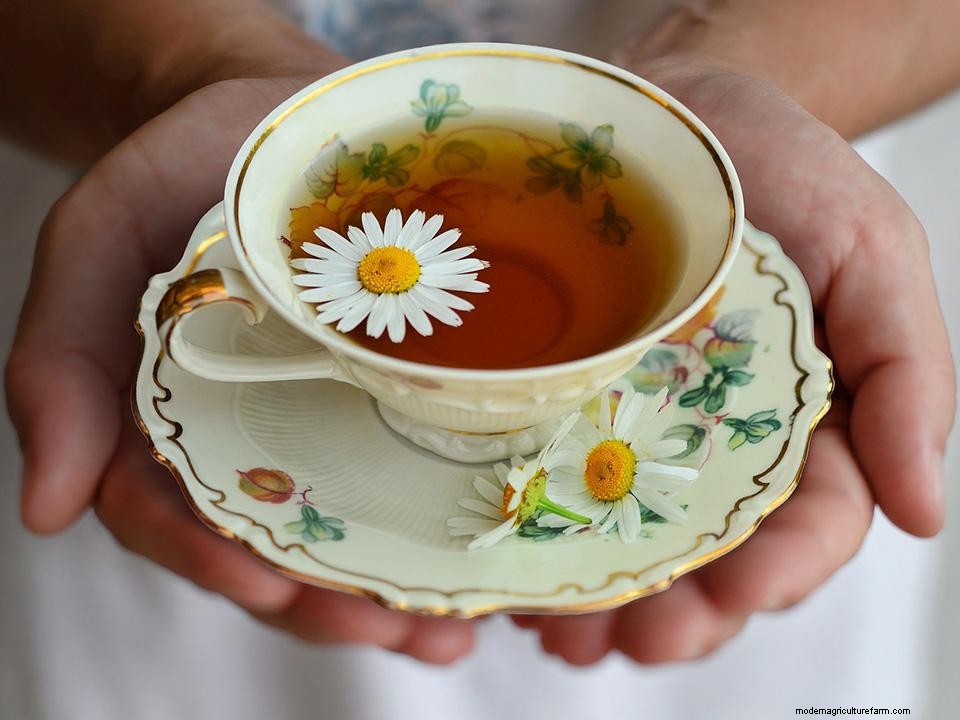
The Roman chamomile is not the same as its German cousin. It is a low-growing perennial. It increases through rhizome and actively take control of a little space if left unattended. It makes it an excellent plant to adopt as a permanent ground covering.
If you want to use it as an actual ground covering, it can stand lightfoot movement. It creates fewer flowers than the German family but it has possible advantages behind what its tall-growing cousin gives.
Even though its leaves and flowers are fit for harvest, it is typically raised instead for its advantages as a ground covering. It is an admirable accent flower in pots, or as an efficient living mulch to lessen weed germination in between established rows of greens. Our beautiful planters and pots collections here will help beautify your garden even more!
Get valuable tips below on planting and harvesting this famous chamomile flower.
The herb requires frequent watering so water regularly without overwatering. Ideally, you should let the ground dry between watering sessions then apply water until it soaks. Overall, two inches of water each week should suffice.
Chamomile plants may fail especially if it lacks adequate moisture. A misting system produces a constant, smaller quantity of water every day. This will bring a uniform supply of moisture to your herbs. You will be guaranteed of steady growth as well. A greenhouse misting system can automatically humidify without generating too much moisture.
The herb thrives even in soils with an average concentration of nutrients. Moreover, it tolerates a wide pH range. Grow chamomile in a greenhouse with the best soil. It should be well-drained and contains essential minerals. The pH can range from 5.6, which is acidic to 7.5, which is mildly alkaline but the ideal pH is 6.5.
Like it? Pin it!
Chamomile prefers full sun but can tolerate a fair amount of shade. The seeds need light and warmth to develop at their fullest potential. Chamomile appreciates being planted near a sunny spot.
Be sure to provide them with no more than 16 hours of light per day. They expect a complete 8 hours of rest from light. It is better to use fluorescent lights because incandescent lights can be extremely strong for immature seedlings. They will also develop under grow lights. These greenhouse grow lights will help improve your seedlings.
Chamomile leaves may tend to be bitter. Stick to its flowers for your tea. You can easily pluck off the flower peaks whenever you are ready. The best time to collect the flower is when the petals start to curl down, instead of turning out straight as they usually do. Do so in the morning just after the leaves shed their mornings’ last dew.
Have it in your cupboard. Now is the chance to warm up a cup of tea along with a spoonful of honey!


