
Welcome to Modern Agriculture!

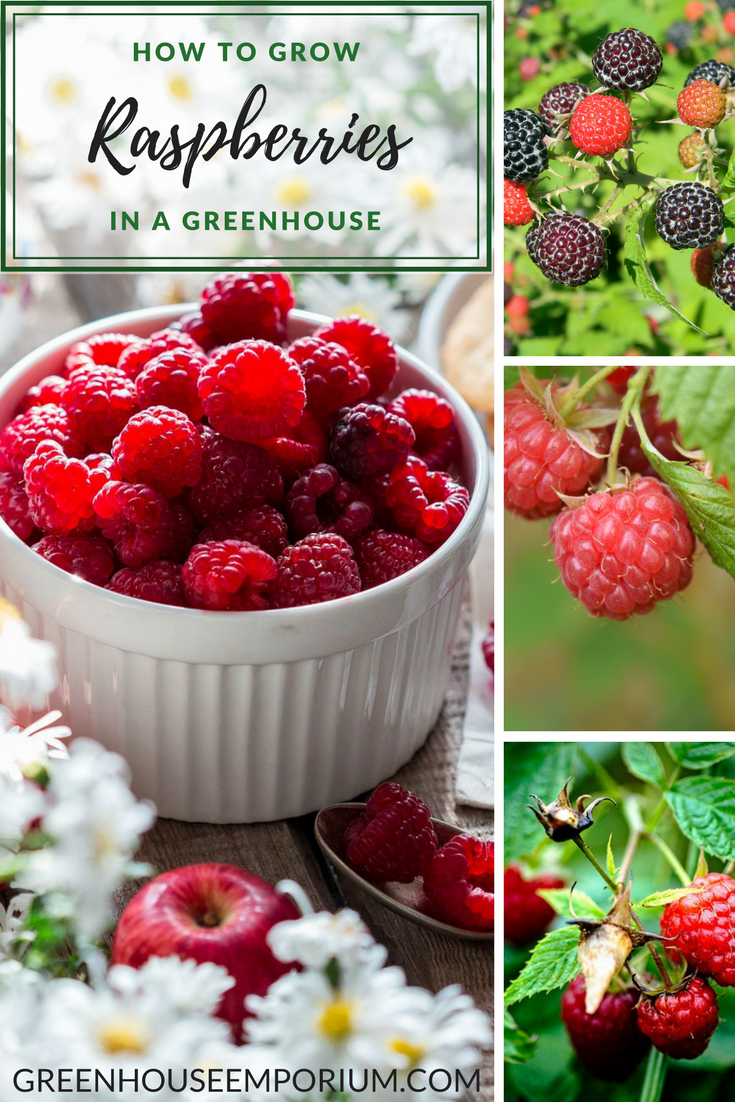
Raspberries are a high-value crop uniquely suited to greenhouse gardening production all year round. They are popular garden fruits that are easy to grow. They do not demand auxiliary lights and they grow abundantly in a nearly cold environment. A greenhouse temperature of 70°F is best for production.
The raspberry plant refers to species belonging to the genus Rubus. They are popular greenhouse fruits that are so easy to plant. These perennial plants in the rose family produce aggregate fruits by the same name. For the purposes of cultivation, there are two types of raspberries: summer-fruiting and ever-bearing.
Ever-bearing raspberry families are more stable than other varieties for off-season results in a greenhouse where situations are slightly tricky to control. Most gardeners plant summer-fruiting raspberries, which are available for harvesting in early the early summer season.
Both of these types are easy to grow in a greenhouse kit if you follow the guidelines presented below.
Like it? Pin it!
You have 2 options for planting your raspberry plants in your greenhouse:
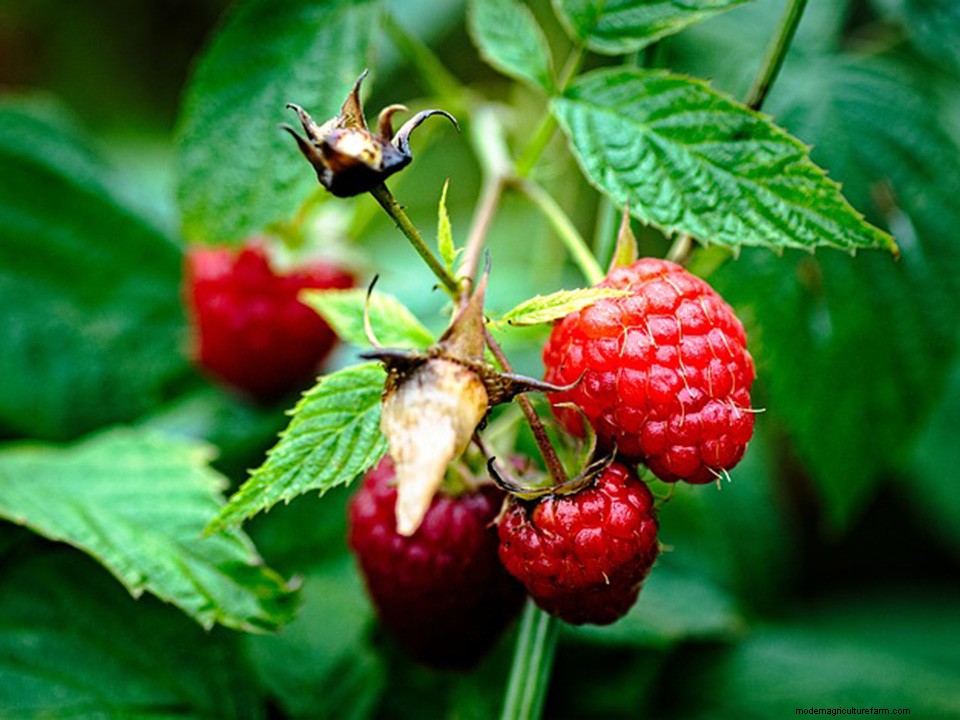
Raspberries are hardy, however, watch out for Japanese Beetles, cane borers, and spider mites. In addition, rabbits can be detrimental. Raspberries are also susceptible to powdery mildew.
Key actions, including reliable soap and cleanliness, are applied regularly to control and regulate outbreaks. Infestations can be maintained through constant monitoring and a combination of pest control plans.
Good relative moisture helps prevent spider mites. Spider mite attacks are expected to be an endless difficulty and an obstruction in raspberry return.
Thrips and aphids are additional possible pest difficulties. Although observed on some plants, neither thrips nor aphids infestations have been critical.
Trellises provide an inexpensive disease control as the canopy will be clearer.
Raspberries need regular watering to grow well. Ideally, an inch and a half of water per week will suffice. Note that regular watering is preferred to deep soaking. Overhead watering will likely produce rotten raspberries. It is better to use a drip irrigation system. Check out the Genesis drip irrigation system here!
Raspberries thrive in rich, moisture-retentive, fertile, well-drained soil that is loose enough to allow for proper aeration, lightly acidic soils, which are weed-free. Work the soil well and add two inches of aged manure or mature compost. The optimal pH level of the soil should range between 5.6 and 6.2.
The plant requires a full day of sun so position your greenhouse kit accordingly. In addition, ensure that you provide adequate lighting since the product will be meager if the plant grows in shady conditions.
Raspberries do not need high light levels, however, supporting lighting is needed throughout the winter season. It will enhance the growth, flowering and, finally, the harvest. Increasing the day length to 16 hours is helpful both in photoperiodic lengthy day effect and capability to provide sufficient daily cumulative amounts of light. At below light levels, the percentage of plant growth is expected to be limited.
Raspberry plants expect chilling temperatures before they bear fruits. They must consume about 200 hours under 40°F. Your greenhouse must be maintained between 60°F to 70°F. If your greenhouse normally less than 65°F, you may want to think of heating your greenhouse.
Bumblebees are simple to maintain and control. They continue to be more productive in cloudy skies and lower conditions than honeybees. Both effective pollinations have been reported with bumblebees compared to honeybees inside greenhouses.
Successful pollination can also be accomplished by hand using VegiBee Garden Rechargeable Pollinator during times of slow bumblebee movement. More details about the VegiBee Pollinator…
Once inside the greenhouse, they will bloom in about six weeks and start to bear fruit ten weeks after being put in the greenhouse. The harvest season continues between eight to ten weeks.
Your raspberries are waiting to be harvested when they come off the plant with a mild quick pull. Pick the berries in the morning after the dew has dried out. Ideally, do this every couple of days.


