
Welcome to Modern Agriculture!

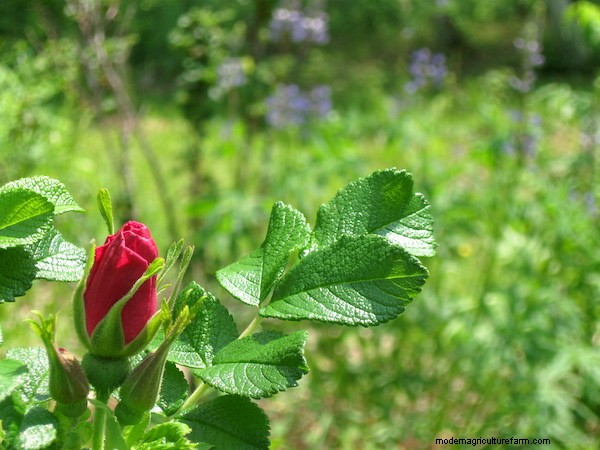 A few years ago a friend of mine asked me to write an excerpt for her book, Gardening Like a Ninja: A Guide to Sneaking Delicious Edibles into Your Landscape. My first thought was, why on earth would you have to sneak anything in? There are plenty of edible landscape plants in just about any yard, provided you know where to look.
The trick is, I didn’t always know where to look. Years ago, when we first moved to our homestead, our plan was to establish as many perennial edibles as possible. Our first step in establishing an edible landscape was to take stock of our foundation.
Taking a look at the plantings that already exist on your property, we learned that many of them were, in fact, tasty edibles, they’re just not the same ones you’d find in the grocery store. Hostas and peonies, for example, are both considered delicacies in Japan. I’d already read about those years ago, but I knew there must be more tasty edibles lurking in our yard already.
Quickly researching other established plants on our land led me to find tasty uses for catmint, roses, crabapples, black locust blossoms, daylilies, hibiscus, sumac, impatiens, linden trees, violets, lilacs, and tulips. Many of these plants were grown for their showy blooms, but those also happen to be edible flowers.
Beyond their edible flowers, many of them also have edible shoots, leaves, and tubers too. That means these simple flower garden plants not only offer tasty edible blossoms to top salads and flavor drinks, but they may also provide more substantial nutrition too.
Knowing our land was also the first step in taking ownership of what was ours. Somehow, knowing every bush and tree in the yard by name helped us find a connection to our plants and the world around us that I can’t imagine we’d have achieved otherwise. Strange as it may seem, walking into the yard and picking fresh violets and other edible flowers for a dinner salad with guests not only impressed my company but also helped make my house feel a lot more like a home.
Knowing that plants in your existing perennial beds are edible is also handy in other ways, especially if you’re a parent.
When I was a small child, I ate a significant portion of one of our hedge bushes, and my mom was quite concerned. She always thought that bush smelled funny, and must be toxic. After I’d eaten it, she searched high and low to identify it to make sure I’d be ok, only to find out that the strange hedge was actually a rosemary bush in bloom…
A few years ago a friend of mine asked me to write an excerpt for her book, Gardening Like a Ninja: A Guide to Sneaking Delicious Edibles into Your Landscape. My first thought was, why on earth would you have to sneak anything in? There are plenty of edible landscape plants in just about any yard, provided you know where to look.
The trick is, I didn’t always know where to look. Years ago, when we first moved to our homestead, our plan was to establish as many perennial edibles as possible. Our first step in establishing an edible landscape was to take stock of our foundation.
Taking a look at the plantings that already exist on your property, we learned that many of them were, in fact, tasty edibles, they’re just not the same ones you’d find in the grocery store. Hostas and peonies, for example, are both considered delicacies in Japan. I’d already read about those years ago, but I knew there must be more tasty edibles lurking in our yard already.
Quickly researching other established plants on our land led me to find tasty uses for catmint, roses, crabapples, black locust blossoms, daylilies, hibiscus, sumac, impatiens, linden trees, violets, lilacs, and tulips. Many of these plants were grown for their showy blooms, but those also happen to be edible flowers.
Beyond their edible flowers, many of them also have edible shoots, leaves, and tubers too. That means these simple flower garden plants not only offer tasty edible blossoms to top salads and flavor drinks, but they may also provide more substantial nutrition too.
Knowing our land was also the first step in taking ownership of what was ours. Somehow, knowing every bush and tree in the yard by name helped us find a connection to our plants and the world around us that I can’t imagine we’d have achieved otherwise. Strange as it may seem, walking into the yard and picking fresh violets and other edible flowers for a dinner salad with guests not only impressed my company but also helped make my house feel a lot more like a home.
Knowing that plants in your existing perennial beds are edible is also handy in other ways, especially if you’re a parent.
When I was a small child, I ate a significant portion of one of our hedge bushes, and my mom was quite concerned. She always thought that bush smelled funny, and must be toxic. After I’d eaten it, she searched high and low to identify it to make sure I’d be ok, only to find out that the strange hedge was actually a rosemary bush in bloom…
If you’re just looking for a quick list, here’s a quick list of edible flowers below. If you’re looking for some tasty recipes for using each flower, or wondering how they taste, read on my friends.
An old school flower garden favorite, Angelica has been grown and eaten since the middle ages. The beautiful flowers are themselves edible, and you can eat them right out in the garden.
How does angelica taste? Floral, with hints of anise and carrot, along with a bit of mild bitterness.
The flower stalks are often candied, and it was a popular confection in the dark ages in Europe. According to Hank Shaw at Honest Food, here’s how to make candied angelica:
“First, you need to know what candied angelica is. It is a very old form of candy. Flavor and structure comes from the herb stems, sweetness from cane sugar. The stems are blanched, then soaked in heavy syrup, boiled in that syrup, soaked again — several times — until they turn translucent. You then dry the stems a bit and roll them in caster sugar.”
Angelica is also a medicinal flower, and it was revered as the “herb of angels” historically. According to WebMD, Angelica is used to treat heartburn, flatulence, loss of appetite, bed wetting, arthritis, stroke, dementia, circulation problems, anxiety, fever, and insomnia.
Quite the list! They also note that it was used historically to “bring the menses,” so don’t eat it if you’re pregnant.
We don’t grow angelica in the garden, but I found a wild patch next to our favorite summertime swimming hole last year. This summer, I’m excited about harvesting some of our own and trying out these angelica recipes:
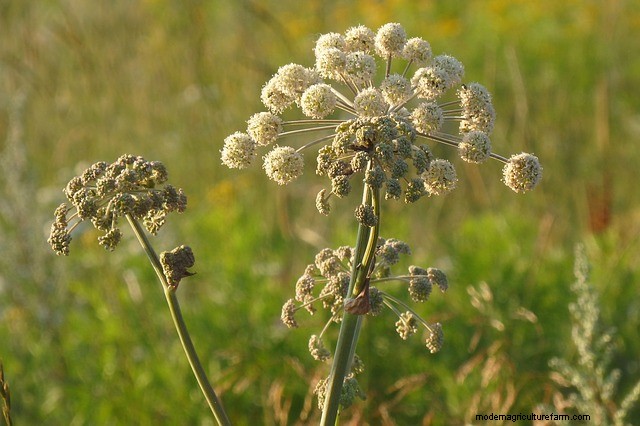
Angelica Flowers
A favorite of the bees, Anise Hyssop has a wonderful scent that fills the garden in midsummer. The flowers and leaves have a delicate black licorice flavor that’s pleasant but not overwhelming. They’re tasty fresh, or you can add anise hyssop blossoms to baked goods as well. Try any of these anise hyssop recipes:
Still looking for more ideas? Here’s a list of things to do with Anise Hyssop. My favorite use? Just leaving it be and watching the bumble bees work the beautiful fragrant flowers in the summertime…
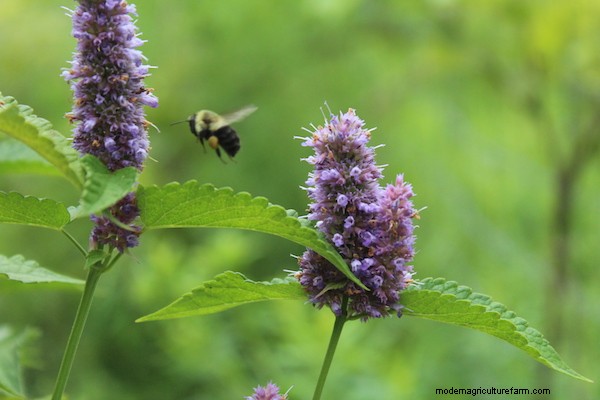
Anise hyssop in my garden. It’s a favorite of bumblebees.
With a bright citrus taste and a hint of sour, begonias are a flavorful edible flower that’s quite versatile. They can be eaten alongside savory or sweet dishes equally well. Eat the weeds notes that begonia blossoms and leaves are tasty raw, and that the stalks can be cooked like rhubarb.
Try any of these begonia recipes:
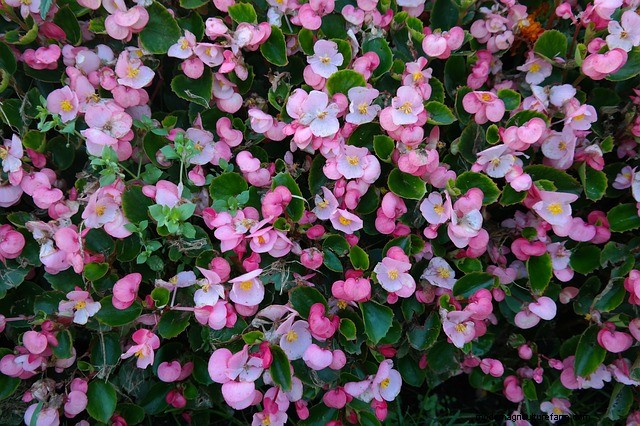
Pink Begonia Flowers
With a flavor reminiscent of fresh cucumbers, borage flowers are often added to cool summertime drinks. While the edible flowers tend to get all the attention, borage leaves are also edible and make a lovely salad green. The greens can also be served cooked, and added to anything in place of spinach.
Hank Shaw has a pretty thorough guide to cooking borage, as well as a borage soup recipe. Here are a few more borage recipes to keep you cooking:
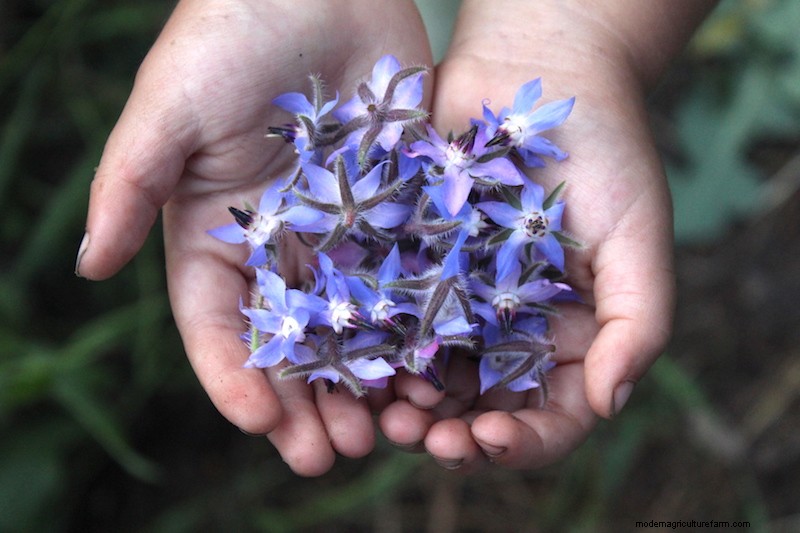
My daughter with a tasty crop of borage flowers from our herb garden.
In the late spring and early summer, our black locust trees are covered with fragrant white blossoms. For about 2 to 3 weeks each year, you can smell them from many yards away. You can also “hear” them, as the trees attract so many bees that they seem to hum when in bloom.
The bees know where the good stuff is, and if you can manage it, pick a few of the edible blossoms to make black locust fritters! While that’s the most popular way to enjoy these fragrant edible flowers, there are also a few more black locust recipes you should try:
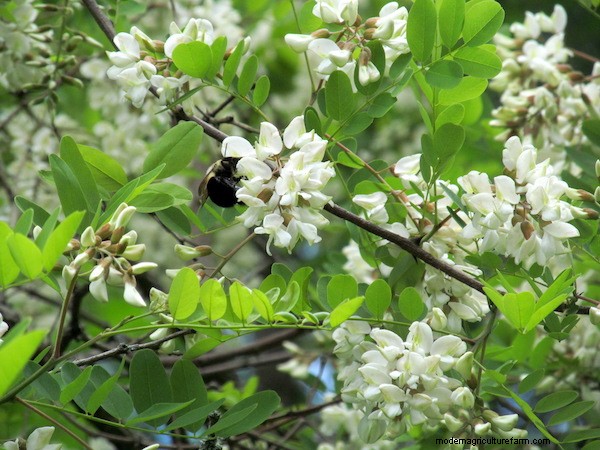
A bumble bee enjoying nectar from our backyard black locust flowers
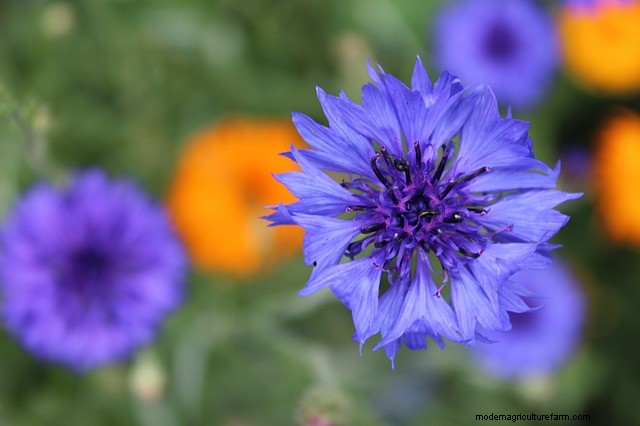
The beautiful orange/yellow flowers of calendula make a beautiful annual in the flower garden, and their bright edible flower petals add color to all manner of dishes. For the most part, they add bright colors to recipes, but not a lot of flavor. They’re used to create these bright natural herbal cupcake sprinkles, and the petals are beautiful in these Calendula and thyme shortbread cookies.
A well-known herbal medicinal, calendula is often used topically to treat skin issues. We use a calendula infused oil on burns, but it’s also anti-inflammatory, antiviral, anti-fungal, anti-microbial, and astringent. This makes it the perfect choice for an all-purpose calendula salve.
Beyond its external uses, calendula is also used internally to treat muscle spasms, sore throat, menstrual cramps and stomach complaints (source).
Calendula flower is used to prevent muscle spasms, start menstrual periods, and reduce fever. It is also used for treating sore throat and mouth, menstrual cramps, cancer, and stomach and duodenal ulcers. Calendula has also been used for measles, smallpox, and jaundice.


