
Welcome to Modern Agriculture!

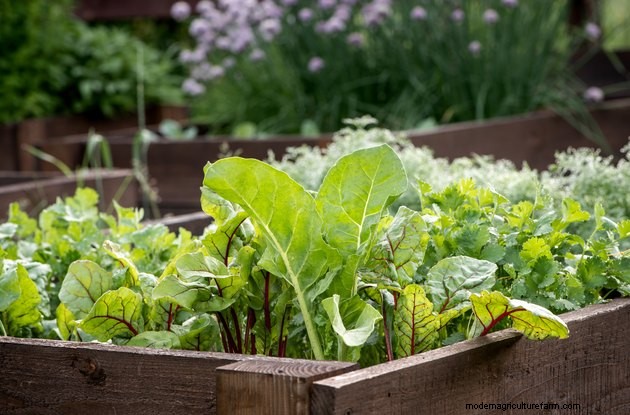
Container vegetable gardening offers many merits to a home gardener, and in some cases, it's an even better method than traditional in-ground gardening. Traditional vegetable gardening can take up a lot of yard space, and it can be hard work, especially if you have physical limitations. There are numerous reasons container vegetable gardening is a good idea, but there are some things to keep in mind if you practice this very rewarding method.
Video of the Day
In addition to the obvious advantages for gardeners with small spaces or who need the easy accessibility offered by raised containers, there are several other advantages to consider:
Almost any edible plant can be grown in a container provided that the size and depth are right, but some veggies are better suited than others for this type of gardening. Perennial edibles such as asparagus (Asparagus officinalis, zones 3-10), strawberries (Fragaria x ananassa, zones 5-9), artichokes (Cynara cardunculus, zones 7-10), rhubarb (Rheum rhubarbarum, zones 3-8) and some herbs can be tricky to grow in containers, especially in cold climates where exposed containers can freeze so hard that even very hardy perennials have trouble surviving. That's not to say that perennial vegetables can't be grown in containers, but you may need to take special measures to do so.
Vegetables that are quite large are also questionable choices for vegetable container gardening, especially if their production is not prolific. Sweet corn (Zea mays), for example, typically produces only one or two ears per plant, so to get many meals, you need to grow quite a few plants in many containers. Pumpkins (Cucurbita) can send out vines that are up to 20 feet long, so while the plant's roots can certainly be contained within a pot, you have to consider whether there is space for the marauding vines to follow their natural urges.
Great vegetables for container gardening include:
Other vegetables that do well in containers include peas (Pisum sativun), potatoes (Solanum tuberosum), squash (Cucurbita spp.) and cucumbers (Cucumis spp.). Some of these will require trellises or extra-large containers for best results. Dwarf vegetable varieties are always worth considering for container gardening.
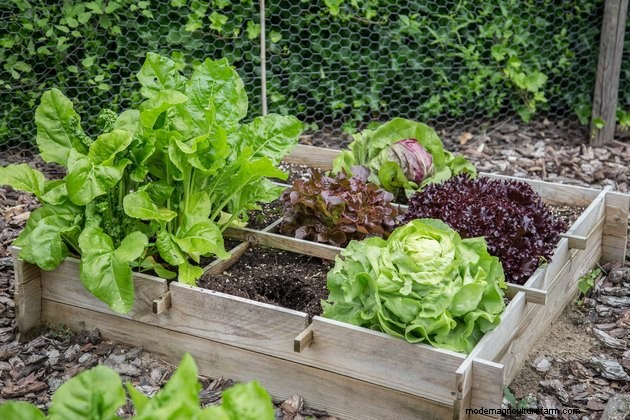
There are hundreds of choices when it comes to choosing pots for vegetable container gardening, ranging from large raised-bed planters to tiny clay pots to hold a single herb plant on a deck railing, but the key to growing any vegetable successfully is good potting mix and a container that has good drainage and is made from food-safe material.
Also, tailor the size of the container and its material based on the scale and aesthetics of the space it will occupy. As you do with any flower planter, try to match the style of the vegetable container to the style of your home. A 5-gallon plastic bucket can make a fine tomato planter for a rustic home with a farm-style landscape, but it will look out of place on a patio near roses growing in Chinese ceramic pots.
If you are purchasing a large ornamental container that will remain outdoors year-round, it should be freeze-resistant. Some glazed ceramic or concrete pots will crack, especially if they are left full of saturated soil for the winter. Even standard clay pots may slough and flake if they are left outside through the cold winter months.
Make sure the container has good drainage holes. This can be especially problematic if you are repurposing a metal tub or other metal container; you will need to drill several holes for drainage. Some decorative glazed ceramic pots are more suitable for indoor use since they may have only a single small drainage hole or sometimes no hole at all.
It's a good idea to use pot feet or bricks to elevate the pots slightly so that excess water can flow freely through the drainage holes. A good heavy material will be less likely to blow over in the wind.
Some common materials used for container vegetable gardening have varying advantages and drawbacks:
Bigger is usually better when it comes to serious container vegetable gardening. Some authorities suggest that 16- to 24-inch-diameter pots are ideal, and less than 12 inches will not be very suitable except for some small herb plants. Depth will be important for root vegetables, like potatoes and carrots. With very large containers, you may want to mount them on wheels that allow you to move them around on a deck or patio to take advantage of moving sun patterns.
General-purpose potting mix, even though it is sometimes called potting "soil," really has no true soil at all. This type of soilless potting mix is best for growing all potted plants, including most vegetables. You can also save money by making your own potting mix with a mixture of vermiculite, peat moss, powdered limestone, super phosphate (essentially a 0-20-0 granular fertilizer) and general-purpose granular fertilizer (6-12-12 or 5-10-10 formulation).
Soilless mixes are usually based on peat moss, which is moisture-retaining, organic material that also provides some nutrient value. A soilless mix will also be free of weed seeds and pathogens that can multiply uncontrollably if you use ordinary garden soil in your containers.
Whether or not you can reuse the same potting mix year after year or must fill containers with fresh soil every year is a matter of some debate. Some gardeners insist that you must start fresh with new potting mix each year, but plenty of experienced gardeners have great results by simply pouring the old mix into a large mixing container or wheelbarrow, blending in some additional peat moss or compost along with more granular fertilizer and then reusing the mixture when spring planting arrives.
However, if a particular plant suffers some fungal, viral, or bacterial disease or a nematode problem, it's best to discard that potting mix completely and use fresh mix when you next plant in that container.
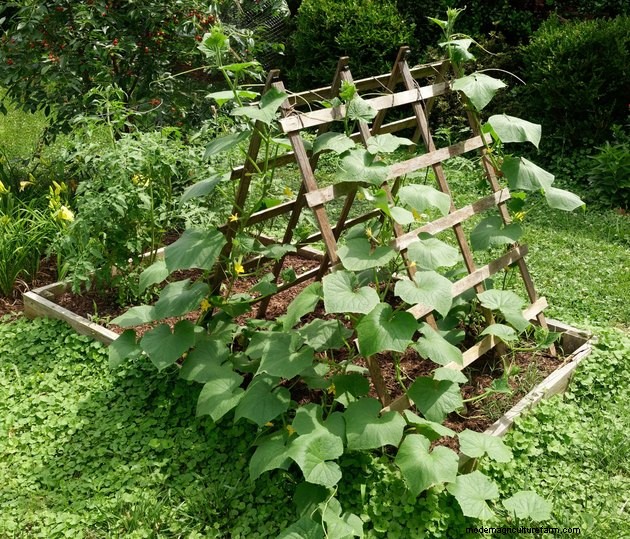
Pole beans, cucumbers and any other vining plants will probably need netting or trellises on which to climb. Some gardeners even grow melons trained up trellises in large containers. Sometimes, a single sturdy plant stake is enough; in other cases, a narrow trellis firmly anchored in the pot is the best bet.
Tomatoes, eggplants, peppers and other bushing plants may need cages placed in the pot to provide support for the branches. Such plants need fairly large, heavy pots to make this practical.
Vegetables growing in containers have most of the same cultural needs as they do when planted in the ground when it comes to dealing with pests, diseases and weeds, but there are some aspects that are unique to container vegetable gardening:

