
Welcome to Modern Agriculture!

Container gardening for vegetables, herbs and flowers isn't what we typically think of when we imagine growing enough of our own food to take us through a year or do a lot of preserving. Self-sufficiency wise, we think of large fields or at the very least, large garden plots.
But container gardening should definitely have a place in your homestead gardening plans, especially if you want to start growing your own food at home but you don’t have a lot of space.
Maybe you live in an apartment or small townhouse without a proper yard. Or perhaps you have some land but you’re looking for ways to gain more control over your soil, keep pests and diseases at bay or even simplify your garden by making your plants easier to access.
Then again, maybe time is your biggest issue, and you’re looking to start a low-maintenance garden that doesn’t require hours of weeding and seeding. If any of the above sounds familiar, then container gardening might be the answer to your gardening problems.
Container gardening is gaining in popularity as more people take an interest in producing some of their own food at home, but have less space and time to dedicate to large gardens.
Container gardening allows just about anyone to grow some of their own fruits, veggies, flowers and herbs without needing a large yard or a ton of time to do so.
And it really is as simple as getting a few pots, buckets and/or other various containers of varying sizes, filling them with some good potting soil and planting some seeds! Well, it’s almost that simple.
As mentioned above, container gardening is a great option for anyone who wants to garden, but lacks the space needed to grow a traditional in-ground or raised bed garden. Even if all you have is a small balcony, you can find a few containers, pots or planter boxes to fit your space and you’ll have all you need to grow an herb garden and/or a few fruits and veggies even in the smallest of spaces.
The types of plants you choose will depend on the size of your containers and the location and microclimate of your growing space (hot and sunny or cool and shady?), but otherwise you truly can grow just about anything in containers.
Container gardening is also a great option if you’re super busy because you can keep your garden as small and manageable as you like and add to it as you see fit. And you spend much less time weeding beds, dealing with pests and battling diseases than you do with traditional garden beds.
Container gardening also allows you to have greater control over your plants and your soil, so it can be a good option even for those living on larger plots of land. Container gardens have much fewer weeds than traditional in-ground gardens and are also much less susceptible to damage or infestation by diseases and garden pests. If a plant does become infected or infested, it is much easier to deal with as you don’t have to worry as much about it spreading to other plants in your garden as they don’t share the same soil!
You can also gain more control over the microclimate of your garden zone as planting in containers allows you to move plants around to different locations at different times of day or season. For example, you can maximize sun exposure by moving your containers around your property to follow the sun during the day, or give your plants some much needed respite from the sun by moving them to a shady spot on particularly hot summer days.
Containers also tend to retain more heat, so seeds may even germinate quicker or earlier than they would in the ground.
Lastly, most large pots retain more water than traditional garden beds and therefore require less frequent watering. However some pots tend to evaporate water quicker, so it’s important to know the pros and cons of the size and style of container you’re using.
Pros & Cons of Container Gardening:
Pros:
Cons:
You can grow pretty much anything in a container… in theory anyway. Obviously, the larger the container, the more space you have for roots to grow and spread out, which is vital to certain plants.
These fruits and vegetables can be grown in containers, but you need to make sure the container is large enough for roots to spread out and for the plant itself to grow to full size.
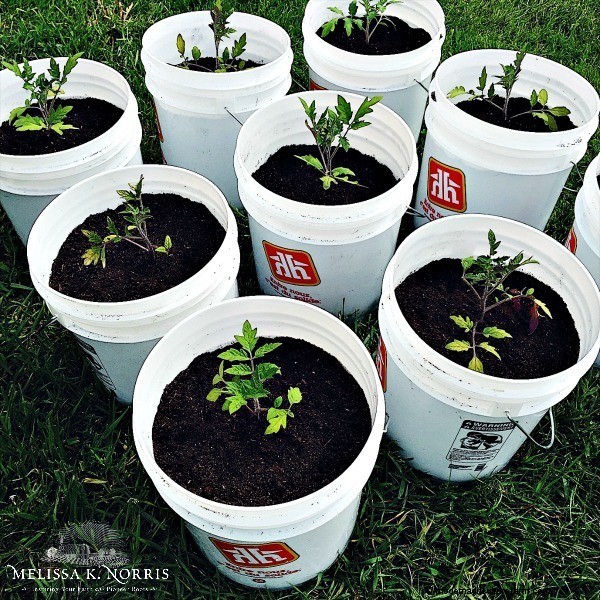
We have had very good success growing tomatoes in 5 gallon buckets and it has become our preferred growing method as we continue to add more buckets (and hence, more tomato plants) each year.
Using buckets has made it easy to expand our garden without having to dig up topsoil or build new raised beds. We add a few more per year, place them in a sunny spot in our garden and are blessed with higher and higher yields of tomatoes each year!
Potatoes likewise grow very well in buckets or even large sacks.
Root veggies such as carrots or beets will grow equally well in large enough containers or planter boxes where they have enough space to grow out and down into the soil.
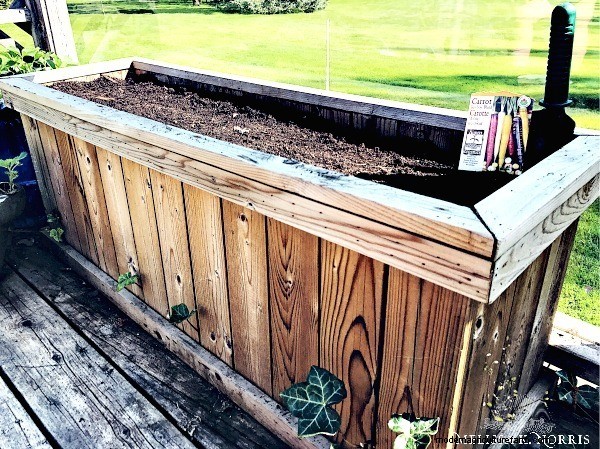
This year we are growing our carrots in our cedar planter box on our balcony as we’ve been battling an almost indestructible soil-borne pest called wireworms that especially love burrowing into roots veggies and destroying them from the inside out. By growing our carrots in a planter box on our deck, high up off of the ground, we pretty much eliminate the risk of wireworms destroying our carrot crop this year.
Many other fruits and veggies grow amazingly well in containers, including garlic, strawberries and even peas and beans as long as they are given a trellis to climb.
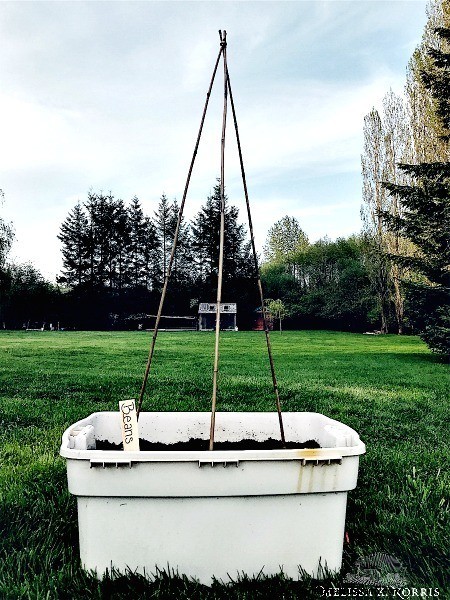
This year we are growing green beans in buckets to allow more space in or raised beds for other crops. We simply drilled drainage holes in the bottom of a large storage container and used bamboo sticks to create a teepee in the middle for the beans to climb.
And needless to say, you can’t go wrong with an herb garden.
Many people prefer to grow their herbs in containers even if they have space in the garden. This allows you to keep your herbs on your deck or just outside your door, making them easily accessible when needed (like when you’re in the middle of cooking a meal and need to run outside to snip a couple sprigs of rosemary).
I could go on and on about what you can grow in containers, but suffice it to say that where there is a will, there is a way… And there’s a container to fit it 🙂
List of vegetables to grow in containers:
*Must use a large enough container to give root vegetables space to grow outward and downward.
While you can use pretty much anything as a container, choosing the right container for the plant you’re growing is the key to success. The containers will inspire your urban gardening ideas as well.
Obviously you will want to choose a container that will be large enough to accommodate whatever you’re growing without stunting its growth, so do your research and know how large your plant will get (and how much space its roots will need) before choosing a container.
Our personal favorite is the standard 5-gallon plastic bucket. We buy ours from our local hardware store for around $5.00 a bucket. We then drill holes in the bottom to ensure proper drainage (usually about half a dozen half-inch large holes will do the trick), and fill with potting soil mixed with a little compost or fertilizer.
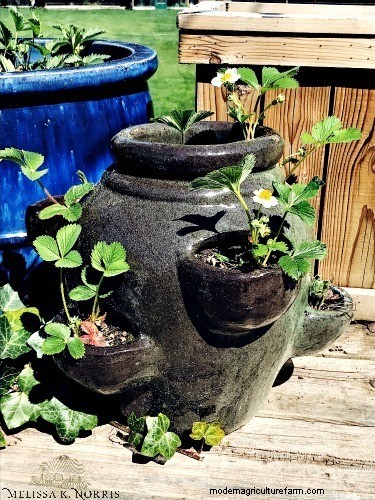
A vertical stacking system like the Greenstalk Tower is a great way to grow a lot in a small amount of space. The pockets are deep enough for root vegetables and contain enough soil you can grow perennials in them like strawberries. Use coupon code: PIONEERING for $10 off
Plastic containers in general tend to be among the cheapest, however they also retain more water which can cause problems if you’re trying to grow in a wet climate. Likewise, black plastic absorbs heat, which can cause plants to overheat in the extremely hot summer months. But you can work around these issues by moving plants out of direct sunlight if it gets too hot and being careful not to overwater or moving plants under cover if you get an excessive amount of rain.
Some other common choices for containers are clay pots, including terra cotta and ceramic. Clay pots are porous and tend to evaporate water much quicker than plastic and keep plants cooler as they allow more air flow. They are also quite visually appealing and all-natural, making them a nice aesthetic choice for your deck or potager.
The cons of clay pots are that you need to water more often and they are susceptible to damage and breaking as they are delicate. They can crack if left out over the winter as water that gets trapped inside freezes and expands, shattering the pot.
Another choice is glazed clay pots. We grow our strawberries in a glazed clay strawberry planter and find that it offers the perfect balance between keeping moisture in and allowing it to drain out. The downside to these glazed clay pots is that they tend to be fairly expensive.
You can also use metal, which tends to be thin and fairly lightweight making metal pots easy to move around. However metal does retain more heat and it will eventually rust, although a little rust is more of an aesthetic issue than a problem for your plants.
At the end of the day, you can use just about anything as a planter. I have personally used old rain boots, an vintage galvanized metal water bath canner, storage bins, garbage cans and repurposed wooden crates. So long as you drill drainage holes in the bottom and choose a container that is large enough to accommodate whatever plant you’re trying to grow, you shouldn’t have a problem 🙂
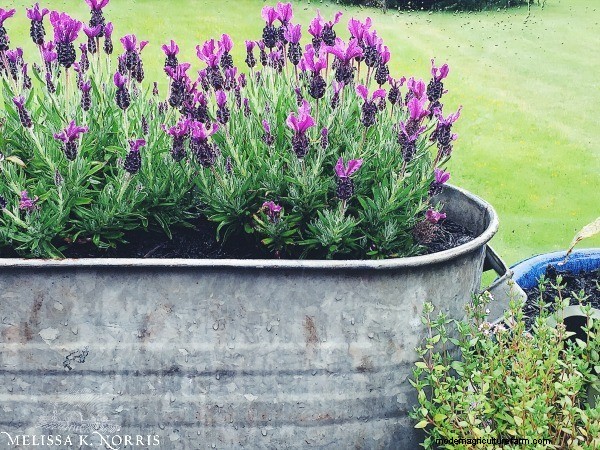
Popular container options:
Once you’ve chosen your containers and decided on your crops, it’s time to get planting!
Likewise, if a plant is diseased, get rid of the plant and the soil. Do not add to compost as this can infect your new soil. This is one of the major upsides to container gardening as you can contain diseases and pests without them spreading. If one tomato plant gets blight, your others can still be saved!
Best practices for planting and care in the container garden:
While there are many things you can do to optimize your container garden, don’t worry too much about following every step or getting it all just right. Have fun with it!
Try new things; New crops; New containers; New methods! As with all gardening, somethings will work and some won’t. Enjoy your successes and learn from failures. And always, try, try again:)


