Welcome to Modern Agriculture!

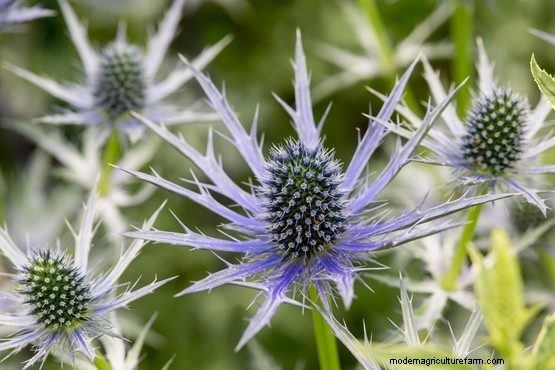
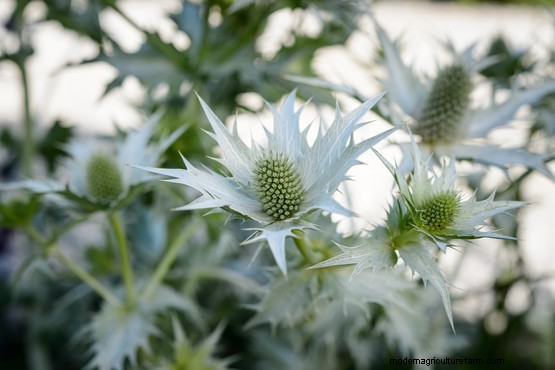
Eryngiums are also known as sea holly: they grow well in coastal areas and have spiny leaves and a characteristic ruff around the flowerheads.
The thistle-like flowers are made up of tiny flowers packed together in a tight cluster. With colours ranging from grey to intense cobalt blue, eryngiums are striking plants. There are over 250 species and lots of garden cultivars to choose from. They look wonderful in gravel gardens or mixed herbaceous borders and they’re good for attracting pollinating insects.
Eryngiums make good winter silhouettes and the flowerheads are great for cutting and using in fresh and dried arrangements.
Take a look at our handy eryngium Grow Guide, below.
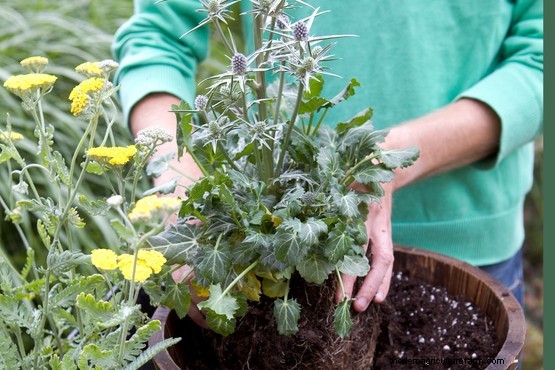
Eryngiums need plenty of sunshine and free-draining soil. They can tolerate poor soil, and a spot at the foot of a wall is a good position as the soil will remain dry over winter. It’s also a good idea to plant eryngiums away from the edge of a border or path, as their spikes can be quite sharp. They work well in gravel gardens and don’t need a lot of watering.
Dig a generous hole, larger than the pot your eryngium came in and add a handful of grit to boost drainage. Follow our step by step guide to planting perennials.
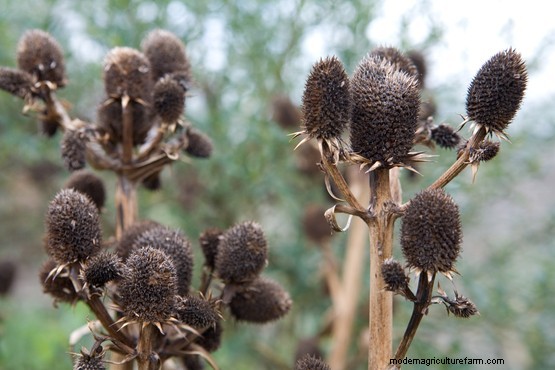
Species eryngiums can be grown from seed, although if you have a named cultivar, take root cuttings to ensure it stays true to type. Follow our step-by-step guide to taking root cuttings. Some eryngiums can be propagated by division in spring. Watch Sarah Raven demonstrate how to divide herbaceous perennials.
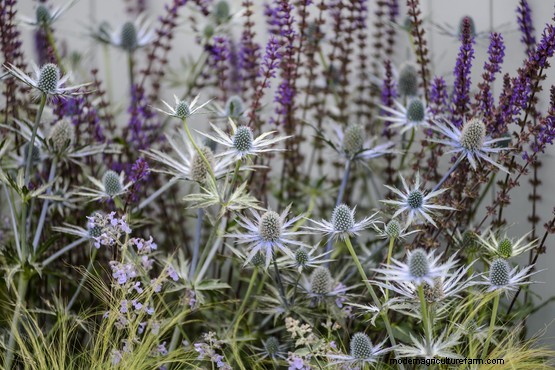
Eryngiums are generally trouble-free plants with no pests or diseases, though slugs and snails can slowly eat small parts of the tough foliage.
In colder climates you may need to protect the roots with a mulch of straw over winter, and tidy spent foliage in spring to prevent rot.