Welcome to Modern Agriculture!

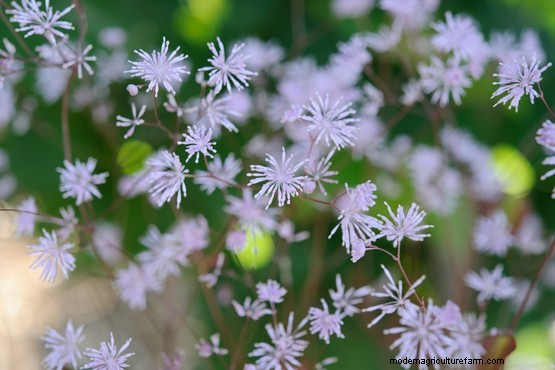
Thalictrum is also known as meadow rue.
Although we’re probably most familiar with the taller thalictrum varieties that grow in partial shade, there are around 130 species across the globe. These include dwarf variations and thalictrums that suit free draining sunny sites, as well as the tall, airy perennials that we associate with wild and woodland planting schemes.
They all share pretty, delicate foliage, similar to aquilegia, and small, pale coloured flowers. The taller varieties with airy clouds of flowers tend to complement plants with bolder foliage and look good growing among ferns, Japanese anemones and grasses. Thalictrums also make great cut flowers.
Take a look at our handy thalictrum Grow Guide, below.
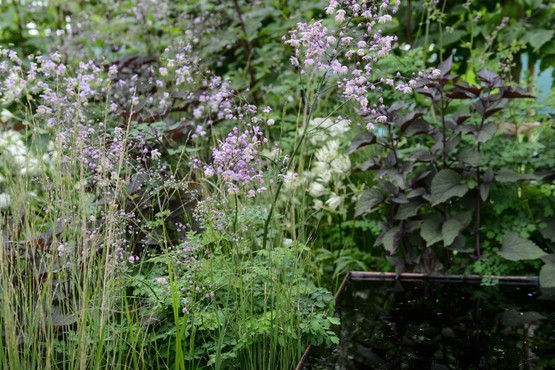
Most species of thalictrum are happy growing in sun or partial shade, in rich, moist but well-drained soil.
If you have a pot-grown thalictrum, dig a generous hole and add some good open compost, particularly if your soil is clay-based. Back fill and water in well.
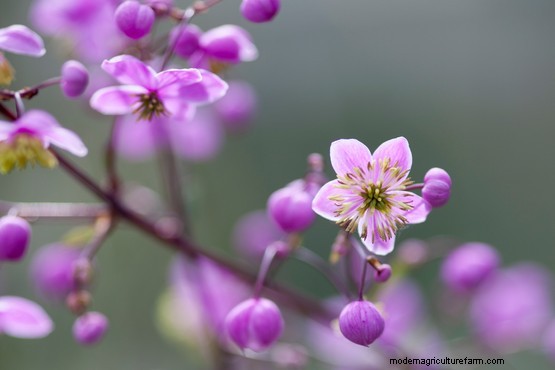
Thalictrums can be divided in spring or early autumn to make more plants. Choose a clump that is well established, dig up and split with a spade. Replant new sections and water well.
Video: How to divide herbaceous perennials
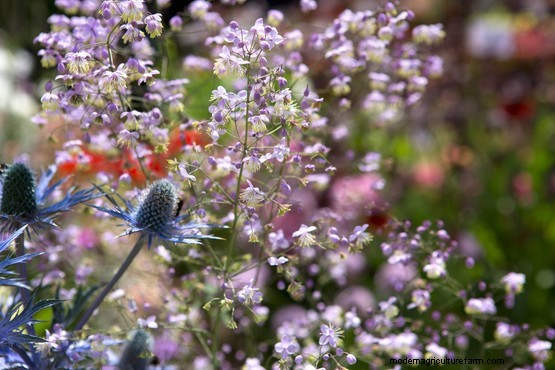
Thalictrums are not prone to any pests and disease.
Thalictrums are very low-maintenance, apart from requiring staking for taller varieties. Cut down the stems after flowering, but be careful when pruning as the sap can irritate the skin.