
Welcome to Modern Agriculture!

Dry, sandy soils can quickly leach moisture and nutrients, but they have the advantage of being easy to dig. Plus, they can be worked at any time of the year and warm up quickly in spring.
Most coastal gardens have dry, sandy soils but there are also many areas inland with similar conditions. Some of us might have areas of thin soil within our plots or gardens, such as in the rain shadow under the eaves of a roof, on a fast-draining bank or raised bed, or perhaps a new-build site with a thin layer of topsoil spread over rubble.
Plants that thrive in sandy soil include trees such as arbutus, griselinia and olive and shrubs such as cistus, elaeagnus, euonymus and olearia. Many grasses do well on sandy soil, as do various perennials including achillea, eryngiums, lychnis and verbenas.
Spread out the plants and don’t space them too evenly, for a more naturalistic, coastal feel. A gravel mulch between the plants will enhance the look and help create a feeling of space.
More on gardening by the sea:
Discover five key plants to create a vibrant dry coastal border.
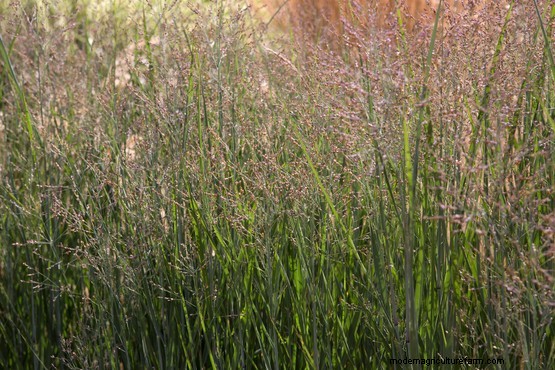
Many grasses do particularly well in coastal conditions, enjoying the soil and coping with wind. ‘Heavy Metal’ has a stiff, upright habit so is ideal towards the back of the border, but avoid placing it in a regimented line. Its foliage is a steely grey, and in summer it carries airy, pinky flowers and seedheads. During autumn, the leaves turn a pleasing yellow-orange and last well into the winter.
Height x spread: 1.5m x 75cm.
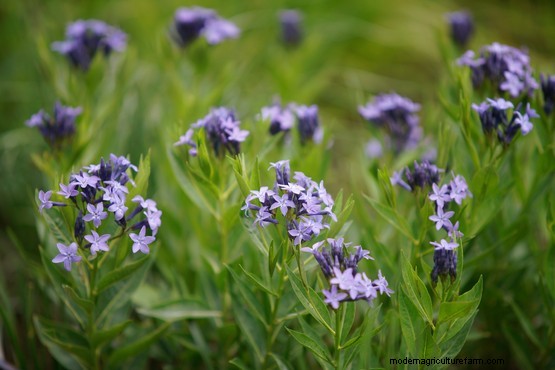
Amsonia ‘Blue Ice’ is a compact perennial with masses of dark-blue buds that open into starry, lighter blue flowers and last for several weeks in summer. Its fresh, mid-green foliage turns an attractive bright yellow in autumn. It works well in a gravel garden or at the front of a sunny border.
H x S: 45cm x 30cm.
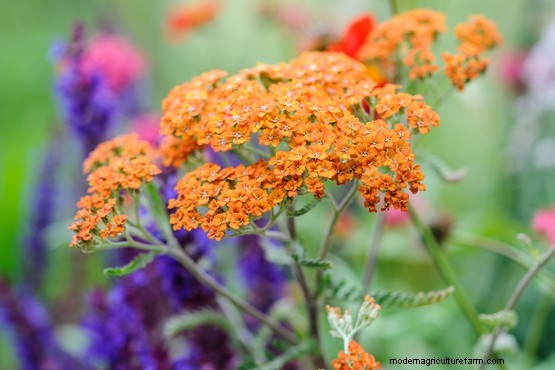
The flat saucer-shaped flowerheads of achilleas cut horizontally against any planting you combine them with. The flowers of ‘Terracotta’ start off a rich terracotta and fade to a mellow orange-yellow. It’s tempting to cut off their flowerheads when they’re over, but they often add good form to the winter border when left dried, if they stay upright.
H x S: 1m x 40cm.
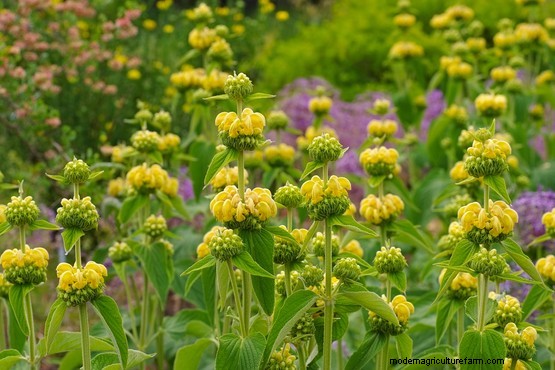
This plant has two main seasons of interest – whorls of sunny yellow flowers in summer, followed by the dark silhouette of upright dried stems and flowerheads that last right through the winter. Its large, hairy, sage-green leaves quickly clump up and make good ground cover. You could also choose one of the light-pink varieties such as Phlomis ‘Amazone’.
H x S: 90cm x 75cm.
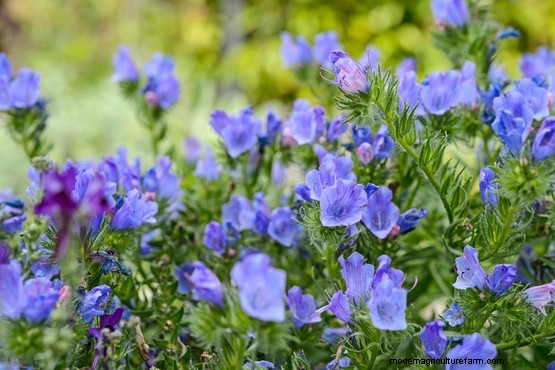
A hardy biennial British native, viper’s bugloss is spotted growing wild in many a coastal area but also a great garden plant. Its violet-blue and purple, bell-shaped flowers are held on upright stems from June to August. It’s an absolute magnet for pollinating insects and will freely self-seed if you let it. It does well in a container in a sunny spot, too. More often grown from seed rather than bought as potted plants.
H x S: 90cm x 30cm.


