Welcome to Modern Agriculture!

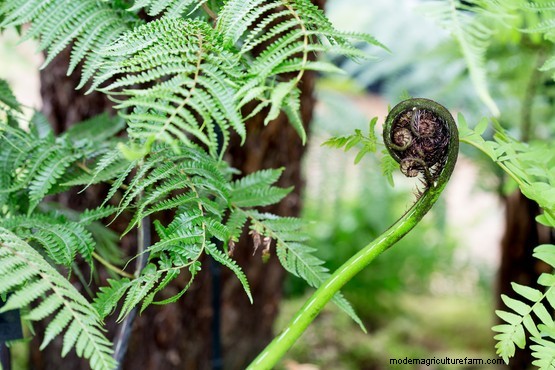
Tree ferns are not actually trees, but with their tall ‘trunks’ and dramatic crown of fronds, they do look very tree-like. The trunk is actually a mat of fibrous aerial roots that need to be kept moist. The most common species tree fern grown in the UK is Dicksonia antarctica. Native to Tasmania, it’s one of the oldest plants in the world. It’s classed as half hardy but will grow in the UK and tolerate quite cold temperatures.
Tree ferns are very slow growing and work particularly well in urban spaces, where they look good against hard surfaces and look particularly striking in shady courtyards. When buying a tree fern, always make sure it has been responsibly sourced.
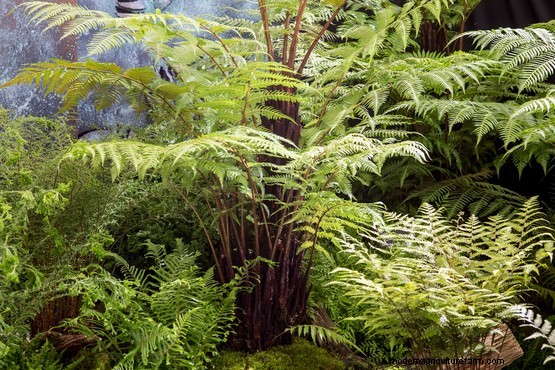
Tree ferns can be grown in borders or containers and need a damp, shady, sheltered spot, out of direct sunlight and neutral to acid soil. They grow well in boggy conditions near water too.
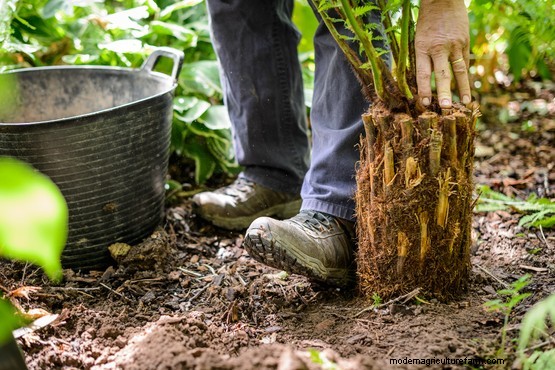
The ‘trunk’ of the tree fern is where the roots are, so there is no root ball. Dig a generous hole, adding plenty of organic matter. Staking isn’t necessary, but position the tree fern, backfilling and making sure the tree stands firm.
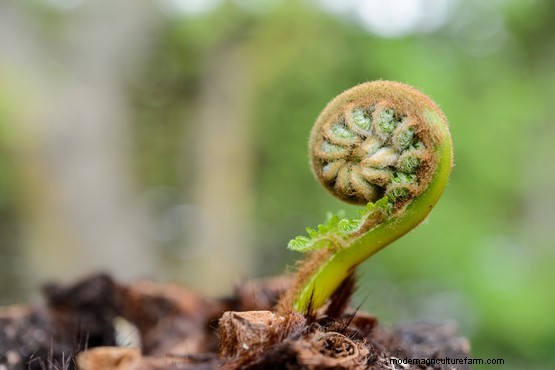
Like all ferns, tree ferns can be propagated by spores, but being such slow-growing plants, it’s a very long-term project.
Tree ferns are relatively pest and disease free.
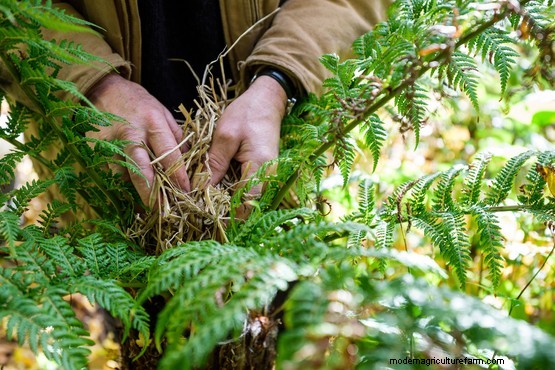
It’s important to water your tree fern regularly, making sure the crown and the trunk are kept moist. The fronds may get battered and unsightly over the season, and older fronds will brown and die. However, you can use these old fronds to wrap over the crown to protect it from frost in winter. You can also protect the crown by wrapping it up with straw and horticultural fleece. Trim tatty fronds in early spring.