Welcome to Modern Agriculture!

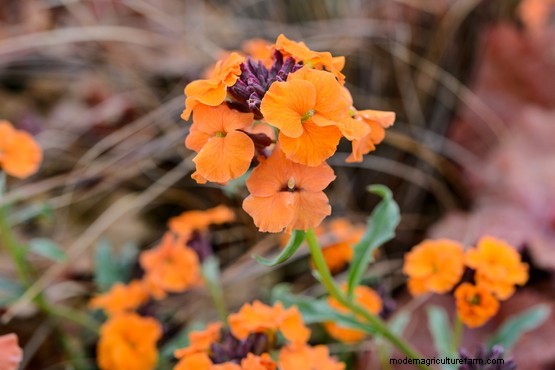
Wallflowers (Erysimum), are commonly grown as a spring bedding plant. Most wallflowers are biennial, and are grown from seed in late spring and then planted out in autumn (you can buy bare-root wallflower plants for autumn planting). They flower the following March, offering a splash of colour when there’s little else in bloom. They combine beautifully with spring bulbs.
Perennial wallflowers are also available, and have become increasingly popular in recent years. Varieties such as ‘Bowles’s Mauve’ and ‘Winter Orchid’ flower almost continually throughout the year, making them great value in small gardens. Perennial wallflowers are a great source of nectar, so can provide a reliable source of food for pollinators over a long season.
Grow wallflowers in moist but well-drained soil in full sun to partial shade. Sow biennal wallflowers annually in late spring and plant them out in autumn. Dig them up and compost them after flowering.
Plant perennial wallflowers between May and September. Cut back periodically to maintain a good shape and promote flowering. Take cuttings regularly to ward against losses.
More on growing wallflowers:
Find out more about growing wallflowers in our detailed Grow Guide, below.
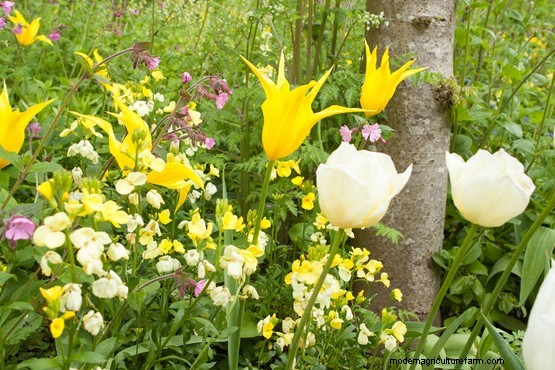
Wallflowers do best in moist but well-drained soils, in a sunny location. They’ll tolerate partial shade.
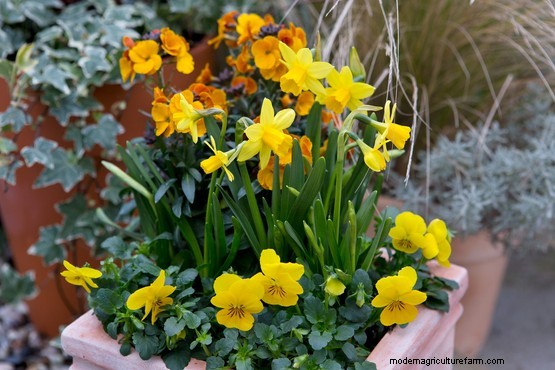
Bedding (biennial) wallflowers work well when planted with spring bulbs such as tulips and daffodils, and can also be grown in pots. Perennial wallflowers are best planted towards the front of a mixed ornamental border.
Wallflowers woth well with a number of other spring-flowering plants, including daffodils. Here, Monty Don plants wallflowers and daffodil bulbs along the edge of a path, for a gorgeous spring display:

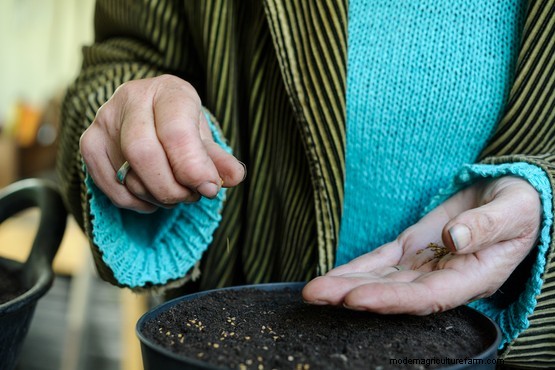
Bedding wallflowers are usually grown from seed. Sow seed in late spring and grow on to plant out in autumn or the following spring.
Here, Monty demonstrates how to sow wallflower seed:
Perennial varieties are best grown from young plants. It’s a good idea to add a handful of grit to the planting hole to aid drainage.
Find out how to plant bedding wallflowers in autumn, in this Gardeners’ World clip with Monty Don:
Wallflowers are easy to propagate. In the right conditions, biennial varieties will self-seed. Some mat-forming alpine wallflowers can be propagated by division. Perennial wallflowers are sterile and therefore won’t set seed but they’re very easy to propagate from cuttings.
Find out how to grow wallflowers from seed, in this Gardeners’ World clip with Monty Don:
Trim flower stalks as they fade. Perennial wallflowers cope well with cold weather and short bouts of frost. However they don’t cope well with wet and windy winters, so make sure the soil is well drained and protect from wind.
Wallflowers are part of the brassica family and therefore can be prone to club root and other diseases that affect this family of plants. Downy mildew, leaf blight and flea beetles can cause problems; and beware slug and snail damage to young plants.
Perennial wallflowers are quite short-lived and can become woody, so it’s a good idea to take cuttings annually to insure against losses.