
Welcome to Modern Agriculture!

Known as the beauty berry, Callicarpa comes into its own in autumn, bearing dense clusters of small, jewel-like, purple-blue berries, against bare stems. Its dark green foliage also puts on a good show in autumn, turning golden and red before falling. Callicarpas are medium-sized shrubs and look good in a mixed border, or planted as a specimen near a path or window. The bare stems of purple berries make an excellent addition to autumn flower arrangements.
Grow callicarpa in moist but well-drained, neutral to acidic soil in full sun to partial shade. Mulch annually with well-rotted compost or manure and lightly prune in spring.
More on growing callipcarpa:
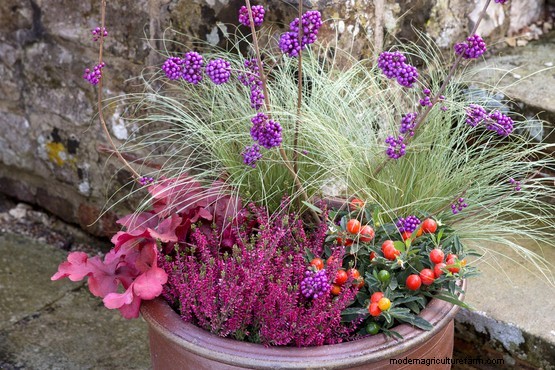
Grow callicarpa in a prominent position such as near a bench or garden path, ideally where you can see it from the house. Choose moist but well-drained soil in full sun or light shade. Although callicarpas tolerate a little lime in the soil, they will suffer from yellowing foliage in very alkaline conditions, so a neutral to acidic soil is best.
Dig a generous hole and plant the callicarpa to the same depth it was in its original pot. Water well.
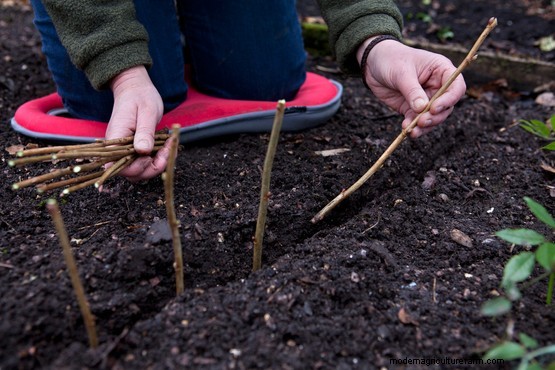
Propagate callicarpas by softwood cuttings in summer and semi-ripe cuttings in autumn.
Callicarpas are generally pest and disease-free.
Depending on which variety your choose, you may need to plant a few callicarpas together to ensure cross-pollination and fruiting. Check the planting label for advice. In spring, lightly prune your callicarpa to maintain its shape and size.


