Welcome to Modern Agriculture!

Hoverflies are important garden pollinators. While many lay eggs on aphid-infested plants, some, like the drone fly (Eristalis tenax), need stagnant water to breed.
This hoverfly lagoon can be placed in a corner of the garden, where the organic matter added to the water will gradually break down, creating the perfect habitat for hoverfly larvae.
In this No Fuss video guide, Kate Bradbury explains how to make a ‘hoverfly lagoon’ in which certain species will come and lay their eggs:
More on gardening for hoverflies and other pollinators:
Follow the quick steps in this guide to create your own hoverfly lagoon.
Weigh out around 100g of organic material and choose a small container. Line it with pond liner or similar if it has a hole.
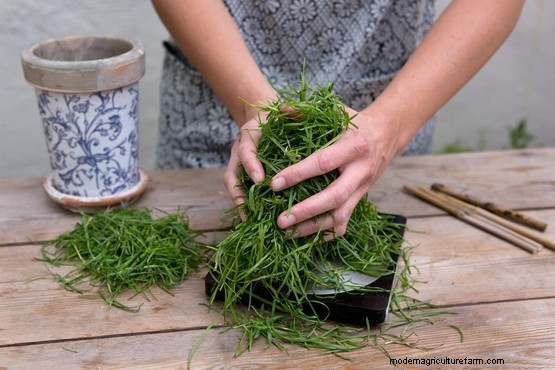
Fill the container with your organic material. Cram in as much as possible, as it will break down very quickly.
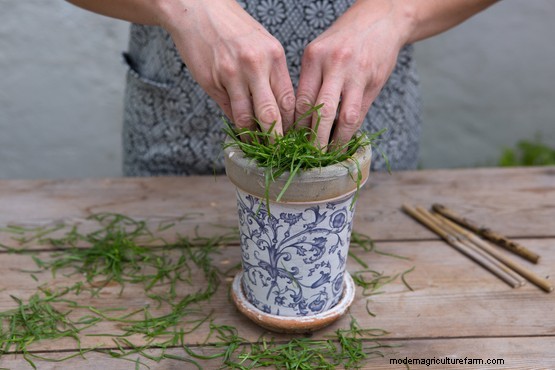
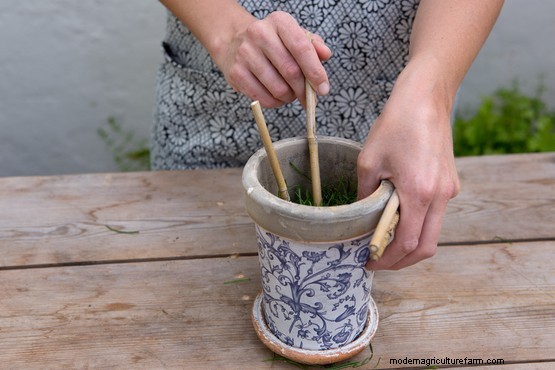
Add twigs or bamboo, placed vertically so the larvae will be able to climb up from the bottom when they’re ready to pupate.
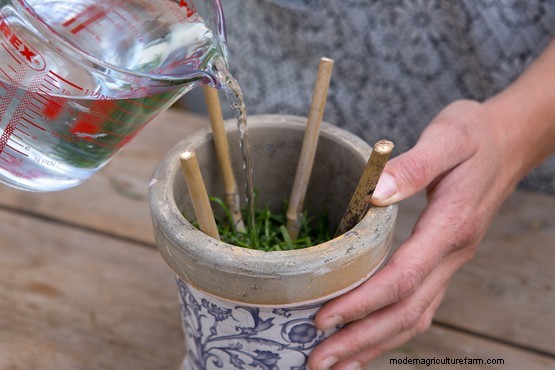
Fill the pot with water and add extra clippings or leaf litter to the surface. This will give the adults something to land on.