Welcome to Modern Agriculture!

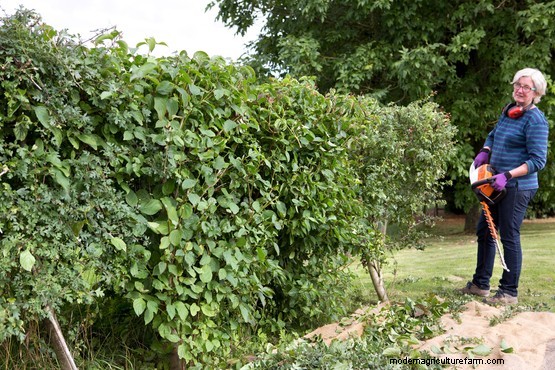
Like ornamental hedges, those grown for wildlife can quickly get out of hand if not clipped regularly, and August is the best time to do it.
Cutting wildlife hedges in the dormant season is best avoided, as it encourages more vigorous growth the following season and can look ragged and unsightly. It may also destroy berries and seeds, as well as the eggs of overwintering insects.
Discover some berried plants for birds to grow.
Cutting the hedges in late summer, while growth is still soft, is a much easier job and can be done with secateurs, shears or a hedgetrimmer. It also allows the remaining stems to ripen fully, encouraging more flower buds; reduces the vigour of the hedge and so the need for pruning.
Most birds will have vacated their nests by this period, but do check throughly before pruning anyway, as some birds may squeeze in a second brood before autumn.
Looking for fast cover? Check out the plants to use for fast-growing hedges.
Follow the advice to pruning wildlife hedges in our step by step project.
Check through your wildlife hedge for nesting birds. Assess the growth – most will have been made at the top of established hedges, while the sides and base will be less vigorous.
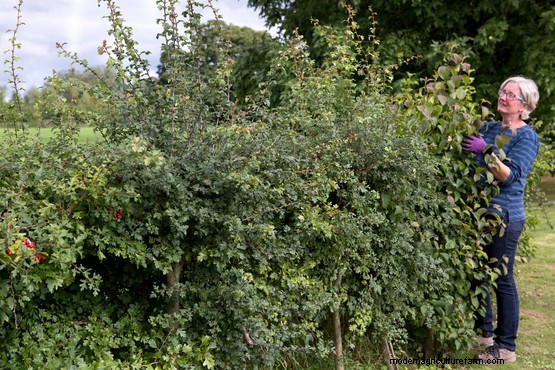
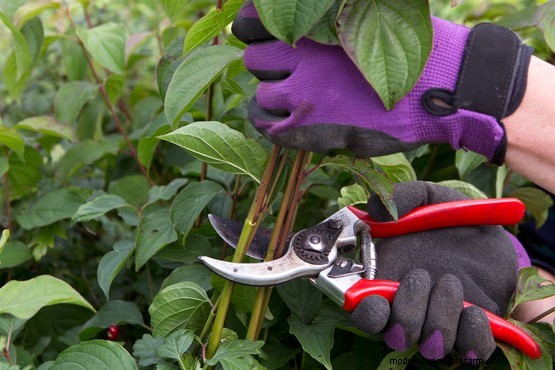
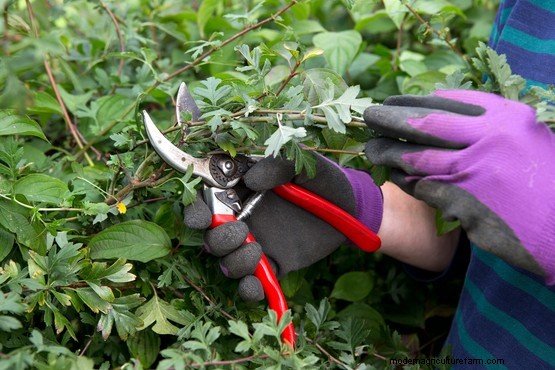
Use secateurs or loppers to cut the most vigorous, upright shoots down to two or three buds above where they started into growth this spring.
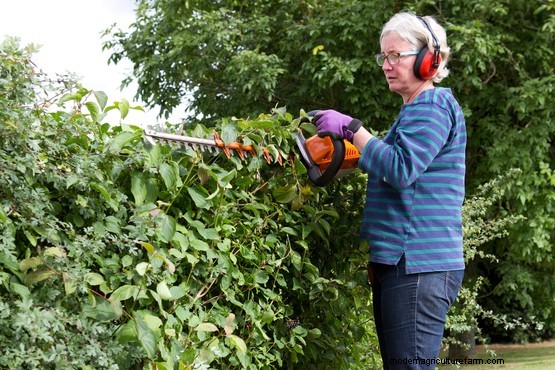
Cut the thinner, soft growth on the top and sides using a hedgetrimmer or shears to create a roughly flat surface. Make sure you’re standing securely and wear protective goggles, gloves and ear defenders when using powered machinery.
Check over the hedge and use secateurs to cut back any weak or wispy shoots missed by the hedgetrimmer. Prune these back to strong, healthy buds to encourage side branches, which will help to fill out the hedge and make it denser.
Step back and assess the finished hedge. Tidy up any ragged cuts with secateurs or loppers. Soft clippings can be chopped up and composted, but avoid thorny stems, which may not rot down well.