
Welcome to Modern Agriculture!

I think I have gardening in my blood. My Italian grandparents gardened and made wine in the Roman countryside. Summertime memories from my childhood include plates heaped with just-picked figs and peaches so juicy they'd drip all down my arm. My Nonno was so proud of his roses — if we didn't smell them, he said they might as well not exist. My Nonna loved their cherry tree that looked "like a bride" when in full bloom.
Gardening has continued to be a family activity for me. My kids think it's fun to pick spinach leaves right out of the ground for a quick snack — the same spinach they won't eat at the dinner table. Earthworms from the compost pile have been given names.
I've worked in the gardening industry since 1998, and feel lucky to be Product Testing and Coordinator for Gardener's Supply. I test products in our company's beautiful backyard, and truly enjoy working with fellow gardeners around the country, from a rooftop garden in New York City to the desert-like climate in Arizona. I think gardening really brings people together.
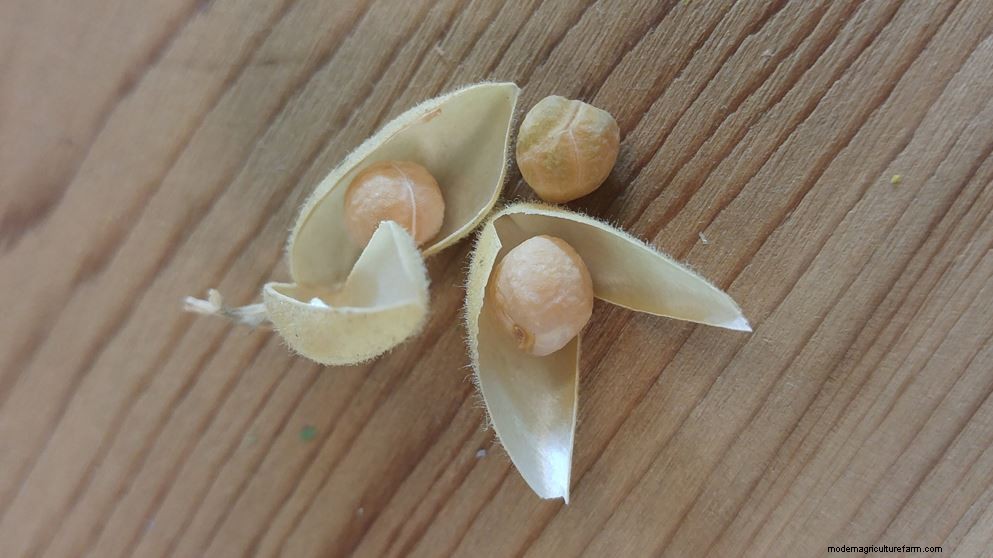 Chickpeas come in easy-to-peel pods.
When I heard that the United Nations named 2016 the International Year of Pulses, it motivated me to grow pulses, but first I had to learn what pulses were.
Pulses are a type of leguminous crop that are harvested for their dry seed. Examples include dried beans, lentils, and chickpeas.
They are packed with nutrients and have a high protein content, are low in fat and rich in fiber. They also enrich the soil, are water efficient, don’t need much fertilizer, and can be stored for long periods of time. In other words, they are great crops to feed the world! I wanted to be a part of it, so I thought I’d give it a try.
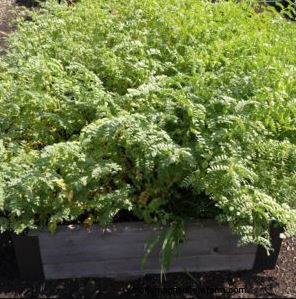 Chickpeas growing in a 3′ x 6′ raised bed
I wasn’t able to find a packet of chickpea seeds, so I used the seeds from a package of Garbanzo Beans Sprouts from Botanical Interests. I sowed the seeds in a raised bed in late spring, right around the time of our last frost date. Before sowing, I amended the soil with our granular organic fertilizer. You may read other posts that say they need a long growing season, but don’t let that stop you. Our season is short here in northern Vermont, and the plants had plenty of time to grow.
The seeds germinated easily and the plants grew well with little more than sunshine, occasional watering and admiration. They did not need staking and had pretty little white flowers in spring that turned into cute green pods throughout the summer. The peas inside are tender and edible, and taste a bit like edamame. Because I wanted to save most of them for dried chickpeas, I tried not to eat them all.
By late summer, the plants began to turn brown and dry out — this is supposed to happen. After a few weeks of dying back in the garden, I harvested the plants by cutting them off at the soil line, and brought them inside to dry out completely. It’s easy to strip the dried pods from the branches and open the husks to reveal the little treasures. It is a bit time consuming, so I enlisted the help of two coworkers, and we had fun while we chatted and peeled.
From a 3' x 6' raised bed, I got about 3 cups of dried chickpeas, which need to be soaked before cooking. Not a huge harvest, but enough to add to a few delicious soups or to make fresh hummus this winter. Plus, the joy of saying, “I grew these myself” makes it all worth it.
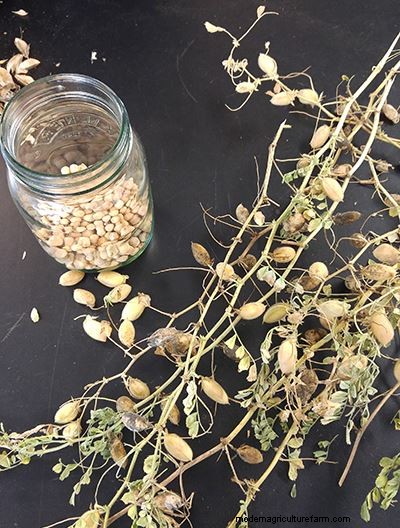 Separating chickpeas from the papery shells is easy


