
Welcome to Modern Agriculture!

I've been gardening and writing about gardening for more than 20 years, yet I find I'm always learning new things about the plants, insects and other critters that call my backyard home. That's the great thing about gardening — it's never boring! I've worked as a landscaper, on an organic farm, as a research technician in a plant pathology lab and ran a small cut-flower business, all of which inform my garden writing. Someone once asked me when I'll be finished with my gardens, to which I replied, "Never!" For me, gardening is a process, not a goal.
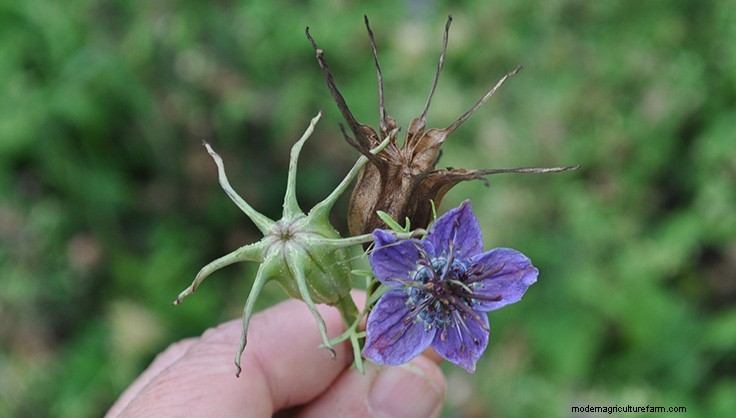 Collecting seeds in late summer and fall for replanting in spring is not only fun, it saves money, too! This is the flower, unripe seedpod, and ripe seedpod of nigella, an old-time favorite commonly called love-in-mist. Photos: Suzanne DeJohn
I'm finally getting around to tidying up some of my flower gardens, and one of the benefits of my tardiness is that there are plenty of seedpods filled with ripe seeds. In a matter of minutes I collected hundreds of seeds for replanting. Saving seeds is one of gardening's best-kept secrets. When else in life can you get something for nothing?
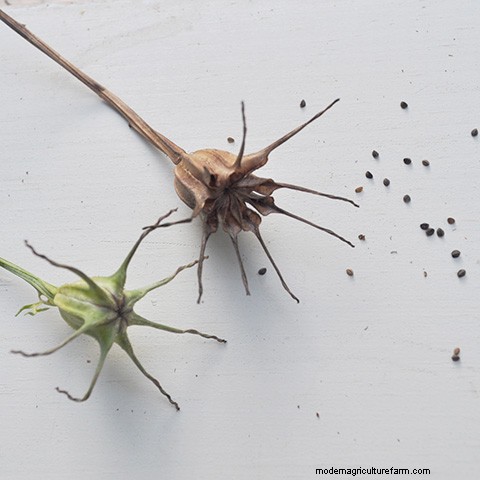 Unripe (green) nigella seedpod is closed at the top. Once the pod is ripe the top sections open and the seeds readily spill out.
The most obvious reason to save seeds is to save money. Buying a packet of zinnia or calendula seeds will set you back a few dollars and it may contain as few as a dozen seeds. A single flower will usually yield that many, or more.
There are other rewards to saving seeds.
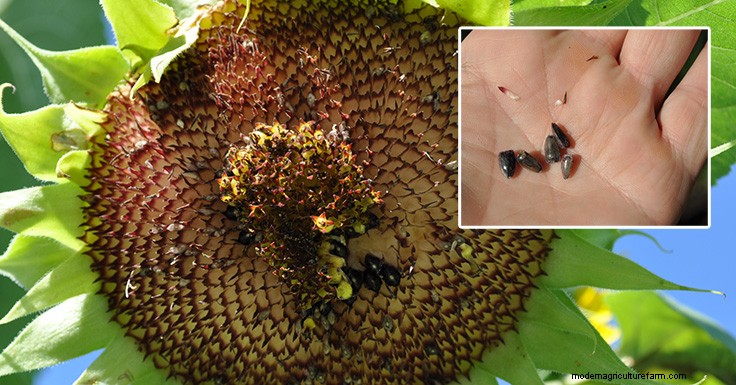 Sunflower seeds can be tricky to save; you need to let them ripen, but then collect them before the birds get to them!
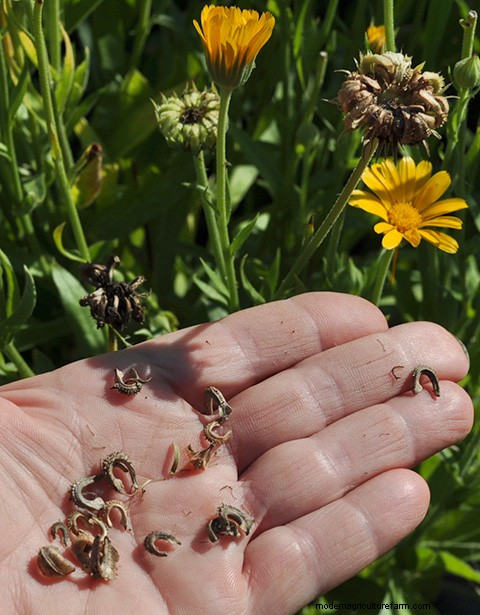 Calendula seeds are easy to collect and easy to grow.
Saving seeds is pretty straightforward, but if you're new to seed-saving, it pays to have a little background information.
Hybrids vs. open-pollinated. If you save and plant seeds from hybrids, the resulting plants may not closely resemble the parent plant. Hybrids are the result of careful crossbreeding of specific parent plants to yield specific traits, and these traits often aren't passed down to subsequent generations. The offspring of hybrid plants might not have the desirable traits of the parent plant; on the other hand, you might get a nice surprise.
If a plant isn't a hybrid, it's described as open-pollinated. If you save seeds from an open-pollinated variety, the offspring plants will more closely resemble the parent plant — they may not be identical but they'll likely be similar. If you get serious about saving seeds, you'll want to research how different plants are pollinated and whether you need to isolate plants to prevent cross-pollination.
Related Article: Heirlooms to Grow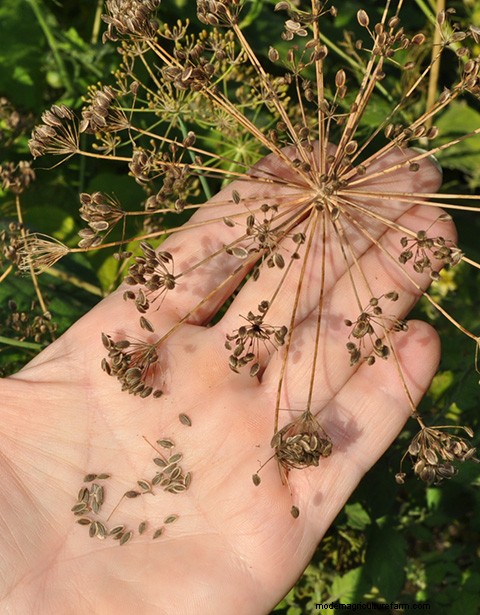 Collect dill seeds when they're completely dry but before they fall to the ground.
Degree of difficulty. If you're new to seed-saving, start with easy plants. Plants that readily self-sow (that is, they naturally propagate themselves via seed they drop) are a good choice; examples include bachelor's buttons, calendula, cleome, columbine, nigella and rudbeckia. Easy vegetables include beans, broccoli, corn, chives and melons.
Some plants are difficult to grow from seed, even for the experienced gardener, so it might not be worth the trouble to save their seeds. Certain perennials, such as peonies, are so slow-growing that it takes years for them to grow from seed to begin flowering. The seeds of many cold-hardy perennials require a prolonged period of chilling before they'll sprout — this isn't difficult but does take some planning and patience.
Some plants make it easy to save their seeds. Calendulas and zinnias produce abundant flowers that contain big seeds. Columbines hold their seeds in upright seedpods. For sunflowers and black-eyed Susans, you'll have to get to the seeds before the birds do.
As a general rule, it's best to let seeds fully ripen in their pods before harvesting. That can be trickier than it sounds because some plants scatter their seeds as soon as they're ripe. The seeds may simply drop to the ground, blow away or be ejected from the seedpods. You can tie a paper bag around maturing seedpods to catch the seeds ? this thwarts hungry birds, too.
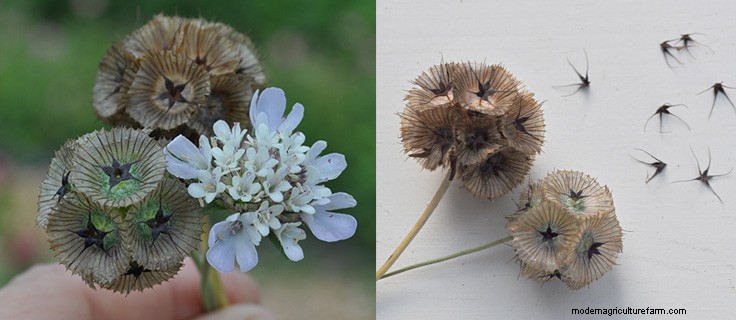 Scabiosas are popular cut flowers. Scabiosa stellata forms whimsical seed pods punctuated with star-shaped seeds. The seeds are ready to collect when the seedhead turns completely brown and the seeds fall away.
Often, it's easiest to carefully harvest the ripe seedpods and bring them indoors. If they're not completely dry, put them in a dry, airy place protected from hungry rodents to finish drying.
