Beneficial nematodes are microscopic predators that destroy the larvae of many common garden pests. But there are also nematode species that feed on the roots of plants and foliage. Root-knot nematodes are one type of root-feeding nematode that can infest tomatoes, carrots, lettuce, beans and other crops. Infected plants become stunted and yellow; during hot, dry weather they may wilt. Plants will die if severely infected.
To check for root-knot nematode, uproot a few plants and look for small, round galls on the roots. Infected taproots, such as carrots, may develop many small side roots. Since nematodes are almost impossible to see with the naked eye, an accurate diagnosis of nematode damage may require assistance from a professional. Nematodes can be accidentally introduced to a garden via infected soil, water, tools or plants. They are a more severe problem in warm climates than they are in colder regions.
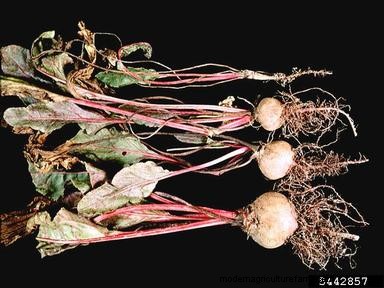
Closeup of a sugar beet with severe galling from root-knot nematodes. Photo: Mactode Publications, Bugwood.org
Prevention and Control
- Plant nematode-resistant varieties if available.
- Add compost to your garden each year to maintain a high level of organic matter. This will encourage the activity of beneficial soil organisms.
- Avoid moving soil from infested beds to other parts of your garden.
- Plant cover crops of oats, annual ryegrass, or sudangrass and incorporate the organic matter into the soil the following spring. Root-knot nematodes are unable to feed on the roots of these grass and grain crop, so their numbers will be diminished.
- Plant a cover crop of French or African marigolds and incorporate the flowers and foliage into the soil at the end of the season. They plants contain a substance that suppresses root-knot nematodes.
- Leave problem areas fallow but weed-free for one to two years to reduce nematode populations.
- In warmer zones, 'solarize' the soil to kill weed seeds. Till soil, water thoroughly, and cover soil with sheets of clear 2- or 4-mil plastic. (A double layer, separated by a garden hose for instance, increases effectiveness.) Seal the edges with soil or stones. Sunlight passes through the plastic and heats the soil, which stays warm. The goal is to raise soil temperatures 3-6" deep above 100 degrees F. Depending upon the amount of sun and how hot it is, the process can take six to eight weeks.
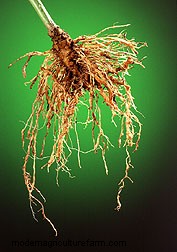
Pepper plant roots with extensive galling (thickened, lumpy portions) are heavily infested by the Southern root-knot nematode.
Photo: Scott Bauer/USDA Agricultural Research Service.


