Welcome to Modern Agriculture!

I've been gardening and writing about gardening for more than 20 years, yet I find I'm always learning new things about the plants, insects and other critters that call my backyard home. That's the great thing about gardening — it's never boring! I've worked as a landscaper, on an organic farm, as a research technician in a plant pathology lab and ran a small cut-flower business, all of which inform my garden writing. Someone once asked me when I'll be finished with my gardens, to which I replied, "Never!" For me, gardening is a process, not a goal.
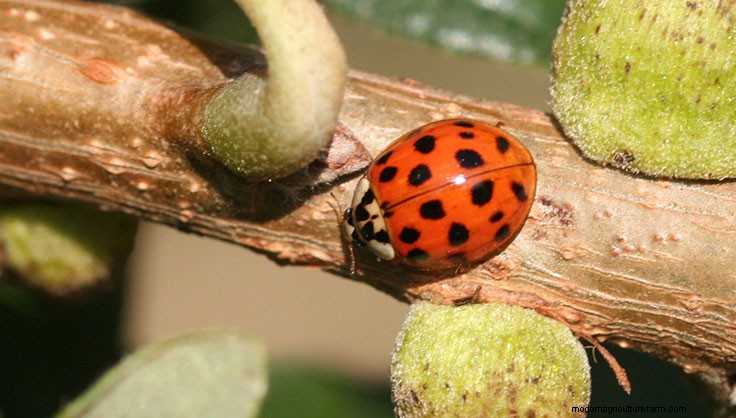
Of the thousands of species of lady beetles in the world, several hundred can be found in the U.S. Some are native species, and some, such as the Asian lady beetle, were intentionally introduced to help control crop pests. Unfortunately the tables have turned and this introduced species itself has become a pest.
During the 1960s through the 1990s, the U.S. Department of Agriculture released large numbers of Asian lady beetle in an effort to manage aphids and scale insects on pecans and apples, among other crops. Though the releases took place in specific states across the country, the beetles' have spread and their range now includes most of the U.S.
Both Asian lady beetles and native species, such as the convergent lady beetle, hunt garden pests. However, Asian lady beetles have become a troublesome pest in many parts of the country:
| Native Lady Beetles | Asian Lady Beetles |
|
|
Asian lady beetles are believed responsible, at least in part, for the severe decline in the populations of native lady beetles. Often larger than their native counterparts, Asian lady beetles not only outcompete their cousins for food, they actually prey on the native species. Asian lady beetles vary widely in color (orange, pinkish, red) as well as number and shape of spots. The distinguishing feature is a black, M-shaped mark behind the head:
 Related Article: Beneficial Insects: Ladybug / Lady Beetle