
Welcome to Modern Agriculture!

An easy vegetable to grow, it is generally more disease and pest resistant than other brassicas, although it can experience similar problems. Kale also occupies less space than other brassicas. Use it as a spinach substitute in a wide variety of dishes. Kale maintains body and crunch which makes it a good substitute in dishes where spinach might not be suitable; its especially delicious in stir-fry dishes. It is recommended to cook over high heat to bring out the best flavor and prevent bitterness. Many specialty growers are planting kale in wide beds only 1/2 to 12 inches apart and harvesting kale small as salad greens. In England, close plantings of kale have been shown to prevent aphid infestations through visual masking.
Almost anywhere in the United States where there’s a cool fall growing season. It’s a cool-season crop, hardy to frosts and light freezes. Kale’s flavor is reported to improve and sweeten with frost.
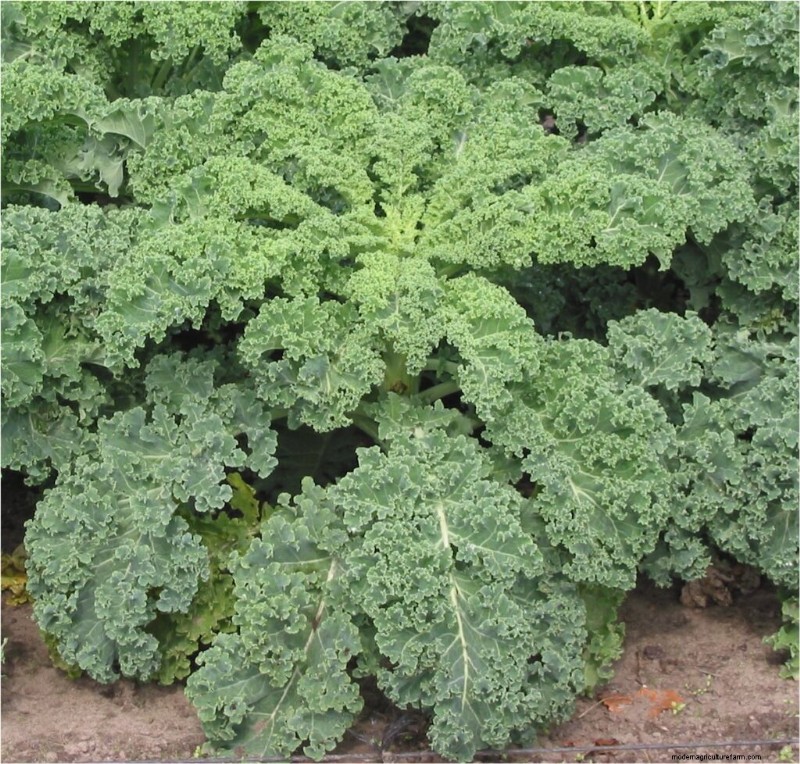
There are 2 types: Scotch, an early kale with deeply curled, blue green leaves, (Dwarf Blue Curled), and Siberian, a later type with smoother, gray green leaves (Dwarf Siberian). There also are ornamental kales, grown particularly for garden display in late summer and early fall when the annuals begin to wane. The leaves are deeply curled and beautifully tinted with pastel colors ranging from emerald green to soft lilac to reds to whites.
The ideal kale soil is a fertile, well-drained loam. Clay types can be improved with generous amounts of compost and well-rotted manure worked in to spade depth.
Germination in 7-10 days.
Start in midsummer for a late-fall winter crop.
In rows 18 inches to 2 feet apart. When the seedlings are 3 or more inches high, thin plants to 10 inches apart and use the thinnings for salads or as a cooked vegetable.
| Temperature | |
| Germination | 45 - 95 F |
| For growth | 60 - 65 F |
| Soil and Water | |
| Fertilizer | Heavy feeder, use compost. |
| Side-dressing | Apply when plants are 1/3 grown |
| pH | 6.0 - 7.0 |
| Water | Heavy |
| Measurements | |
| Seed Planting Depth | 1/2" |
| Root Depth | 6 - 12" |
| Height | 12 - 18" |
| Width | 8 - 12" |
| Space between plants | |
| In Beds | 15 - 18" |
| In Rows | 18 - 24" |
| Space Between Rows | 24 - 46" |
| Average plants per person | 4 |
| Harvest | |
| Harvest younger leaves from the middle and work your way up the stalk as it grows. Keep some of the leaves on the bottom to feed the growth on the top. You can also harvest the plant all at once by cutting its stem near the bottom. | |
| First Seed Starting Date: | 52 - 108 days before last frost date |
| Last Seed Starting Date: | 94 - 108 Days before first frost date |
| Companions | |
| Companions | Artichoke, beet, bush bean, celery, cucumber, lettuce, onion, peas, potato, spinach |
| Incompatibles | Pole beans, strawberry, tomato |
Like collards, kale develops attractive leaves from a central stem, which grows a foot or so tall.
Cultivate shallowly or mulch heavily to keep down weeds.
| Storage Requirements | ||
|---|---|---|
| For fresh storage, don't wash leaves. For drying, cut the leaves into strips and steam for 2-5 minutes. Spread on trays no more than 1/2" thick and dry. If using an oven set the temperature to below 145 F; check and turn every hour. | ||
| Fresh | ||
| Temperature | Humidity | Storage Life |
| 32 F | 95 - 100% | 2 - 3 weeks |
| 32 - 40F | 80 -90% | 10 months (only fair taste) |
| Preserved | ||
| Method | Taste | Shelf Life |
| Canned | Good | 12+ months |
| Frozen | Good | 12 months |
| Dried | Fair | 12+ months |
Kale can be harvested within approximately 1 month of becomming established. Leaf color is the best sign of crop readiness. Rich green leaves of firm texture are ready for cutting. If too dark and heavy, the leaves are tough and not as flavorful. Kale leaves for cooking should generally be about the size of your hand. The small, tender leaves can be eaten uncooked, and are often added to salads. Cut the leaves frequently to encourage new growth, but avoid picking the terminal bud(at the top of the plant). When cold weather begins, mulch the plants with straw, salt hay, or the like, they will continue producing well into winter, and they may even taste more flavorful.


