
Welcome to Modern Agriculture!

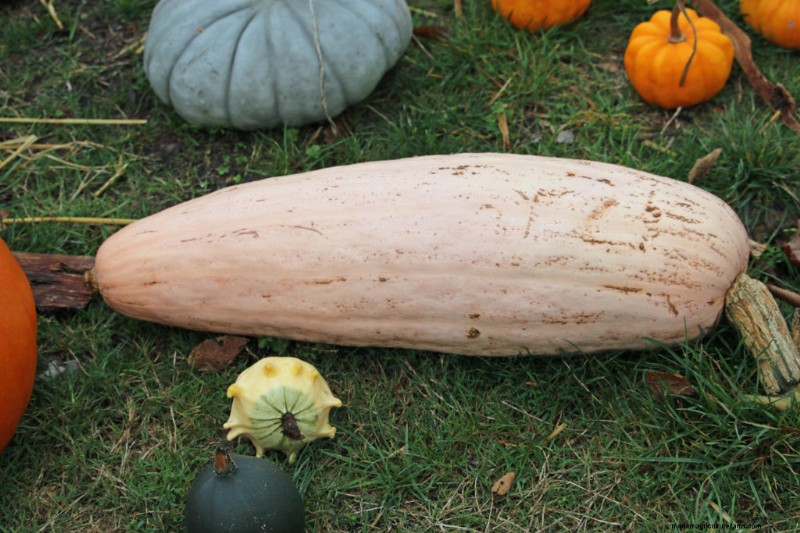
Pink Banana Squash has been a new addition to my garden for the past couple of years. I love how it grows to an impressive size and hangs down the trellis with almost supernatural strength. Yes, you read that right, you can grow this jumbo squash on a trellis – and I strongly suggest that you do.
While you won’t get a ton of fruit from this type of squash, you’ll get record-sized fruit to satisfy your baked squash appetite. So if you’re into growing giant vegetables, or just want something to brag to your friends about, this guide will teach you everything you need to know about growing Pink Banana Squash from seed to harvest.
Like all cucurbits, squash seeds need heat – at least 70°F (21°C) – to germinate and thrive. In temperate climates, soil temperature rarely reaches that temperature until early summer. This is why it’s better to get a jump start on your squash growing season and start your pink banana squash seeds undercover or indoors.
I have to admit, I’ve never started any type of squash seed directly in the ground. I did have tons of volunteer squash seedlings sprouting from my homemade compost, but that wasn’t intentional or controllable. And, as the owner of a very compact garden, I love control. This is why, as long as plants transplant well, I will continue to start pink banana squash seedlings under growing lights. Here’s how to do it:
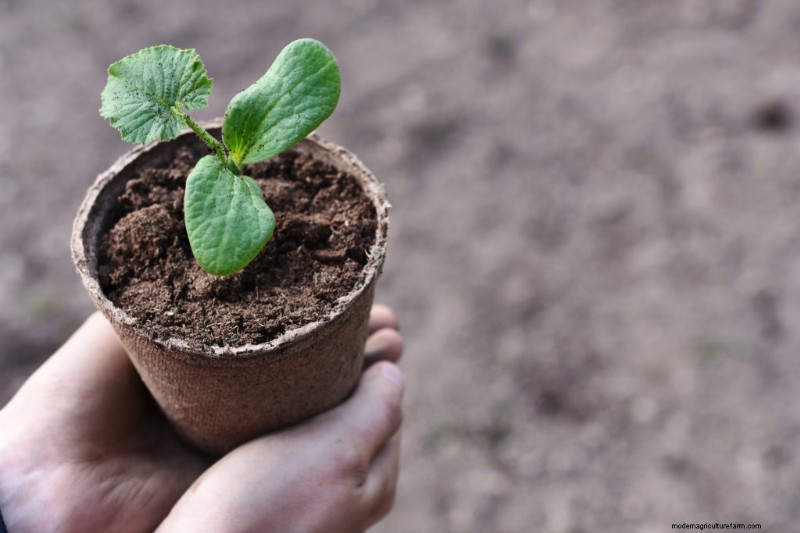
Sow your seeds where you want the final location of your squash plants to be, using the station sowing method for large seeds – sowing 2-3 seeds in each location and then thinning the seedlings to the strongest one. You can raise the soil temperature if you cover each sowing site with a cloche, or create a temporary mini polytunnel.
By mid to late May, your soil temperature should be just right for transplanting squash – days should be in the 70°F (21°C) range, and nights should consistently remain above 60°F (15°C). Your squash seedlings should now be about 4 weeks old, with 1-2 sets of true leaves, and starting to outgrow their pots.
This is the best time for transplanting pink banana squash seedlings outside. Wait any longer, and your seedlings will set flowers and go past their prime – you can still transplant them, but they’ll take longer to establish and thrive.
Don’t move your seedlings outside too suddenly – allow for at least 5 days of hardening off. Start by leaving them out in the shade for a couple of hours each day, then transition them into a sunny location. Lastly, allow them to spend one full night outside – I like to protect them with a cold frame, but that’s not mandatory.
You’ve successfully kept your squash seedlings alive for one full month, now it’s time to transplant them to their final location. Where you plant them is up to you, but keep in mind that Pink Banana Squash plants are large vining plants – their vines can reach 12-15 feet (3.6-4.5 m) in length.
If you plant them in an open field, size shouldn’t be an issue, but if you, like me, have only a limited amount of space to work with, I suggest you grow them vertically. In fact, growing squash vertically should always be the first choice, since it improves access to sun, airflow, reduces the chance of powdery mildew, and prevents fruit from rotting on the ground.
The only thing you need to worry about when growing Pink Banana Squash plants is guiding them regularly up the trellis. In summer, these prolific vines grow very fast, so they might escape you every once in a while, and you might break them if you force them up the trellis when they’re already too large.
The good news is that it can be done, and, in my experience, it’s the most efficient way of growing large squash and pumpkin varieties.
Pink Banana Squash needs at least 120 days (from the moment of transplanting) to reach full maturity. This means that in most gardens, they’ll be ready by early fall.
Keep in mind, though, that not all pink banana squash fruits will develop at the same rate. Most plants will start off with 3-4 or more fruits on their vine, but some of them will rot or simply stop growing due to poor pollination. On average, one pink banana squash plant will produce 2-3 full-sized fruits.
This is why it’s best to look at the fruit’s appearance before harvesting and give it a few more weeks if it doesn’t seem ripe enough. Do harvest them weeks before the first frost, though, because you still need to cure them and get them ready for storage.
Most likely, you’ll recognize ripe pink banana squash fruit by their unique salmon color that brightens up gradually as the fruit matures. You can even go as far as harvest a fruit that is only barely starting to change color from yellow to pink, and it will turn salmon pink during the curing process.
However, it’s best to leave the fruits on the vine for as long as you can.
You can store Pink Banana Squash for winter for as long as 6 months, and reportedly even longer, although I’ve never had one last that long in my pantry – it’s so delicious and versatile that it’s one of the first squashes we turn to for baking, soups, and stews.
That’s a great storage life if you ask me – so how exactly do we achieve it?
Mature fruit stores better than immature fruit, so mark those smaller fruits and make sure you eat them first. Don’t try to force ripening, though. Curing is wonderful, but it doesn’t perform miracles. So if you have some pink banana squash that’s yellow even after the curing process, it will be bland and barely edible – it’s best to discard it.
Cutting open a Pink Banana Squash is an exciting time. Its flesh is medium orange and gives a fragrant, almost melon-like smell when raw.
But baking is when the real magic happens. Here are some of the traits of baked Pink Banana Squash:
Overall, I enjoy this squash better than the Butternut, which is often too sweet for my taste. I like that it’s neutral enough to turn it into purees, soups, curries, and all kinds of savory dishes, while also being the perfect ingredient for creamy Pink Banana Squash pies.
Once you cut into a giant Pink Banana Squash fruit, keep in mind that you won’t be able to eat it all in one sitting. So unless you have a huge family or a party to throw, dice the rest in small pieces (while still raw!) and freeze it for later use.
I hope I’ve convinced you to give this magnificent squash variety a try! Happy gardening, and have a bountiful squash season!


