
Welcome to Modern Agriculture!

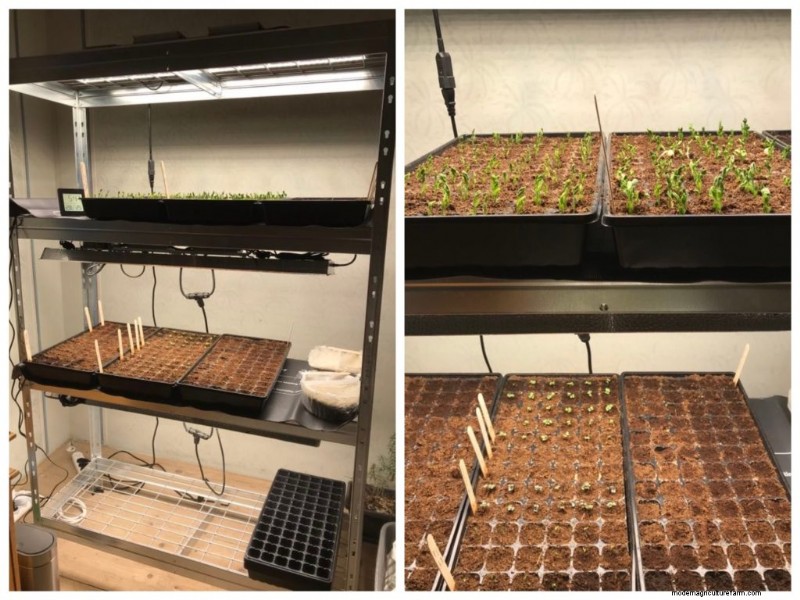
For the past two years, I’ve successfully started and grown all my seedlings in an unheated room, under grow lights. It took some work to provide the additional heat (early spring is still very cold here in zone 6B), but I believe I’ve discovered the best setup so far and I want to share it with you.
Basements are the most popular option for most Americans when creating a grow room for seedlings. While they’re cold and dark, the temperatures are well above freezing – 55°F (13°C) on average. Heat mats, grow lights and electric heaters are great ways to increase the temperature and help seedlings thrive.
Now, 55 to 60°F (13 to 16°C) is still too low for a lot of seeds to germinate. Cool-season crops will take slightly longer to germinate in these conditions (if lights are provided, of course), while heat-loving plants like peppers, tomatoes and eggplants won’t germinate at all.
Most seedlings germinate and grow best within 68 to 86°F (20°C to 30°C). If you manage to keep your room temperature within this ideal window – around 70 to 80°F (21°C to 27°C) – at all times, you can easily use your basement for growing all kinds of plants. How much extra heat you’ll need depends on your climate, location and how well insulated your basement is.
These tools and practices not only apply to cool basements, but also any kind of enclosure that has electricity and ensures temperatures above freezing: your garage, attic, insulated shed or an unheated part of the house.
Here’s what you’ll need to get started:
Heat mats will not only save you a hefty heating bill, but they’ll also provide warmth exactly where it’s needed – at soil level. Whenever we’re talking about germination temperatures, it’s the soil temperature that counts. Heat mats are a great way to keep the soil warm during the night when temperatures drop, and together with grow lights they significantly heat up the seedlings’ immediate environment.
Not all heat mats are created equal, but you can probably get away even with the most basic, plug-in ones. The average heat mat will raise the soil temperature by 15°F (8°C). Professional seedling mats equipped with thermostats can detect and maintain an optimal temperature for seedlings at all times.
Here’s a seedling heat mat similar to what I’m using, although I didn’t purchase the digital thermostat to go with it. Keep these things in mind when purchasing a heat mat:
Some gardeners report their heat mats not putting off enough heat, which might also have to do with heat transfer. If your basement or grow room is very cold, you might want to consider insulating the surfaces around or under your heat mats with cardboard to prevent too much heat from escaping. Always have safety in mind when designing your grow room setup.
All grow lights put off heat – some more than others, and we’ll cover the difference below. Grow lights are already a must when starting seedlings in a dark room like a basement, but the heat they provide may be enough that you don’t have to supplement with additional heat sources.
Fluorescent lights are a great option for beginners and have been used by gardeners for the longest time. Whether you go with cheap shop lights that you can find in most hardware stores, or more efficient T5 lights designed specifically for growing plants, fluorescent lights are a budget-friendly option that helps heat up the surface above and around your seedlings.
The heat produced by fluorescent lights counts as a disadvantage for many growers, but in this case – growing plants in a cold, dark basement – it’s a huge win. For these types of lights, you’ll need to:
LED lights are another popular choice because they’re so energy efficient, long-lasting and cover the ideal light spectrum for seedling growth. They don’t heat up nearly as much as fluorescent lights do, but they still put off some heat.
From personal experience, I’ve observed an increase of at least 5-7°F (3-4°C) at soil level after switching my LED lights on, despite the fact that they’re sitting further away from my seedling trays (about 12 inches). These are the lights I’m using at the moment, and I’m quite happy with them.
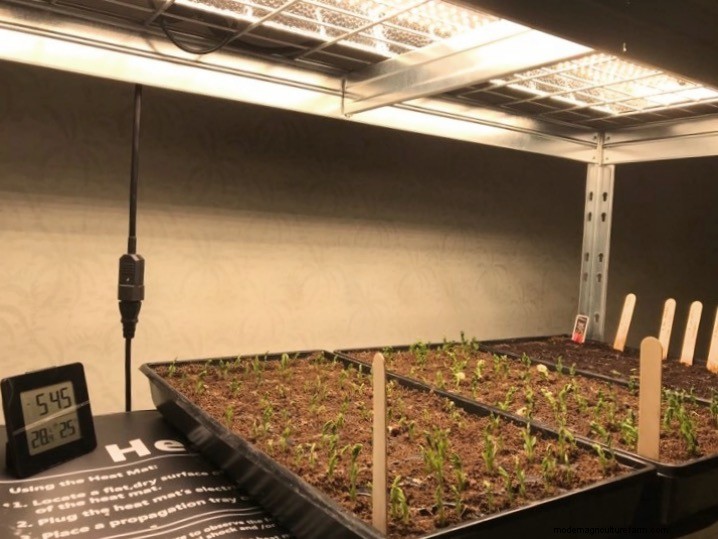
Not all seedlings are created equal when it comes to experiencing heat. While most seeds germinate at warm temperatures, treating seedlings the same after germination can lead to leggy, weak growth.
Cooler temperatures in your grow room will result in stockier plants that are more resistant to cold and varying temperatures, and easier to harden off.
But how cold is too cold when it comes to seedlings?
So how do you keep all your seedlings happy?
A good option would be starting cool-season crops in the basement and keeping the temperature on the cool side while growing your warm-season crops inside the house where it’s warm and toasty. Of course, this will only work if you don’t have hundreds of warm-season plants to grow.
If you decide to grow all your plants in one place, only provide heat mats for your heat-loving plants. Your cool-season crops will benefit from the heat they put out as well, but not as much as to stunt their growth.
Save some heat and space by starting as many seedlings as possible in small pots, and then pricking them out and transplanting them to larger trays, so you don’t waste energy on too many surfaces.
Another important tip is not to start your seeds too early! Cool-season crops don’t need more than 4-6 weeks before they need to go outside and LED grow lights speed up the growth of warm-season crops tremendously (think 8-9 weeks instead of 10-12 weeks). In fact, I struggle with pepper and tomato plants flowering too soon!
So, save some electricity and effort, be patient, and start seeds a couple of weeks later than you’re tempted to. And of course, watch the weather!
Starting seeds and growing seedlings indoors is a lot of work. Since most of us don’t have the luxury of a grow room inside our house, growing our plants in a basement, garage or insulated shed is doable, as long as we handle the logistics.
Starting most of my vegetables indoors has been a huge contributing factor to my garden’s success since everything is predictable and measurable when done this way. I love being in control of my seedlings’ health from the germination stage all the way to transplanting.
Hope you’ve found these resources useful – once you get set up, it’s easy and fun. Have a lovely growing season, everyone!


