
Welcome to Modern Agriculture!

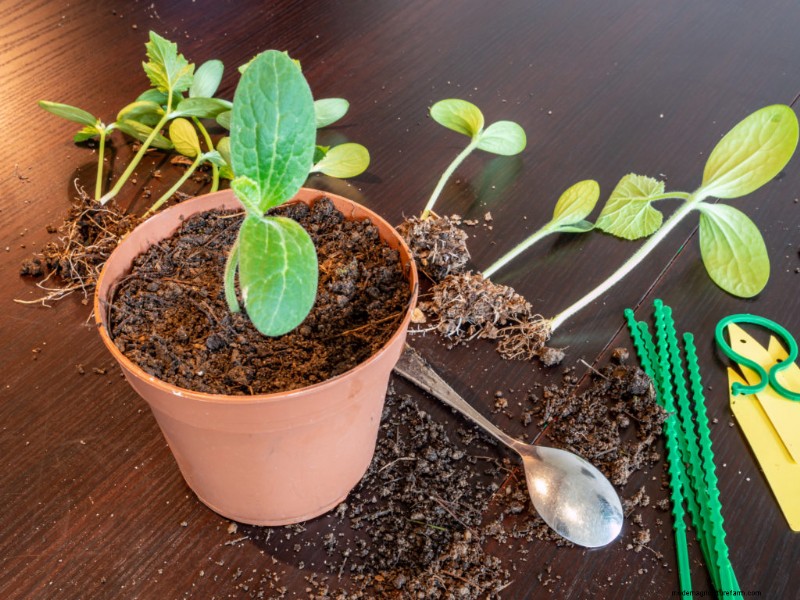
Separating seedlings for the first time is anxiety-inducing for many inexperienced gardeners. What if you break the stem? What if you break the roots? What if the plant doesn’t recover? These are all relevant questions, although, fortunately, separating seedlings is a lot easier than it looks.
To safely separate young seedlings, make sure the soil is moist. For small seedlings, lift from underneath the roots with your finger or a tool and gently pull apart. With bigger seedlings, turn the container upside down, squeeze it to get the roots out, and loosen the soil until they break apart.
If you’re starting your own seeds, you’ll need to master separating and transplanting seedlings, as you’ll be doing this over and over again. Throughout the gardening season, you’ll be:
Each situation is a bit different when it comes to separating seedlings, and we’ll be covering all three of them here so you’re fully prepared to grow your own little plants.
In this particular situation, you’ll have a tray of very crowded seedlings waiting for their final location. Broadcasting a bunch of seeds on a tray is very economical because you’ll be getting enough seedlings to fill your entire garden, all confined in a small container.
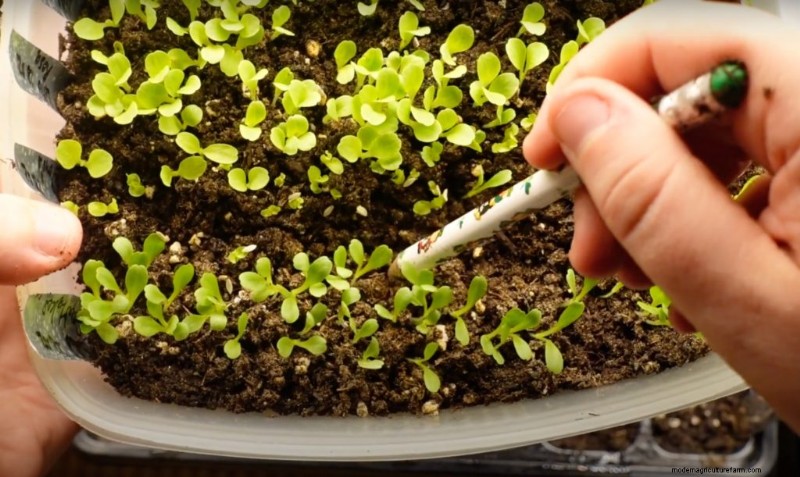
Pricking out is the act of separating very young seedlings that are growing together and individually moving them to their own plug. You’ll be doing this with seeds like lettuce, celery and celeriac, and many gardeners start their tomatoes with this method as well.
You can prick out young seedlings at the cotyledon stage – when they have just two leaves and are about 1 week old, or you can wait until the first true leaves emerge, at about 2 weeks old. You can prick out seedlings at a later date, but they recover best when transplanted very young.
Leaving seedlings crowded in a tray for too long will make them compete with each other and stunt their growth, so don’t postpone this task.
Here’s how to easily and safely separate young seedlings:
Some seedlings spend a lot more time indoors than others. With lettuce, peas, beans all kinds of root vegetables, 4 weeks spent in an individual plug is more than enough before it’s time to transplant them outside.
But certain tropical vegetables like tomatoes, peppers, chillies and eggplants need anything between 8 to 12 weeks to reach a good size and get a head start in the garden. During this time, they’ll be potted up once, sometimes twice.
I like to start my peppers, chillies and eggplants in modules and keep them there for 3-4 weeks before I pot them up to bigger cups. Check a detailed article on moving peppers to bigger pots here.
When sowing peppers, chillies and eggplants, I like to drop at least 3 seeds in each module, because I often get spotty germination and I want to increase my chances. Sometimes, all three seeds germinate, and I have a choice to make: either thin my seedlings and only leave one in each module or keep them all, separate them, and move them to bigger pots.
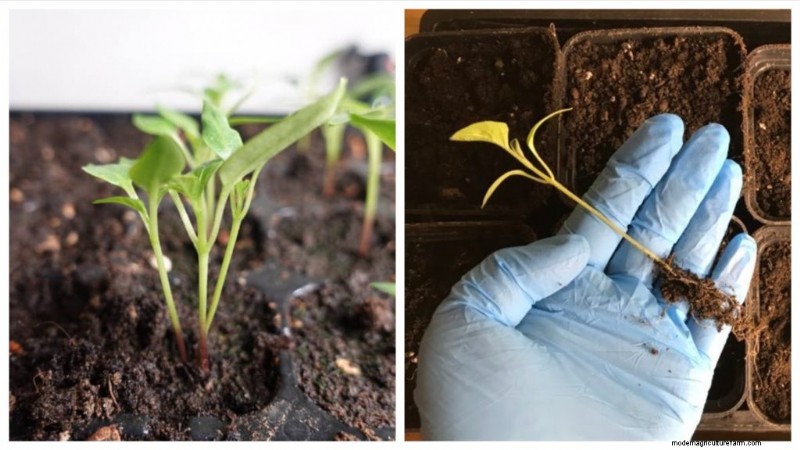
Whether you start your heat-loving plants in modules or directly in cups, you can separate them when they’re about 3-4 weeks old following the same process:
Since the seedlings are only a few weeks old, they shouldn’t be rootbound and this process should be very straightforward. Transplant them deep in individual pots that are big enough to hold their roots for 4 more weeks.
We all have those pots with two big seedlings in them because we couldn’t fully decide which to keep and which to thin. Many gardeners like to plant their vegetables in pairs: cucumbers and eggplants are only a few examples.
You could also be getting your seedlings from a plant nursery, in which case, deliberately look for pots that have two seedlings in them – you’ll get twice the value for the price you pay.
Separating older seedlings isn’t always as straightforward. Sometimes, they’ve been growing in a container that’s too small which leads them to become rootbound. When transplanting older seedlings outside, here’s how to separate them:
Cutting up the root ball may seem barbaric, but most plants are very resilient and quickly recover. You don’t have to worry about peppers and tomato plants when messing with their roots. I’ve even successfully separated cucumber plants, although common knowledge says they hate having their roots disturbed.
Now, there are some plant roots you just shouldn’t mess with – like carrots, parsnips, daikon radishes – generally all tap roots. It’s best to direct sow these. Also, when transplanting beets and radishes, try to be gentle and never attempt to separate them – if you have multiples, just grow them in clumps (see my article on multi sowing here).
Separating seedlings isn’t only possible, it’s necessary when growing certain plants. It also prevents waste if you separate and transplant extra seedlings instead of thinning them and throwing them away.
Pricking out seedlings saves you a lot of space when starting your seeds, and buying transplants that have multiples is a great way to save money. So get used to handling your seedlings – they’re small but tough, and you can rest assured that they’ll survive.


