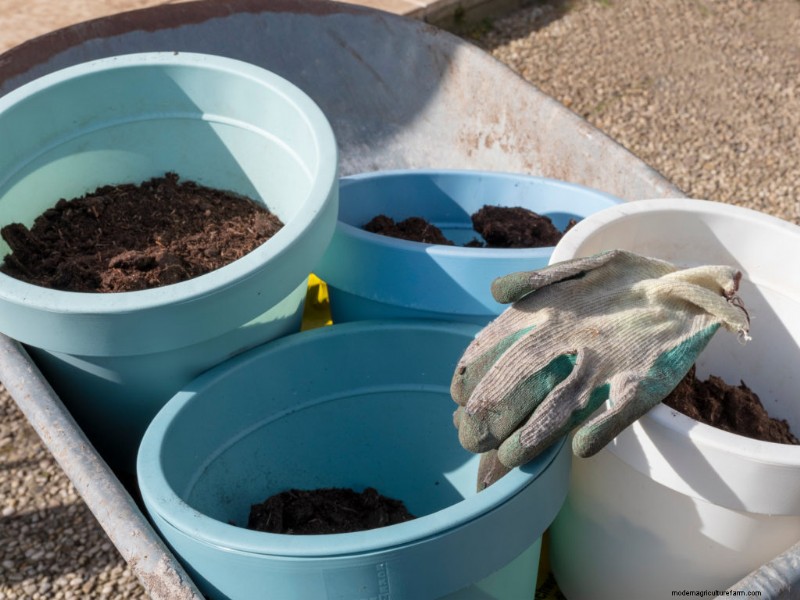
Every year, home gardeners toss away tons of old spent compost because, well, they just don’t know what to do with it. Did it go bad after just one year? Can it be saved and refreshed? Buying fresh compost or potting soil is always more satisfying, but not necessary, and definitely not cheap.
If you’re a fan of container gardening, you probably know that by the end of the season your compost will look like a sad, dried up, and compacted mess. Heavy feeders like potatoes and tomatoes can especially take a toll on the nutrients inside your compost, not to mention leave loads of roots behind.
In this article, we’re going to address reusing both old compost and old potting soil, because you can recycle them in similar ways. They’re not created equal, though, and it’s important to tell them apart so you can know what to supplement them with:
Compost is made up of organic matter that’s completely broken down – leaves, grass clippings, garden and kitchen waste, cardboard, and many more ingredients that work together and feed microbial activity. It can be homemade or store-bought. Compost should hold on to moisture but even more importantly, it should add vital microorganisms – bacteria and fungi – to the soil or to the crop you’re growing inside it.
Potting soil is different than compost because it’s a mix of multiple ingredients: peat moss or coco coir for water retention, perlite and sand for aeration and drainage, all kinds of fertilizers, and mineral supplements like dolomite. Potting soil can contain part compost for nutrition, but it’s generally used as a growing medium for your plants to root in. For this reason, you need to fertilize it more frequently than pure compost.
Now that you know the difference, let me show you how you can recycle both so that nothing goes to waste.
Why reuse old compost / potting soil
You should reuse old compost for many different reasons:
- Potting soil is expensive, and so is organic compost. Homemade compost isn’t easy to make or always readily available. So why not be thrifty and reuse it all?
- Old compost and potting soil, while they do get depleted over the year, they don’t become completely devoid of nutrients for a number of seasons, so no need to toss after just one year.
- Potting soil will still maintain its moisture-retentive properties. See it as a sponge, an inert growing medium that will hold on to oxygen, water and all the nutrients you’ll add.
- Any old roots you might leave in the compost will slowly decay and contribute to the organic matter over time. So don’t throw those away either!
How to revitalize old compost / potting soil
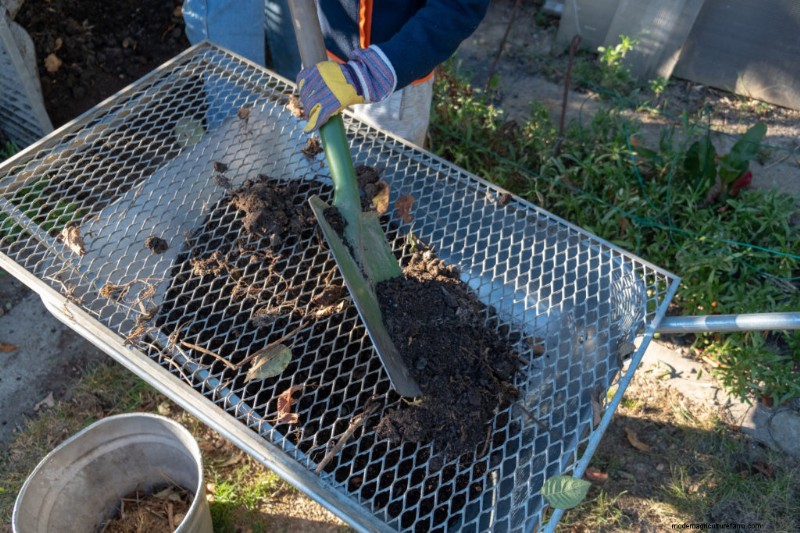
So now that you’re convinced to give this a go, let’s dig in! You can either rejuvenate old compost or at least fluff it up, but there are a couple of things you need to do before reusing it. Gather all your containers and start emptying them out in a wheelbarrow or a large tarp.
I strongly recommend sifting your old compost / potting soil. This does more than just break it up. By sifting, you can keep an eye on the contents – a chance to remove large rocks, grubs, pieces of plastic, or anything that doesn’t belong there. Does your compost still have worms in it? That’s a good sign, and make sure to toss them back in, as well as the small roots you might find.
Now that you’ve sifted the contents of your old containers, you’ll have a lovely mixture of fluffy compost. It looks much better already, doesn’t it? You can just leave it as is for later use (I’ll explain in a minute), or if you’re looking to completely rejuvenate it, here’s what you can mix it with:
- Mix half old compost with half fresh compost, manure, topsoil – or, why not, all of them together.
- Add a small amount of balanced, slow release, organic fertilizer – like bone meal or sea weed pellets. Better to underfeed than overfeed.
- Add perlite or coarse sand for better drainage – if your potting mix already contains perlite (you’ll see the small white particles), skip this step.
- Add a handful of mineral-rich material like azomite, ash, or kelp meal. Trace minerals like Molibden, Cadmium, Sulphur, etc, are very important for the health of your plants.
- Lastly, boost the microbial activity by innoculating your mix with something like Vermicompost, Bokashi (fermented compost) and/or even Mycorrhizae supplements. (Check these articles to learn more about worm castings and mycorrhizal fungi, and remember – a little goes a long way).
- If you’re using this mixture right away, don’t forget to thoroughly rehydrate it.
9 ways to recycle old compost / potting soil
Congrats! If you’ve added all the ingredients above, you’ve got a fantastic growing environment for your beloved seedlings and plants. This rich organic mixture has it all, and this is how you can use it in your garden:
- Container gardening.
Just do what you normally do and fill your containers with your lovely cycled-up compost. Your plants will be more than happy to access all the goodness you’ve added, they won’t even know then difference from freshly bought compost. Grow potatoes, tomatoes, squash, herbs, flowers – get creative and take advantage of this new resource.
- Potting on young seedlings.
While using old compost as a seed starter isn’t advisable because of possible pests and disease, older seedlings are strong enough to handle any type of soil. Use rejuvenated compost to pot on your peppers, eggplants and other larger seedlings until it’s time to transplant them outside.
- Top dressing for raised beds.
Once or twice a year, home gardeners use fresh compost to top dress their beds for new plants to go in. You may not have enough homemade compost to do that, and buying dozens of bags of organic compost can get very expensive. You can cut your costs and add a whole lot of nutrients by dressing your beds with the rejuvenated compost mixture you just made.
But let’s assume you didn’t add anything to your old compost. Even if you don’t have manure, fresh compost or fertilizer on hand, you can still use the old compost you’ve just fluffed up. Here’s how to use spent compost in your garden, with no additional ingredients:
- Use instead of mulch.
Who said you can only use woodchips for mulch and landscaping? Compost and potting soil are just as good, if not better, at water retention. When used on your raised beds as mulch, old compost will lock moisture in and help seeds germinate. Your flower or perennial beds can also benefit from old compost.
- Use as a bottom layer when creating new raised beds.
If you’ve already started a garden, you probably know how much work it is to fill up those raised beds. You can add anything from cardboard, tree trunks, straw, and garden soil, so why not throw old compost in there too? It will help with better drainage and weed suppression.
- Bottom layer for container gardening.
Much like filling up raised beds, you can use old compost or potting soil to fill up the base third of any gardening container. Top it up with 2/3 fresh compost and transplant your seedlings – your plant won’t know the difference, it will be surrounded by plenty of fresh compost, and you’ll spend a 1/3 less.
- Throw it back in the compost bin.
Did you know that old compost isn’t completely spent? It still has some soil life in it, and if you throw it back into a compost pile that you’ve just started, it can help it decompose faster. It’s not quite the most efficient compost activator – like coffee grounds or comfrey tea – but I always use old soil or compost whenever I mix a new compost pile.
- Spread it on top of your lawn.
Do you have any bald spots on your lawn that just won’t grow grass? Spreading old compost on top of freshly sown grass seeds is a great way to keep them moist and get them to germinate. Just remember to keep on top of watering and mark the spot so you don’t step on it.
- Save it for later use.
If you’ve sifted your old compost at the end of the season, you may not want to use it right away. It’s still a good thing that you didn’t leave it out in the open, where rain can continue to wash it down. The best way to store old compost is inside a covered bin, safe from the elements. It will continue to break down and freezing temperatures will help kill any pests inside it.
When not to reuse compost
While you can keep reusing old compost and rejuvenating it indefinitely, there are certain times when it’s best to just throw it away. Don’t reuse old compost if your plants have been affected by disease, like blight, or soil-borne pests that won’t be killed by frost. Do thorough research on your problem to see if the disease spores or pest eggs can survive winter.
Also, avoid using old compost or old potting soil as a seed starter. Young seedlings are too sensitive to deal with pathogens, so a sterile mix works best.
Lastly, if you’re reusing old compost, you might be dealing with some weeds next season. The plants you’ve grown inside your old compost will have likely dropped seeds – but any unwanted volunteers will be easily manageable with a layer of mulch or some light weeding.
Conclusion
So there you have it – rejuvenating and reusing compost – a great way to save money and be kind to the environment. Apply these tips and you’ll be following in nature’s footsteps, wasting nothing, just transforming. And if you’re not already making your own compost, give it a go! It’s far less intimidating than you might think.


