
Welcome to Modern Agriculture!

My friend passed the paper, and I read the headline: “Invasive Weed Killing Animals — Wow! That’s scary. What else does burdock kill?”
“Just about everything in its path by the sound of it.”
“We seem to have a lot of invasive plants taking over.”
“The powers that be always have a great plan,” my friend said. “Until their great plan creates another problem.”
I chuckled. Usually destroying one problem included introducing yet another. Like an invasive weed to kill off an invasive weed only to become the new invasive terror, the kudzu plant is one example.
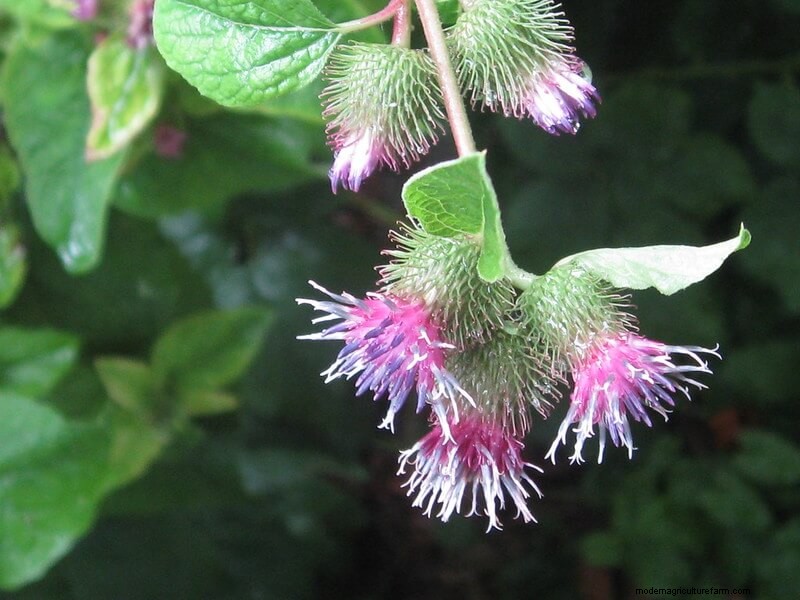
“It’s called Arctium minus,” my friend continued. “Common burdock. It’s destroying our ecosystem in many ways.”
“How?”
“Primarily the burrs. When they attach themselves to fabric, fur … you name it. It’s stronger and more destructive than Velcro. In fact, once on sheep, the wool has to be discarded because it’s not usable. Attached to horses and cows, it makes them ill and not marketable. These burrs have a tendency to catch some creatures, particularly songbirds, and they literally starve to death. Not a pretty sight.”
“Oh my!” I exclaimed. “I guess it overtakes native species and unbalances our ecosystem in the process?”
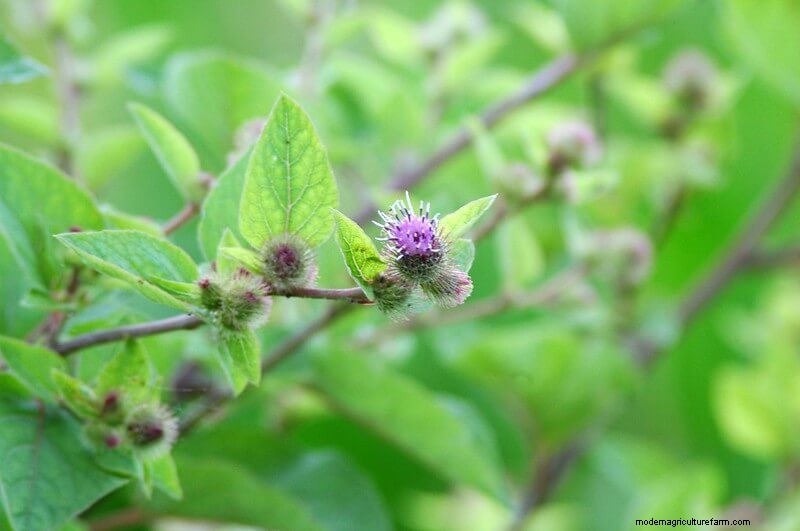
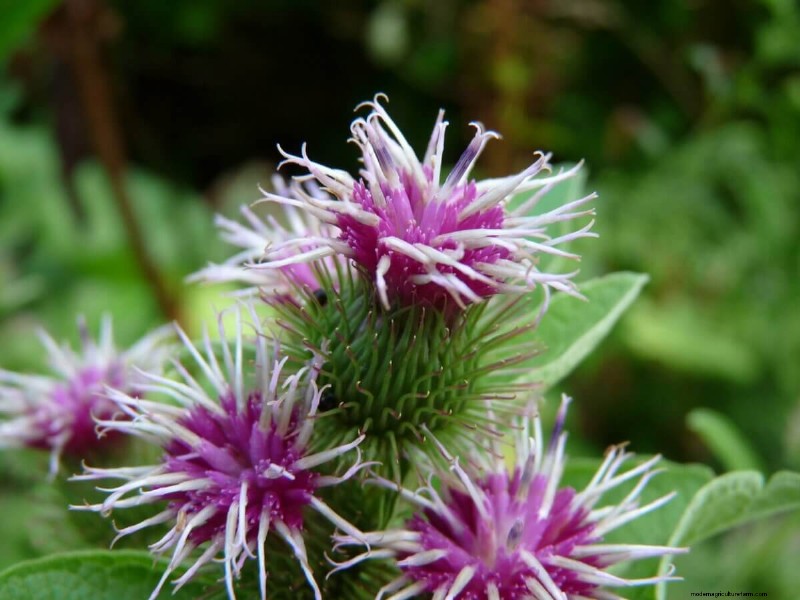
Burdock, from the Asteraceae family (genus Arctium) is a biennial plant native primarily to Europe and Asia, but found just about anywhere around the world. It is a large plant. At its full height, about 7 feet tall, it’s pretty difficult to miss. That height plus the reddish stems, large, heart-shaped leaves with toothed edges and hairy undersides, and of course, the purple flowers with spiny, hooked leaves (the leaves can be up to 20 inches long) — which when gone to seed, become those annoying burrs that latch onto everything. And those burrs aren’t small either — about an inch in diameter.
Ah yes, the purple flower that blooms from July to October might be pleasant to the eye, but when it goes to seed, those leaves turn the flower into a round and bristly nuisance. A deadly one, too, which is unfortunate considering how beneficial this flower is to honeybees who collect its pollen and nectar around August when other pollinating plants, like clover, are dying back for the season and goldenrod hasn’t started to bloom.
Related Post: Homestead Stories: Japanese Knotweed
A very sturdy plant, common burdock can grow almost anywhere, including waste places, pastures, open words, roadsides, along fence lines, and in barnyards. Interestingly, however, is that it seldom grows in cultivated land.
Deadly when in its natural habitat, various parts of the common burdock plant are both edible and have medicinal uses. The root is sometimes used as food; the root, leaf and seed are used for various medical ailments. Conditions such as skin and stomach problems and joint swelling are the most common ailments treated with various parts of the common burdock plant. The chemicals present in common burdock are believed to be beneficial in combatting bacterial infections and inflammation.
Some research shows that creams made from the fruit can reduce those annoying eye wrinkles known as crow’s feet. In tea, burdock has been shown to help prevent the recurrence of diverticulitis, although it doesn’t stop the bleeding associated with it. Some studies show that burdock is helpful in treating breast cancer, diabetes, fluid retention, fever, anorexia, stomach conditions, gout, acne, dry skin, psoriasis, and other conditions. Research is slim on how effective these medicinal uses are. Like anything else, use with caution and seek professional advice as to the merits, safety, and efficiency of common burdock as a medical treatment.
As for food and drink, common burdock is a staple in many diets. The taproot of the young plant is often harvested to be eaten like any other root vegetable. It’s found in popular European and Asian dishes. In Russia, the roots actually substitute for potatoes. The common burdock root is crisp like a potato or carrot, and it has a mildly sweet flavor. Like many root crops, there is that musty flavor of the mud in which it was grown, but this can be soaked off. The root is often pickled, and it cooks well in soups and stews.
The young flower stalks, if harvested in late spring before the flowers appear, is thoroughly peeled and eaten raw or boiled in saltwater. The taste is similar to that of artichokes. The young, soft leaves are also popular in Japanese cuisine.
With the increased attention to high fiber diets in the late 20th century, common burdock became a popular culinary additive. It’s full of dietary fiber, as well as calcium, potassium, and amino acids. It’s also low in calories.
Like dandelions, common burdock is a popular ingredient in drinks. In the United Kingdom where common burdock has its origins as a medieval mead, common burdock can be found in soft drinks. Before the trend to use hops as a bittering agent in beer, common burdock root was the main component.
Like anything else, there are some unsavory and unsafe side effects to using common burdock for medicinal purposes. There may be some beneficial qualities, but it can also be dangerously toxic and even deadly. Medicinal products made with common burdock have been associated with poisonings when the plant has been contaminated with the root of belladonna (a poisonous perennial of the nightshade family, Solanacea). Whilst these poisonings have not been caused directly from common burdock, it gives one pause to wonder: Do the two plants growing in close proximity to each other cause the cross-contamination poisoning? Or is it a result of harvesting the two plants (belladonna, as well as being poisonous, is also deadly) and processing the two together?
There are many other marginally tested uses for common burdock. Most of the suggested medicinal benefits of common burdock are sketchy at best. In other words, no one really knows if common burdock is beneficial or dangerous. Err on the side of caution and make sure you do the research and consult the professionals.
Despite of its culinary and supposed medicinal benefits, common burdock is a blight on the natural habitat of many wildlife species, and its invasive nature strangles and prohibits the growth of other plant life. Other than harsh defoliant chemicals (that are just as harmful to both the environment and all who live in it), or digging up every plant, roots and all (a mind-boggling task at best), the only known remedy to eliminate common burdock are specific bugs like the larva of the ghost moth and other lepidoptera like the lime-speck pug. The larva eats the plant voraciously, but unfortunately, it also eats other plant life as well.
Is It Wise to Import Another Non-native Plant of Insect to Stem the Invasion?
This is a loaded question that has besieged researchers throughout time. Importing plant, animal, and insect life may have short-term benefits in eliminating one problem, but ultimately, once that problem is dealt with, the import may create new problems of its own. It’s an ongoing debate and perhaps there is no right answer. Monitoring new growth of common burdock and advising the various councils who deal with invasive species control is just one step toward dealing with the issue.


