
Welcome to Modern Agriculture!

Do you love mild, crisp peppers in a broad spectrum of colors? Or hot red chili peppers that make your taste buds tingle and your eyes water? Grow peppers in your garden and you’ll have an assortment to add bold flavor to soups, stews, stir-fries, sandwiches, salads, and salsa.
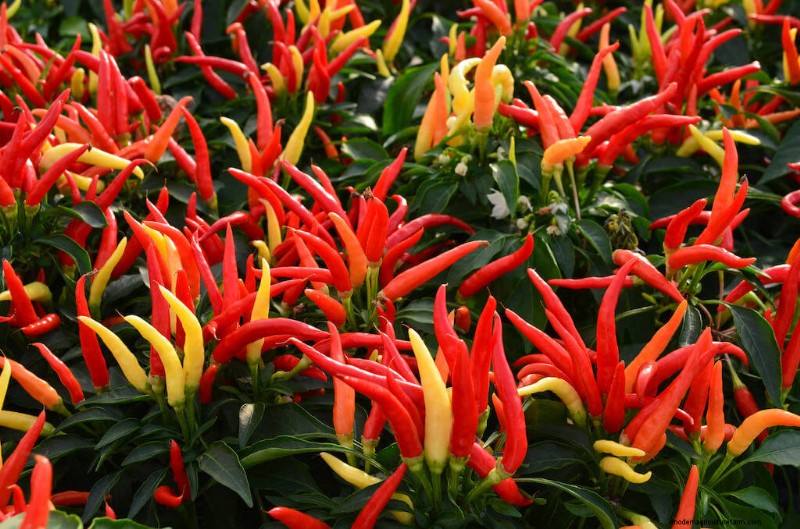
Folks who say they don’t like peppers often change their minds once they taste a garden-grown, fully-ripened pepper.
Peppers are a cultivar group of the plant species Capsicum annuum, a member of the nightshade family, Solanaceae. They’re botanically related to potatoes, tomatoes, and eggplant.
Using companion planting techniques, peppers are easy to cultivate in the home garden. Read on to discover how companion planting, or grouping complimentary plants together, can maximize garden space, enhance flavor, repel insect pests, boost growth rates, and increase yields of food crops in the homestead garden.
Peppers, tender perennials typically grown as annuals, require a long, hot growing season. Native to Mexico, the West Indies, and Central and South America, peppers do best in a full sun location and prefer nutrient rich, well-drained soil. Enhance soil prior to planting with a generous amount of aged herbivore manure (sheep, goat, horse, cow, lama).
In the home garden, companion planting serves a diverse array of purposes ranging from attracting beneficial pollinators and insects, providing a wind barrier or shade for neighboring plants, crowding out weeds, as well as drawing insect pests away from other food crops. Companion planting is also one of the best ways to avoid using noxious chemical products to fend off bugs or fertilize garden plants.
Here are some flowers, vegetables and herbs that will compliment your pepper patch.
Several common garden plants should not be planted in close proximity to pepper plants, as they may harm one another. Mustard plants and Brussels sprouts should not be grown close to peppers. Also, members of the plant family Brassica, which includes cabbage and broccoli, should not be grown in the same area as pepper plants. Fennel, soybeans and lima beans are also poor companions for pepper plants.
Sweet peppers and chili (hot) peppers are the two basic chili types. Chili peppers are typically used in small amounts as a food seasoning. Sweet peppers are used as a vegetable. Peppers vary greatly in shape, size and heat level.

According to the Washington State University Extension Service, “bell peppers are considered to be sweet with no significant heat. Pepperoncini, banana pepper, and Anaheim pepper are relatively mild-flavored peppers. Meanwhile cayenne, Hungarian wax, jalapeño, Serrano and chipotle peppers may pack significant heat. Habanero and pequin peppers can be insanely spicy hot.”
In the United States, sweet bell peppers are the most popular. Bell-shaped with three to four lobes, sweet bell peppers are green, yellow, orange, red, brown, or purple, depending on the variety and the level of ripeness.
The majority of bell peppers sold in the marketplace are picked at the mature green stage: fully developed, but not yet ripe. When allowed to ripen on the vine, bell peppers start to turn red—these peppers have more flavor and more nutrients.
Bell peppers are mild and flavorful, with a crunchy texture. If you like a pepper that is a bit spicier, try Mexi-Bells, a smaller sweet bell pepper with a slightly more intense flavor.
Although peppers are self-pollinating, they will also cross-pollinate. Different types of peppers should be isolated from one another if you intend to save the seeds for planting next season. They will cross-pollinate if intermixed.
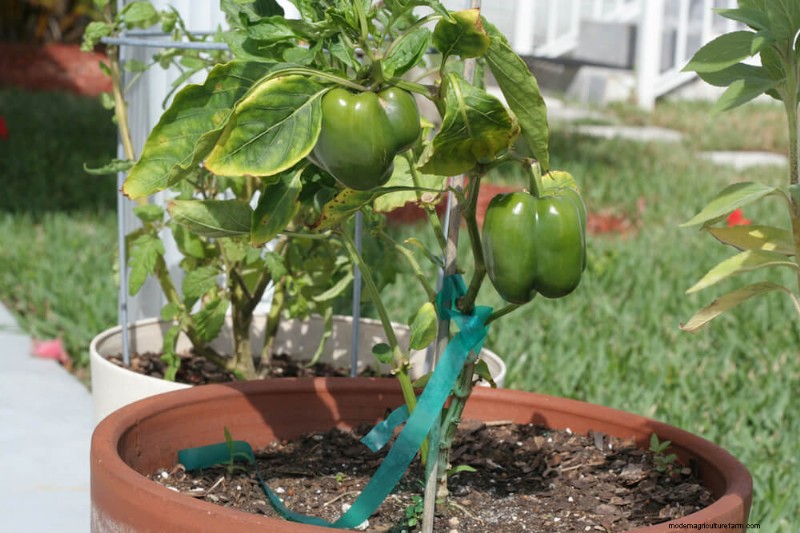
If different varieties of pepper plants pollinate each other, the seeds and the resulting plants will exhibit characteristics from each parent plant. That will influence the appearance and flavor of the new crop. However, if you don’t plan to save seeds, you can plant different types of peppers adjacent to each other.
Harvest peppers with a knife or shears as they mature, then store in the fridge. Peppers stored in the refrigerator crisper stay fresh for up to three weeks. Peppers can also be canned, pickled, dehydrated, or cored and chopped to store in the freezer.
The Georgia Department of Agriculture suggests several different ways to use and enjoy fresh peppers from the homestead garden:


