So there comes a time in every growing season when one crop is growing so well you have what’s called a glut.
This happened to me during the pandemic in 2020 when I was allowed to visit my allotment but not to donate any excess fruit to neighbors and friends so my dilemma was how do I use or store all these strawberries and fruit so that it doesn’t go to waste?
You can see the resulting strawberry wine pictured below. I also suddenly remembered the pantry in my aunt’s house in Haddington Road in Dublin, where my siblings and I used to visit when playing hide and seek.
A dark cellar-type area was packed with shelves from floor to ceiling, and being outdoors under the stairs, it was never warm and it actually used to get icicles in winter.
In there, shelves were packed with food in bottles and jars and it is only now I value this historical knowledge because this is how humanity used to preserve food for winter use before refrigeration. Read on for some ways to use and preserve your excess fruit.
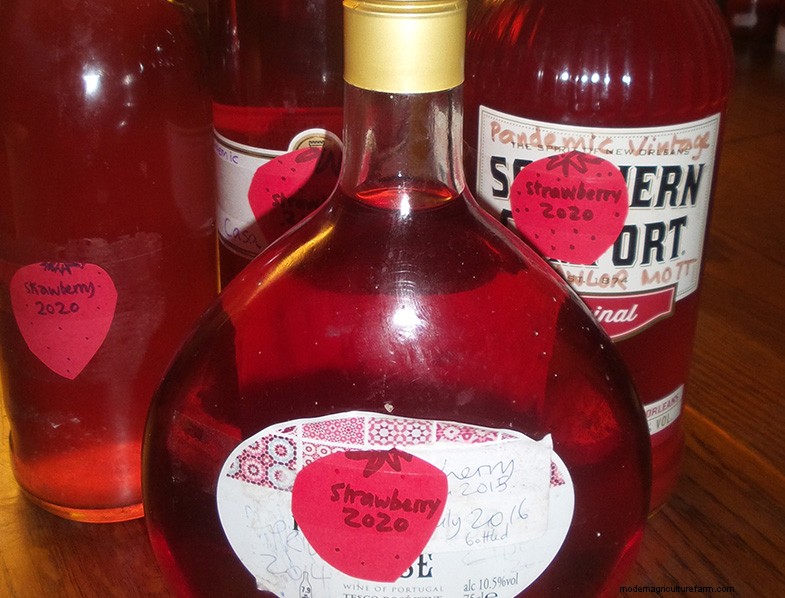
The author’s Strawberry Wine at home, Image © Tina Lawlor Mottram
Preserving Fruit
Fruit is best eaten on the day you pick it to benefit from the vitamins, taste, and nutrients but failing that, here are 8 ways to use or conserve it.
- Jam is made by boiling the fruit while the added sugar is a strong preservative, provided jars are stored in an airtight jar in a cool place. Red currant jelly is a traditional accompaniment for lamb in England but its bright red colour can be used on toast or when serving cheese too.
- Fruit juices are a cinch with modern equipment. Redcurrants can be quite sour but they add a zing to any homemade juice and if you chop half a banana with a cupful of berries, the sweetness counteracts the bitterness of the currants. Add ginger, lettuce, or any spare fruit or veg for a daily vitamin dose.
- Sloe gin is world famous and you can use mixtures of sugar, alcohol, and sloe fruit to make a winter warming drink. Damsons can also be preserved in this way or made into jams. Collect sloes and damsons from hedgerows when the winter frosts arrive for the best flavor. See recipes below.
- Dried flowers and fruit make non-alcoholic beverages like teas and squashes. Elderflowers can be dried, fried in batter, and made into wine. Dandelion flowers are edible and they are a famous household wine in Elizabethan times, often drunk for its health benefits. Nettle leaves can be dried to make tea and used fresh to make nettle soup.
- Syrups can be made using rosehips and elderberries with sugar. These can be drunk as a teaspoon of medicine, added to drinks, poured over ice cream, and used as prevention for flu. See the recipe below.
- Whole fruit pieces can be preserved in syrup, where you cook the fruit lightly with sugar and then seal it in a jar (canning in the US), and then store it in a dark place. This works for many fruits including pears, plums, and apricots.
- Globe Artichokes can be cooked, then preserved in oil.
- Freezing is a great option for rhubarb, cherries, and apricots but softer fruit like raspberries will defrost into a mush, which is ok for winter juices but not as appealing as the fresh fruit. However, in our house, the tradition has become frozen raspberries and strawberries in the trifle every year with a dash of homemade booze for the sponge!
How to make jam:
Suitable for cherries, blackberries, figs, strawberries, raspberries, and gooseberries.
In general, I use a cup to measure because foraged or allotment fruit does not come in pre-measured plastic containers like from any supermarket! These will fit nicely in a small saucepan. Double up quantities if you have too much fruit! Before you start, make sure you wash and sterilize your jam jars by placing them in the oven on low heat or just straight out of the dishwasher is fine.
You will need:
2 cups of fruit (for cherries remove the stones first) and remove the stalks, 1 cup of sugar, and 2 lemons (which add pectin, needed for the jam to set). Some empty jars with lids, greaseproof paper, and some elastic bands or strings are useful.
- Put the fruit, the sugar, and the lemon juice in a saucepan on medium heat and bring to a boil. Stir the mixture occasionally. The fruit will become soft after about 30-40 minutes. It may take slightly less for soft berries.
- To see if the jam has “set”, place a spoonful on a plate and wait for a minute to see if it goes solid. If it is very runny, continue to simmer the jam until the spoonful wrinkles on the plate.
- Pour the jam into the jars and cover the tops with greaseproof paper and elastic bands until it cools.
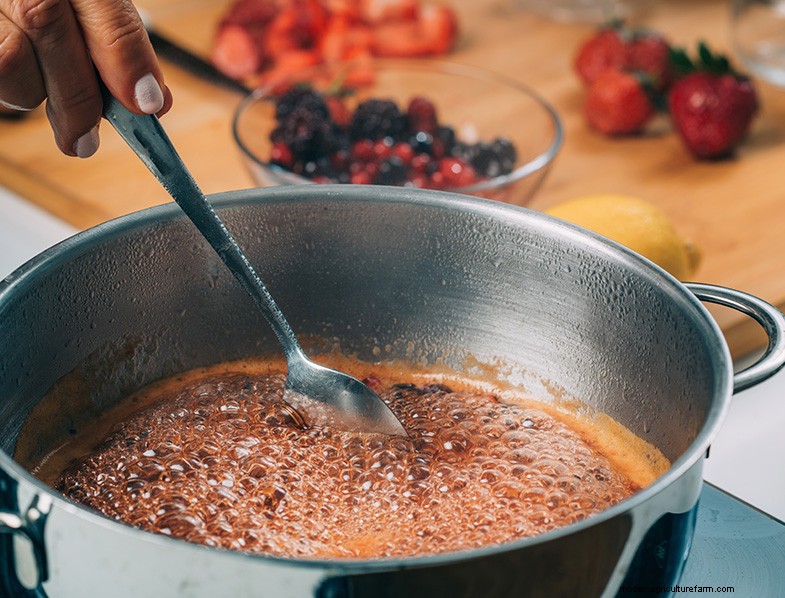
Making Jam
How to make redcurrant jelly:
This jelly is not a dessert but a type of preserve offered as a garnish, that is completely free of fruit and seeds. To make it, you need a muslin bag to strain the currants through which removes the seeds, and a lot of patience but the end result is perfect!
You will need:
1.5kg of both redcurrants and sugar, 750 ml of water, 250 ml of white wine vinegar, a piece of ginger root freshly cut, and a cinnamon stick.
- Put the water, spices, and currants to simmer in a heavy saucepan and allow the fruit to soften for at least 25-30 minutes but more if the fruit is not very ripe. Test the fruit – it should squeeze very easily.
- Next, add the vinegar and allow the mixture to come to a boil. As soon as you see the bubbles forming, add the sugar and keep stirring it in until it is fully dissolved. This usually takes about 15- 20 minutes.
- Next, you need to strain the whole mixture through a muslin bag. If you don’t have one, cut up an old shirt or blouse with a thin, fine weave and drip the mixture through this into a collecting bowl or individual jars. These should be sealed immediately and allowed to cool before placing in storage.
- A word of warning from my own mother! “Never squeeze the muslin bag or the jelly will not emerge clear!”. Just be patient and allow it to drip through at its own pace.
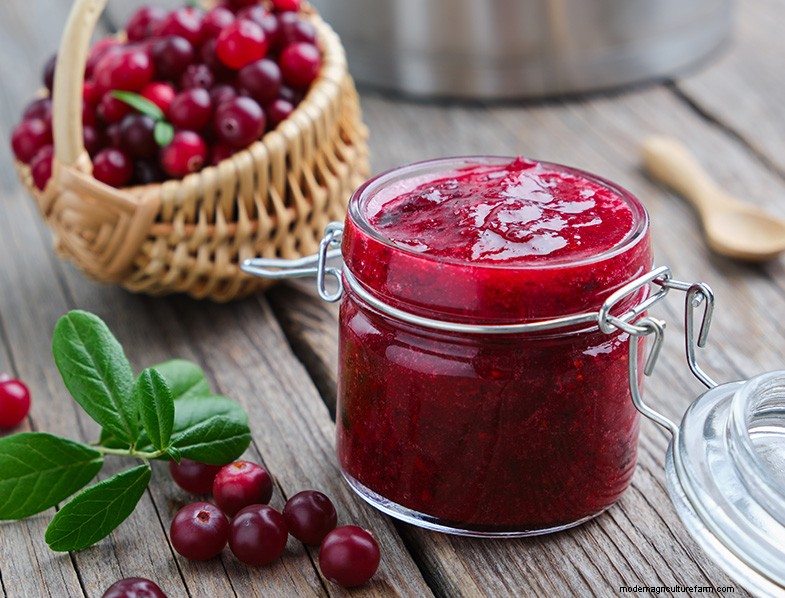
Red Current Jelly
How to use elderflowers in tea, wine, and even as an eye soother.
The end of May is the perfect time to find elderflowers in bloom. A whole tree will have bunches of sweet-smelling blooms in your local park.
- Pick a whole floret and you can use it fresh or dry some bundles by hanging them upside down on a piece of string for a few weeks. Then store them in a jar and use them whenever you fancy a cuppa. The flowers have a wonderful perfume and the whole tree was one of the 9 sacred herbs of the Saxons.
- In the past, people picked them to use for dessert, dipping the whole floret into a batter mixture and then frying them lightly until golden brown making a delicious dessert.
- Traditionally, elderflowers were used mixed into creams as moisturisers and also in liquid teas to use as eyewashes, to help cleanse the eyes of pollen for hay fever sufferers.
- Elderflowers make a fantastic herbal wine too with a delicate, light flavour. A word of warning though! If you want to try making elderberry cough syrup, you need to leave several flowers to become berries so only pick enough for yourself and leave the rest go to fruit. The birds like to munch on these in winter too.
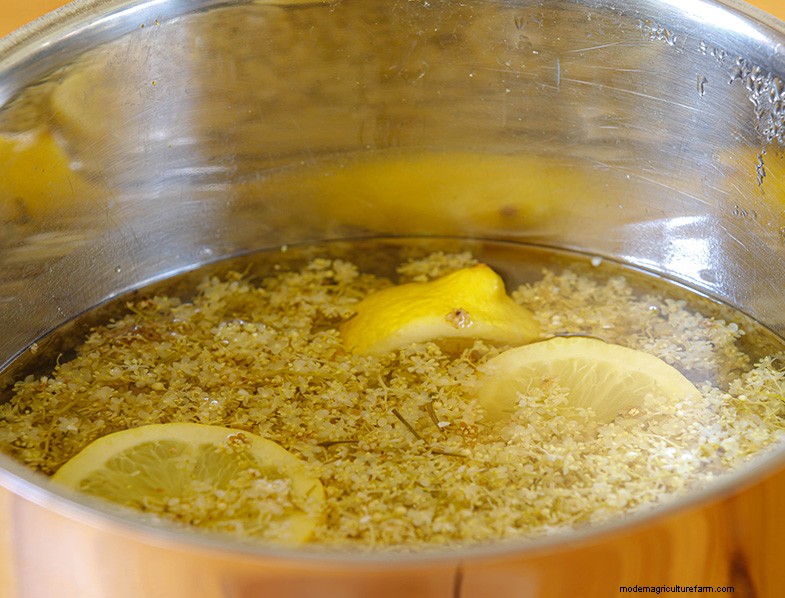
Elderflower Tea
How to make elderberry syrup, as a cough mixture.
Elderberries have been used as a remedy for coughs and flu for centuries and scientific research verifies that the berries have antiviral qualities and inhibit the flu virus in tests.
- Pick 1 kilo of ripe berries in bunches from late August onwards. (You can halve the mixture if you prefer or freeze half the berries and then cook them later). They must be black so remove any green ones. Use a fork to remove the berries and then discard the stalks.
- Place the blackberries in a saucepan with a small amount of liquid, just enough to cover them, and allow this to come to a boil, stirring occasionally. Do not allow the vitamins to boil away! Stir the mixture regularly and simmer it until you can see the liquid turning a purplish colour. This can take from 20 to 30 minutes.
- Now strain the berries through a muslin bag (or a sieve) to remove seeds and the outer skin and pour this mixture into a measuring jug to see how much liquid you have.
- Add 350g (or 175g if halving the mixture) of sugar, the juice of 2 lemons, and any other spices like cinnamon and cloves to give it that extra taste. Some recommend adding ginger to give it some heat, to shift that flu but it depends if you like ginger or not. Return this mixture to the heat and simmer it, stirring continuously until it starts to bubble.
- Remove it from the heat and strain it into sterilized jars or bottles. Seal it immediately and allow it to cool. Label it with the date and store it in a dark, cool area until you need it. If left unopened it will last about a year but check for any bottles with a mould forming and discard these.
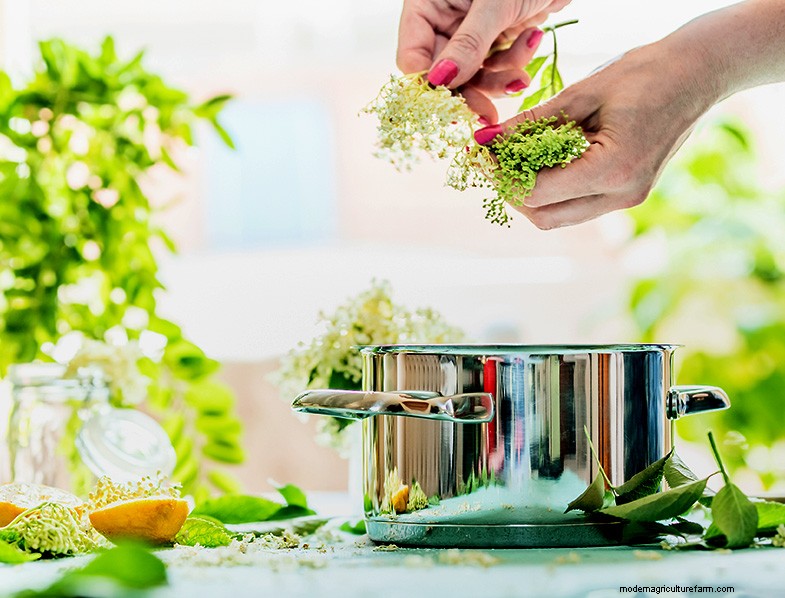
Elderflower Syrup
How to freeze fruit:
- Rhubarb is fantastic if cooked, then frozen and you can defrost as an instant vitamin-filled addition to natural yogurt, or just add some custard on a chilly evening. Or just harvest the crop, cut the stalks into small pieces, and freeze immediately.
- It is important to pick rhubarb before June because, after that, the acid is dangerous for consumption. Allow the plant to recover over the summer and pick again next spring.
- You can freeze redcurrants, blackcurrants, gooseberries, blackberries, apricots, cherries, and plums. All of these will emerge a little moist and misshapen but they are excellent for use in desserts like fruit crumble or defrosted to make jam if your supplies run low in the winter.
- Blanching: Some chefs recommend blanching fruit and vegetables before freezing. This means pouring boiling water over the fruit before freezing it or cooking it slightly for 1-2 mins in boiling water, then allowing it to cool. This process is said to preserve the food flavour better.
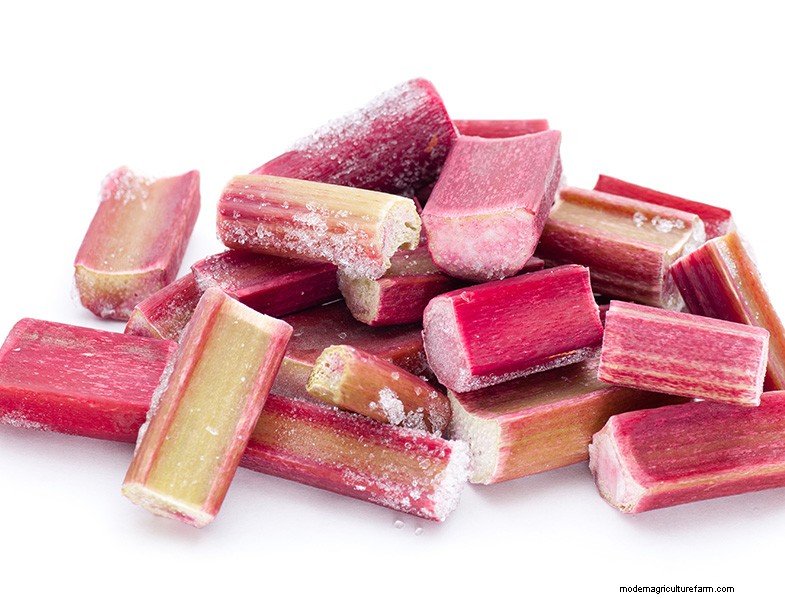
Frozen Rhubarb
How to preserve in oil or vinegar.
Globe artichokes are a deli favourite but you can pick your own and then cook them gently in warm water and remove the spiky flower head.
Then fill a jar with sunflower or olive oil and fill the jar as the season lengthens. In my house sadly, we eat them as they come off the plant so if we need them in winter we still trot to the deli!
Gherkins can be added to vinegar, which preserves them well, if stored in the refrigerator.
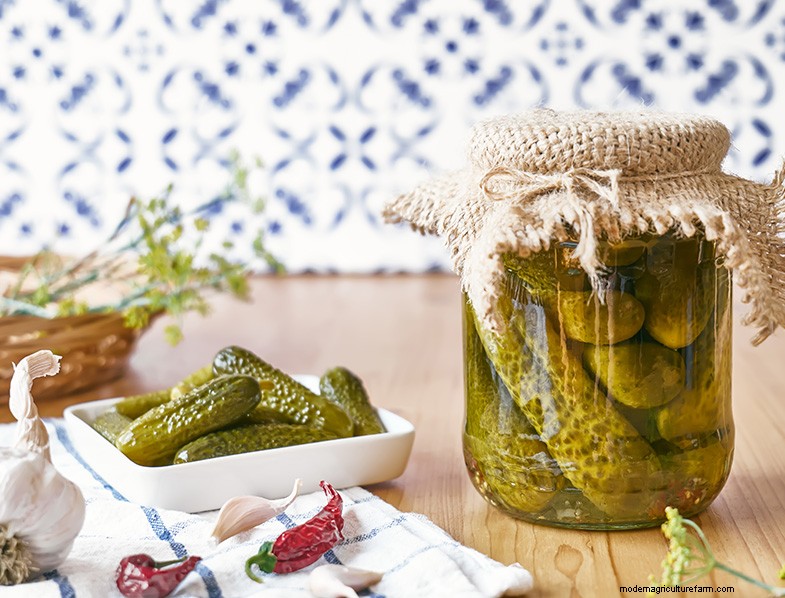
Gherkins in Vineger
How to make Damson, Plum, (or Sloe) gin.
This is a simple way to start your journey into homemade brewing by adding fruit to a spirit. If you enjoy this, then see how to make your homemade wine below. If you have access to a damson bush, then Damson gin (pictured) is wonderful as a Christmas day aperitif, tasting of the countryside while dinner is cooking.
You will need:
350-500g of fruit, which needs to be cut to fit, if it is plums. The foragers’ advice is to wait until after the first frosts before collecting your sloes, as the flavour is improved. You also need 250-350g sugar, depending on the quantity of fruit, and a bottle of your chosen spirit.
- Buy a good bottle of your chosen spirit – it can be 70cl of gin or vodka (or even whisky) but I think a clear spirit works best because the colour of the fruit transforms the alcohol to a pink or deep scarlet, depending on the fruit.
- Empty half of the bottle into another clean bottle, which can also be filled with fruit.
- Add the fruit to both bottles and then add the sugar, and shake gently. Leave to settle in a dark place from harvest time until the festive season.
- Shake the bottle gently whenever you remember but at least once a week, to mix the flavour of the fruit throughout the whole bottle. Then enjoy!
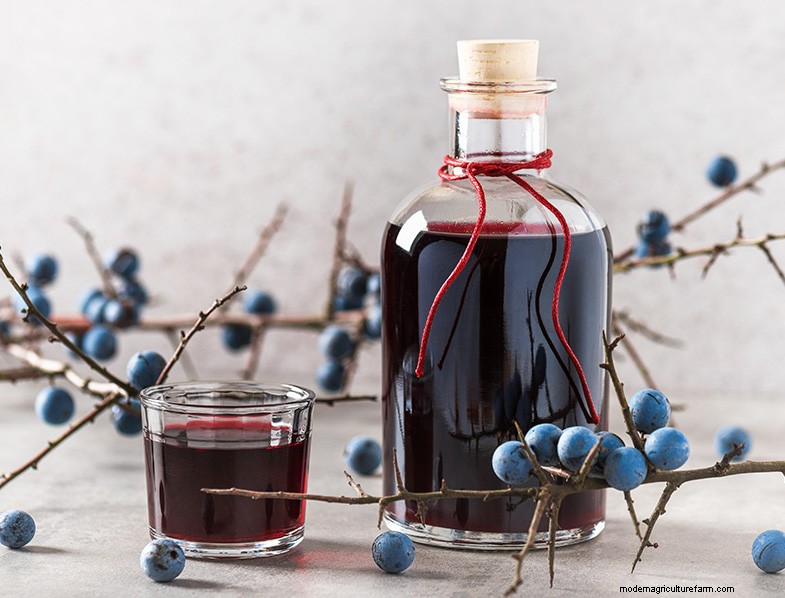
Sloe Gin
How to make homemade wine for complete beginners.
You can use apples, pears, apricots, dandelion flowers, elderflowers, elderberries, cherries, and most fruit and vegetables have been tried and tested over the years.
You will need:
A fermentation bin, the fruit of your choice; chopped or pulped to make juice, water, sugar, and yeast. Campden tablets destroy any natural yeasts and can be purchased in any home brewing shop.
After the first stage, you will need a demi-john, which you can find online second-hand or ask some friends. There is usually one lying around unused in most households. A bowl and a piece of clear polythene tubing are needed to rack the wine. Finally, some clean sterilised bottles and corks are needed to bottle up your wine.
- The bin needs to have a secure lid to keep fruit flies at bay and it is best to also have a fermentation lock, which allows oxygen to be released as the sugar turns to alcohol.
- Wash and chop your fruit into small parts and then fill your bin with it.
- Next, add sugar and water to the mix and allow it to settle for at least a week.
- You can add yeast at this stage or wait a few days to see if natural fermentation starts. If using commercial wine yeast, melt a little sugar in hot water to get it started, then add the yeast and allow it to cool before adding it to the fruit mixture.
- As the sugar and yeast begin to react, you will notice bubbles coming from the lock.
- After about a week in the fermentation jar, strain the fruit remains from the mixture and pour it into a container called demi-john, with a fermentation lock. This is the name for the glass (or polythene) large bell jar where wine is developed.
- Leave the container in a warm place to bubble away and when the bubbling stops, that means fermentation is finished. The wine may look hazy or have sediment at the bottom but this is normal.
- It will take several weeks, maybe months for the wine to clear. At first, it looks hazy and then the yeast particles drop to the bottom of the container and this is the time to siphon off this sediment. This is called racking the wine.
- Racking: You need to insert a clear tube into the bottom of the demi-john, to the cloudy sediment, and then place the bowl under the level of the wine so that pressure will allow it to exit the demi-john. You may need to start the process off by sucking in some air and then watch the liquid rise; just guide it to the bowl you have waiting. This is the lees of the wine and should be discarded.
- Bottling. Sterilise your bottles using hot water and a warm oven or some Campden tablets. Then use a funnel to pour wine into each bottle and then seal it with a cork. You can buy special tools to bottle your wine if you decide you enjoy the whole process. New corks can be bought too.
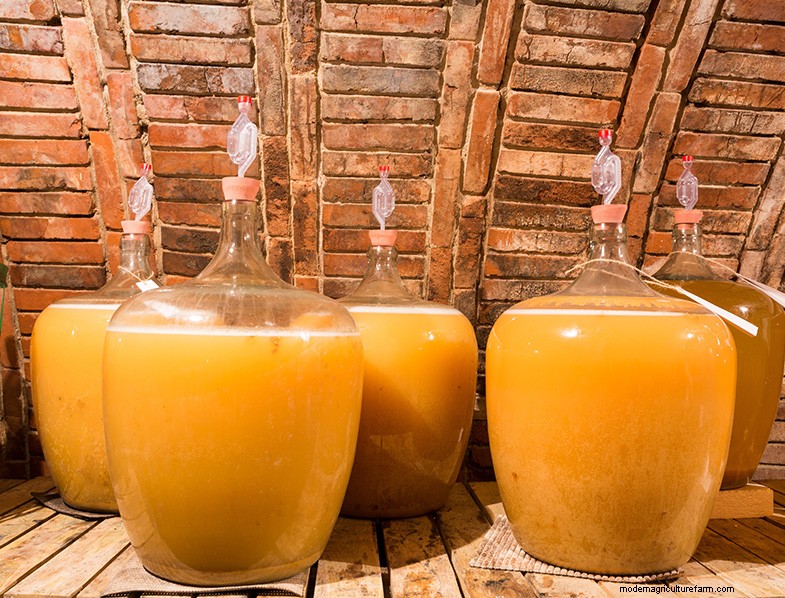
Homemade Wine Fermenting In a Demi-john
Conclusion
Even if you only pick blackberries in the autumn or pick up fallen apples, you can use them in your home cooking and freeze some or make jam, syrup, or wine.
This article has shown you that there is a ready supply in the hedgerows of elderflowers and elderberries which can provide you with tea and syrup. As the chill of autumn arrives, it’s time to collect sloes and rosehips for winter drinks.
Do send us some pics of your fantastic hedgerow culinary creations and any recipes to share with our readers. Hopefully, the idea of a larder is no longer historic and you have not only learned how to make jam but also learned a bit more about the plants in your local area.
118


