Centaurea cyanus–commonly called Bachelor’s button or cornflower–is a hardy annual and member of the Centaurea genus which includes dusty miller and mountain bluet. Bachelor’s-button is one of the most popular annuals with its bright blue tufted round blossoms.
Centaurea cyanus is a bushy plant with grayish-green, lance-shaped leaves, and dense thistle-like flower heads. It grows best in full sun in well-drained soil. There are tall varieties that grow to 36 inches tall and dwarf varieties.
Bachelor’s button is used for bedding, containers, and cut flowers—both fresh and dry. They are effective when massed for color in beds and borders, in foregrounds or backgrounds.
Flower Garden Success Products at Amazon:
- Wildflower Seed Mix Attracts Hummingbirds and Butterflies
- Eden Brothers All Perennial Seed Mix
- 10 pcs Stainless Steel Garden Hand Tool Set
- Gorilla Cart 4 Cu. Ft, 300-pound Capacity
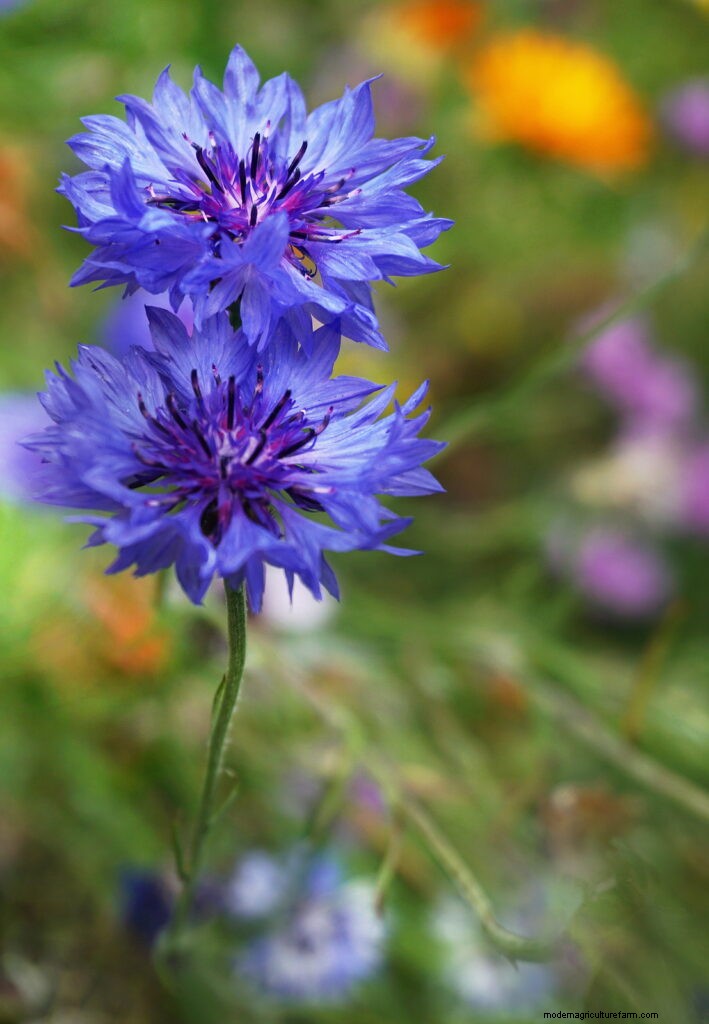
Cornflower, bachelor’s button flower
Bachelor’s Buttons (Centaurea) Overview
Bachelor’s Buttons, also known as cornflower (Centaurea cyanus), is a beloved annual plant known for its charming, daisy-like blooms and vibrant colors. Most commonly seen in shades of blue, the flowers also come in pink, white, purple, and even maroon. Native to Europe, these hardy and drought-tolerant plants are staples of cottage and wildflower gardens. They grow to heights of 12–36 inches, depending on the variety, and are celebrated for their ease of cultivation and ability to attract pollinators like bees and butterflies.
Eight Ways to Use Bachelor’s Buttons in the Garden
- Wildflower Gardens
- Perfect for naturalized wildflower meadows or informal gardens, Bachelor’s Buttons provide a carefree, airy appearance.
- Mix them with other wildflowers like poppies, cosmos, and daisies for a free-flowing, natural aesthetic.
- Borders and Edging
- Use shorter varieties to edge garden paths or flower beds.
- Plant taller varieties toward the middle or back of borders for a colorful vertical accent.
- Pollinator and Wildlife Gardens
- Bachelor’s Buttons are excellent for attracting bees, butterflies, and other pollinators.
- Include them in pollinator-friendly planting schemes alongside plants like milkweed, echinacea, or salvia.
- Cutting Gardens
- Cornflowers make excellent cut flowers and add a rustic, country charm to floral arrangements.
- Regularly cutting blooms will encourage more flowers, making them a productive choice for cutting gardens.
- Cottage Gardens
- Their soft, whimsical blooms fit perfectly into romantic, cottage-style gardens.
- Pair them with hollyhocks, foxgloves, or larkspur for a layered, textured look.
- Seasonal Displays
- Use them in spring and summer gardens for long-lasting color. Bachelor’s Buttons bloom prolifically when deadheaded regularly.
- Vegetable Gardens
- Plant Bachelor’s Buttons around vegetable gardens to attract pollinators, enhancing the productivity of fruiting crops like tomatoes and squash.
- Containers and Window Boxes
- While typically grown in the ground, shorter varieties can be used in containers or window boxes for a burst of color.
Design Ideas with Bachelor’s Buttons
- Monochromatic Blue Themes
- Use the classic blue variety to create a soothing, monochromatic garden palette. Pair them with blue delphiniums, salvias, and agapanthus.
- Mixed Wildflower Meadows
- Combine Bachelor’s Buttons with California poppies, black-eyed Susans, and Queen Anne’s lace for a wild, prairie-inspired garden.
- Color Contrasts
- Use the bright blue flowers as a striking contrast against warm-colored blooms like orange marigolds or yellow sunflowers.
- Cascading Displays
- Plant Bachelor’s Buttons in raised beds or along slopes for a “spilling” effect of flowers cascading downward.
- Formal Garden Accents
- For more structured designs, plant in blocks or rows for a bold display of color. Their upright habit works well for formal arrangements.
- Dry Flower Projects
- Dry Bachelor’s Buttons for crafts like wreaths or potpourri. Their vibrant color remains after drying, adding a rustic touch to home décor.
Quick Care Tips for Bachelor’s Buttons
- Light: Thrives in full sun but tolerates light shade.
- Soil: Prefers well-drained soil but is not fussy and grows well in poor or sandy soils.
- Watering: Requires minimal watering once established. Overwatering can lead to root rot.
- Fertilizing: Usually does not require fertilization but may benefit from a light application of a balanced fertilizer in very poor soil.
- Deadheading: Regularly remove spent blooms to encourage continuous flowering.
- Pests and Diseases: Generally pest-free but may occasionally encounter aphids or mildew in overly wet conditions. Ensure good air circulation.
- Sowing: Directly sow seeds in early spring, as Bachelor’s Buttons prefer not to be transplanted. They are hardy and can tolerate light frosts.
Bachelor’s Buttons Seasonal Notes
- Bachelor’s Buttons bloom from late spring to early summer. In cooler climates, they may bloom into early fall if properly deadheaded.
- They self-seed easily, so they often return year after year in informal gardens or wildflower meadows.
Get to know bachelor’s button
- Plant type: Annual
- Growing zones and range: Zones 3-9
- Hardiness: Tolerates light frost
- Height and width: 12 to 18 inches (30-45cm) tall; 10 to 12 inches (25-30cm) wide
- Foliage: Lance-shaped leaves 4 to 8 inches long; lower leaves with pinnatifid lobes and wooly-hairy beneath; lacy effect
- Flowers: Flowerheads 1 or more inches across with violet-blue inner florets
- Flower colors: Often blue flowers but also shades of pink, purple, and white; tufted, rounded blossoms
- Uses: For beds, borders, cottage gardens; short varieties in containers; excellent cut flower
- Bloom time: Early to mid-summer
- Common name: Bachelor’s button, annual cornflower
- Botanical name: Centaurea cyanus
- Family: Asteraceae
- Origin: Mainly in Europe and the Mediterranean
Related Centaurea articles:
How to Grow Centaurea Montana — Perennial Cornflower
How to Grow and Care for Dusty Miller – Centaurea cineraria
Good Products for Seed Starting Success at Amazon:
- Jump Start Germination Station w/Heat Mat Tray, 72-Cell Pack, Dome
- Espoma Seed Starting Mix
- 200 Count- Jiffy 7 Peat Soil Seed Starting Plugs
- Seed Starter Kit with Humidity Dome (120 Cells Total Tray)
- AgrobriteT5 Fluorescent, 2-Foot, Grow Light System
Where to plant bachelor’s button
- Grow bachelor’s-buttons in full sun.
- Plant bachelor’s-button in humus-rich garden soil; it will grow in average, well-drained garden soil.
- Prepare planting bed by turning under aged compost to a depth of 12 inches (30cm)
- Plant bachelor’s-buttons in beds and borders.
- Excellent for cutting.
- Bachelor’s-buttons attract birds
- Interplant with yellow or orange-colored annuals such as California poppies and Gazania.
- Dwarf forms are well suited for containers.
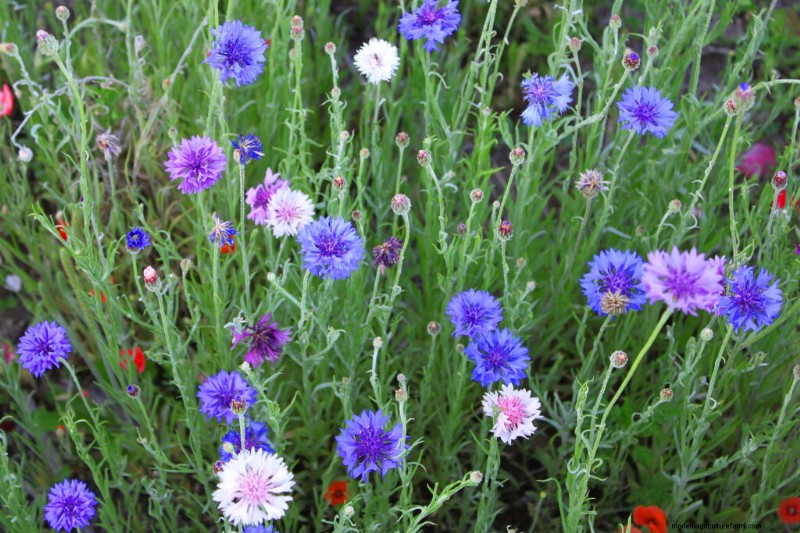
Cornflower or Bachelor’s Button
When to plant bachelor’s button
- Start seed indoors 8 to 10 weeks before the last frost.
- Sow seed outdoors in Zones 5 to 8 two weeks before the last spring frost Do not sow seed in weather colder than 25°F (-4.4°C).
- Sow seeds outdoors in autumn in Zones 9-10 for spring blooms.
- Set out seedlings after the last frost in spring. Set out seedlings after hardening them off for several days in the shade.
- Make successive sowings to prolong the bloom season
Planting and spacing bachelor’s button
- Sow seed in flats or individual six-packs; space seeds 1 inch (2.5cm) apart; sow seed in a sterile seed starting medium.
- Cover seeds 1/8-inch deep and grow at 65°-75°F (18-24°C); seeds usually germinate in 7 days.
- Grow seedlings indoors in bright sunlight or a few inches below fluorescent light.
- Sow seeds outdoors 2 inches (5cm) apart and cover them with ¼ inch of soil.
- Space bachelor’s buttons 10 to 12 inches (25-30cm) apart.
How to water and feed bachelor’s button
- Keep the soil evenly moist but not wet. Bachelor’s-buttons are somewhat drought-tolerant once established.
- Add a 9-month slow-release fertilizer to planting beds before planting.
Bachelor’s button care
- Keep the soil evenly moist.
- Fertilize with an all-purpose fertilizer at planting time; fertilize plants every 4 weeks during bloom time.
- Mulch around plants with aged compost.
Bachelor’s button propagation
- Centaurea cyanus is easy to grow from seed; sow in the fall for the earliest start or as soon as the soil can be worked in spring.
- Germination takes about 7 days at 70°F (21°C).
Bachelor’s button varieties to grow
- Centaurea cyanus is the popular bachelor’s-button or cornflower. A list of cultivars follows:
- ‘Blue Diadem’ grows to 30 inches tall with intense blue flowers.
- ‘Blue Midget’ grows to 10 inches tall with sky-blue flowers.
- ‘Florence Mix’ has blue, pink, white, and red flowers.
- ‘Frosty’ includes mixed pastels frosted with white tips of petals
- ‘Polka Dot’ includes mixed colors of red, white, blue, rose, wine, and lavender on short bushy plants.
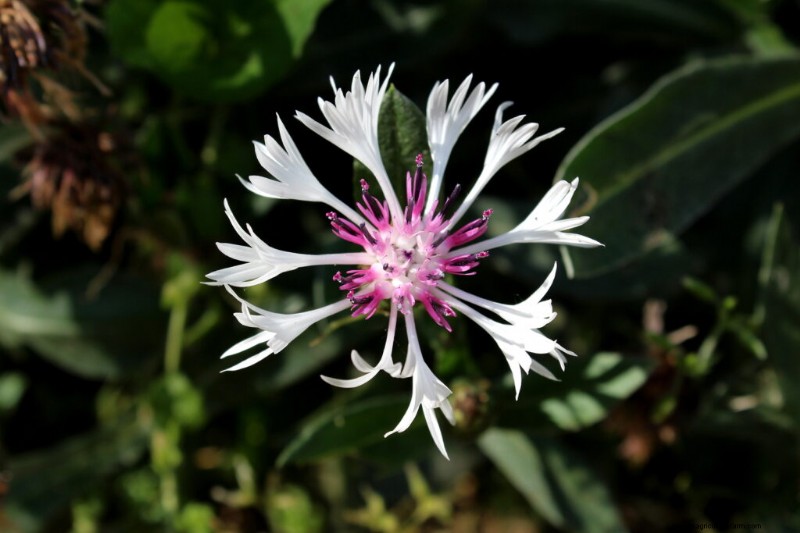
Mountain bluet,
Centaurea montana
Other members of the Centaurea genus
- Centaurea dealbata, Persian cornflowers, is a perennial that grows 2 feet tall and 3 feet wide.
- C. gymnocarpa, dusty miller, is a tender perennial grown for its divided, feltlike, gray-white leaves.
- C. montana, mountain bluet, mountain knapweed, is a perennial with feathery, pale blue flowers.
- C. moschata, Sweet sultan, is a half-hardy annual that needs warm weather; its flowers are large and silky.
Bachelor’s button frequently asked questions
Q: What conditions do bachelor’s-buttons prefer?
A: Bachelor’s-buttons or Centaurea cyanus want well-drained, moderately rich soil–add aged compost to the planting bed. Plant in full sun. Keep the soil just moist and give plants extra water during hot, dry weather.
Q: When should I plant bachelor’s-buttons?
A: You can start bachelor’s-buttons indoors 6 to 8 weeks before the last frost for transplanting into the garden on about the last frost date. Seeds can be planted outdoors as soon as the soil is workable in spring. Sow seeds thinly and cover them with about one-quarter inch of soil. They need darkness to germinate. Thin seedlings to 9 inches apart.
Q: How can I get a good summer display of bachelor’s-buttons?
A: Sow seeds every two weeks throughout spring and summer. Keep faded flowers picked off.
Q: What causes bachelor’s-buttons to flop over?
A: When bachelor’s-buttons have weak stalks it’s usually because they were planted too close together.