Arctotis is a genus of annuals and tender perennials that produce brightly colored daisy-like flowers. There are 50 or so species in this genus. Arctotis is commonly referred to as the African daisy.
Arctotis are natives of South Africa. They grow naturally in dry conditions producing rosettes of gray- to silvery-green leaves. Flowers are borne one per stem from midsummer to fall; they open wide on sunny days but close at night and sometimes on cloudy days. Flower colors include white, pink, orange, apricot, red, and terra-cotta; most are more deeply colored toward the center.
Garden Success Products at Amazon:
- 10 pcs Stainless Steel Garden Hand Tool Set
- Flexi Hose with 8-inch Nozzle
- Gorilla Cart 4 Cu. Ft, 300-pound Capacity
- Neem Bliss 100-% Cold Pressed Neem Oil
- Safer Brand Insect Killing Soap
- Wildflower Seed Mix Attracts Hummingbirds and Butterflies
- Eden Brothers All Perennial Seed Mix
Arctotis is one of three different plants commonly called “African daisies.” Arctotis has lobed leaves that are wooly; the second, Dimorphotheca has smooth green leaves; the third, Osteospermum is shrubby and has white and blue flowers.
Arctotis is often used in beds and borders, as edging, and as a container plant.
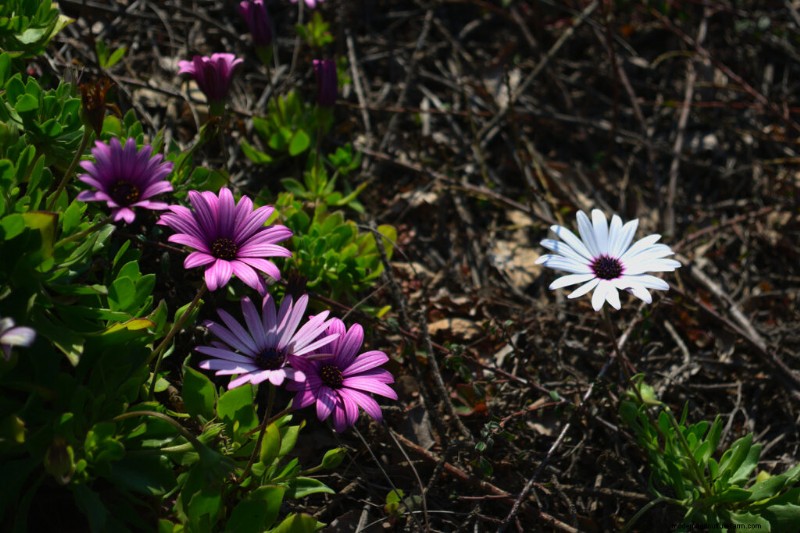 Arctotis venusta
 formerly
A. stoechadifolia has a blue eye or center.
Get to know Arctotis
- Plant type: Annual; some are perennial
- Growing zones and range: Zones 2 to 11
- Hardiness: Grows best in cool regions; does not tolerate heat or humidity well.
- Height and width: 6 to 24 inches (15-61cm) tall; 6 to 18 inches (15-45cm) wide
- Flower form color: Daisy-like flowers usually with a contrasting ring of color around the eye.
- Bloom time: Spring to early summer
- Uses: Edging plant, beds, and borders, container plant.
- Common name: African daisy
- Botanical name: Arctotis
- Family: Asteraceae (Compositae)
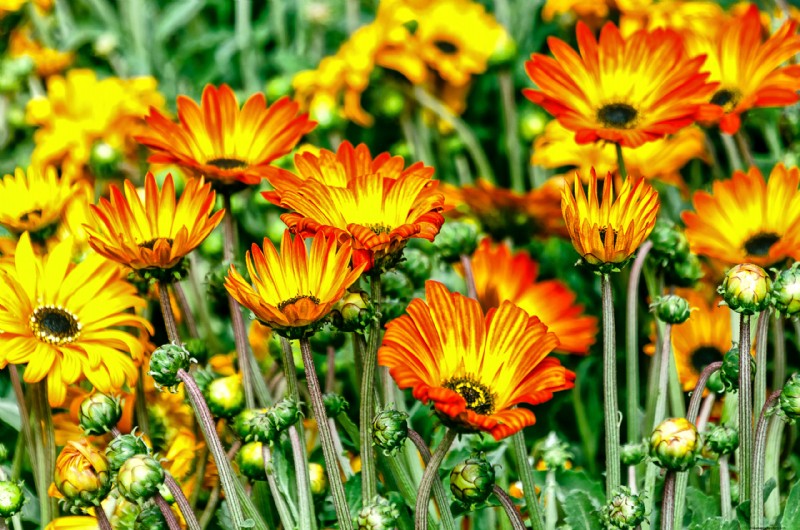
African daisies (
Arctotis hybrid)
Where to plant Arctotis
- Plant Arctotis in full sun.
- Arctotis thrives in areas with extended cool weather and moderate but not excessive moisture. It does not tolerate heat or humidity well.
- Grow Arctotis in loose, well-drained soil. It will grow in gravelly soil.
- Arctotis prefers a soil pH of 6.0 to 7.0.
When to plant Arctotis
- Plant established seedlings in the garden in early spring in Zones 2-6. In Zone 7-11 plant in late fall or early spring.
- Sow seeds indoors 6 to 8 weeks before the last frost in spring; germination will occur in about 7 to 14 days at 60°F to 70°F (15.6°-21°C).
- Transplant seedlings into individual pots as soon as they are large enough to handle.
- Sow seed outdoors after the last frost in spring once the soil has warmed up a bit.
- Set plants in the garden after the last frost in spring or in winter in regions where there is no freeze.
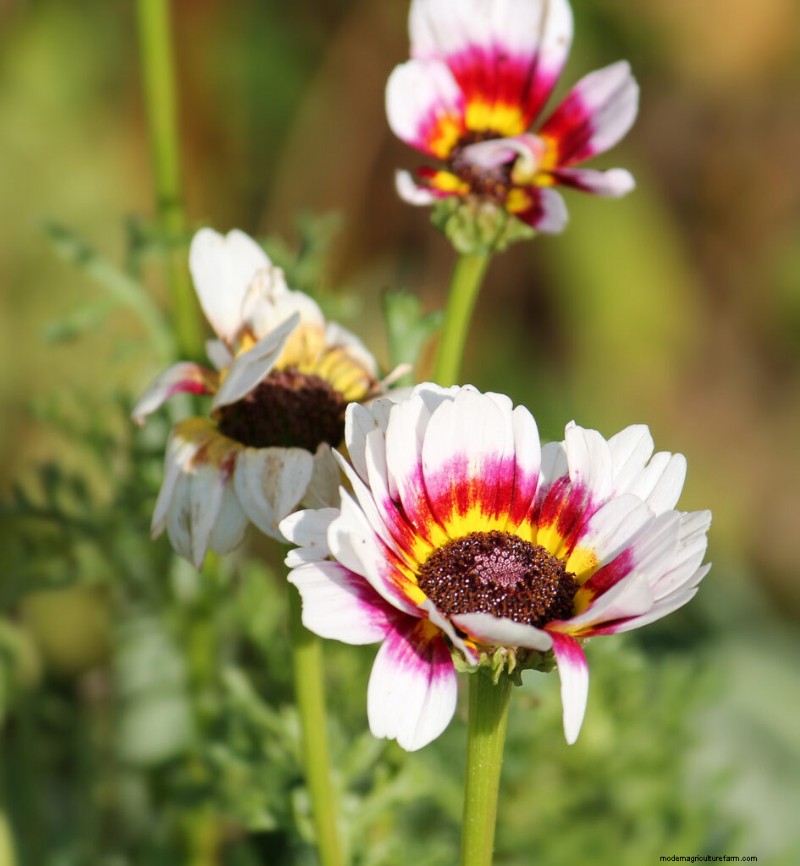
Arctotis hybrid,
Arctotis x
hybrida
Planting and spacing Arctotis
- Sow seeds in flats, six-packs, or individual pots in a sterile potting mix; barely cover the seeds with soil.
- Keep seeds at 60°F to 70°F (15.6°-21°C); germination will occur in 7 to 14 days.
- Sow seeds outdoors in an evenly repeated planting bed; barely cover the seeds.
- Space plants 12 inches (33cm) or more apart.
How to water and feed Arctotis
- Grow Arctotis in soil that is evenly moist.
- Established plants can withstand drought.
- Fertilize Arctotis lightly, if at all.
- Mulch around plants to conserve soil moisture.
Arctotis care
- Deadhead spent blossoms to encourage new blooms.
- Arctotis blooms best in its first year.
- Blooms tend to open during sunny, bright weather and do not open fully on cloudy,, dark days.
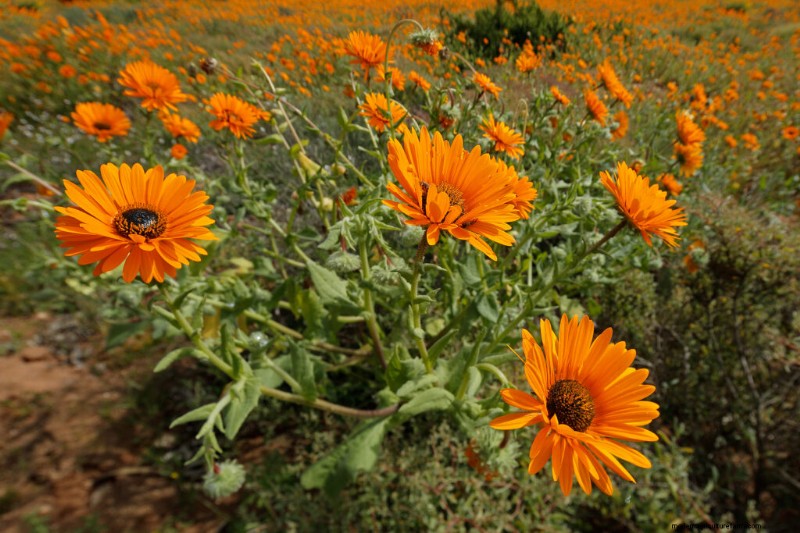
Monarch of the Veldt African daisy,
Arctotis fastuosa
Arctotis propagation
- Arctotis reseeds in warm climates but seedlings tend to revert to orange.
- Arctotis can be grown from cuttings taken in spring or fall; this is the best option for multiplying plants with outstanding colors.
Arctotis varieties to grow
- Artotis fastuosa, Monarch of the Veldt, grows 12 to 24 inches (30-61cm) tall with silver-white, 5-inch-long leaves that are deeply lobed; bears orange 4-inch (10cm) daisylike flowers with dark purple or black centers; tender perennial grown as an annual.
- Arctotis hybrids. Hybrids grow 12 to 18 inches (30-45cm) tall; colors include white, pink, red, purplish, cream, yellow, and orange usually with a dark ring around the nearly black center. Plants that self-sow tend to revert back to orange. Hybrids and modern cultivars tend to stay open on cloudy days; most species do not.
- A. venusta, formerly A. stoechadifolia grandis, blue-eyed African daisy This variety grows to 24 inches (61cm) tall with gray-green slightly hairy leaves and 3-inch (7.6cm) wide white daisies in which a yellow ring surrounds a deep blue central eye.
Arctotis frequently asked questions
Q: How can I get my Arctotis–African daisy– to bloom?
A: Arctotis may not bloom if the weather is very warm and humid or if there is a sudden chill. Arctotis does well in warm, dry conditions. Make sure the soil is well drained and use a fertilizer that is higher in phosphorus and potassium than nitrogen such as 5-10-10.
Q: Can I sow Arctotis seeds directly outdoors?
A: Arctotis can be sown outdoors in early spring as soon as the soil can be worked, but you may have greater success if you start seeds indoors about 4 to 6 weeks before the last frost. Plants can go in the garden after the last frost.
Related Articles:
- 20 Perennials That Bloom for 6 to 8 Weeks
- Shrubs with Showy Flowers Season-by-Season
- Trees in Garden Design
- Growing Annuals for Summer Bloom
- Trees—click here for more articles
- Shrubs—click here for more articles
- Perennials—click here to see more
- Annuals—click here to see more


