Welcome to Modern Agriculture!

You are here: Home / Gardening / Beets: From Growing And Preparing To Canning and Cooking
When I was very young, my mom taught me how to can and pickle beets, and I have continued to do so since my husband loves pickled beets. I have always wanted to eat beets, but I’ve never been a fan of the earthy flavor. Beets are such a healthy vegetable supplying large amounts of iron and vitamin C among others.
As homesteaders and farmers, we look for crops we can use and sell at market. If you have a small amount of garden space and need a crop that is versatile, beets should be your crop of choice.
 Susan Tipton-Fox / Insteading
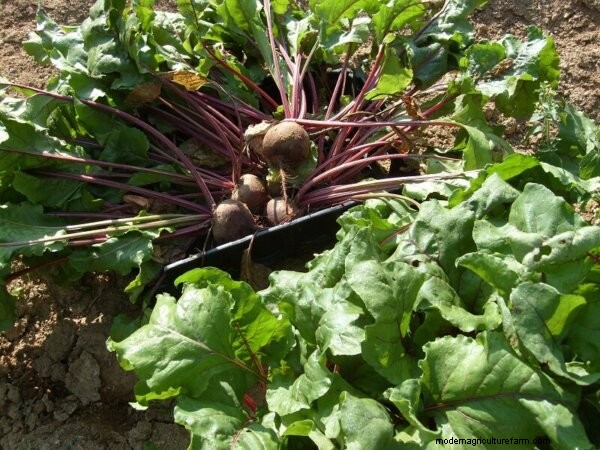
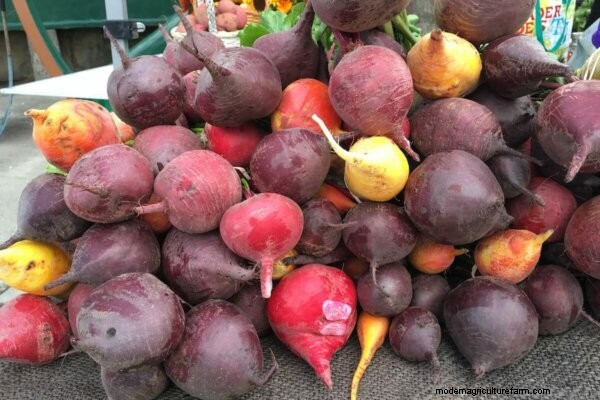
You can grow the beets all year, and it is a reliable crop to provide your markets. We have found that restaurants love to use the “baby” leaves in a wide variety of recipes. The larger leaves are used in about the same way as chard. The type of beets we grow to sell are Detroit and sometimes golden. Detroit is dependable while golden is gourmet.
 Kat Shereko / Insteading
The size of the beet depends on your customer. Some restaurants prefer the “baby” beet while others want a larger beet to slice and quick pickle. Farmers markets are usually individuals that are looking for a pickling size.
We are in plant hardiness Zone 7, so we start beets fairly early. As soon as soil temperatures warm to 60 degrees Fahrenheit, we sow our beet seeds. Usually, with soil temperatures at this range, germination is within 7-10 days.
If we are doing a small plot we will sow the seeds by hand. Our early beets are mainly for beet tops (young leaves), so we are not concerned with the spacing of the seeds – they can be planted closely.
https://www.instagram.com/p/BEOu155FNIP/?tagged=plantingbeets
The seeds can be planted about 1-2 inches deep. If we are focusing on the beetroot and size, we are more likely to space the seeds a couple of inches apart to allow room for growth. If we have a larger area of beetroot we will use a seed sower. We prefer to use the Earthway because it has specialty discs for seed size.
Our gardens are naturally grown – no chemicals. We use mature (aged) goat manure in our garden areas. We try to not grow the same crop in the same area each year and this helps with pest control, especially root maggot and/or wireworms. However, we do use wood ash or Diatomaceous Earth if needed for pests.
We harvest when the leaves are large enough for salads. As for the beetroot, we typically harvest when the bulbs are 1-2 inches in diameter.
https://www.instagram.com/p/BO0psPcB2N8/?tagged=harvestingbeets
The beets can be sown all through the growing season up until the first frost. We will harvest the last of the beetroot in fall or early winter for storage.
Now, what do you do if you don’t like beets? Put them in a cake! Yes, you read that correctly. Put them in a cake!
Here is a very simple recipe I use:
This step can be done ahead of time if you want to refrigerate/freeze the beets for later use. The larger beetroots can be used for these cakes. I peel the beet and cut them up into small chunks to make cooking time quicker.
 Susan Tipton-Fox / Insteading
I use a simple cream cheese frosting that goes great with this cake.
 Susan Tipton-Fox / Insteading
And for those of you who love beets or are just wanting to try them out, here is a very simple recipe that can incorporate the spices of your choosing.
Note that this is just a base to begin with. Check out our articles on fermentation recipes and canning recipes to find even more beet recipes.
*Please note: This is the recipe we use on our homestead. We do not make beet pickles to sell. If you are interested in selling pickles at market check your local state rules and regulations.
In our area, western North Carolina, you must go through a “Pickling/Fermentation” class given by the Cooperative Extension Agency before producing and selling pickled/fermented products.
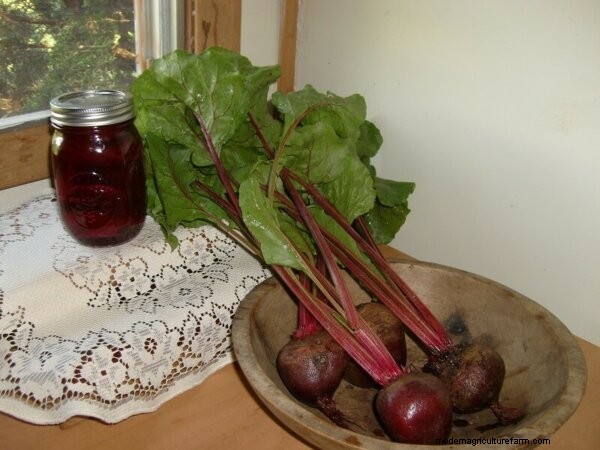
You can put the beet infusion, when cool, directly into containers and freeze for later use. You can also go one step further and add spices to it, bring to a boil, and then can the spiced liquid to use later.
This spiced liquid can be used to do a quick pickle – pickled hard boiled eggs and pickled cabbage.
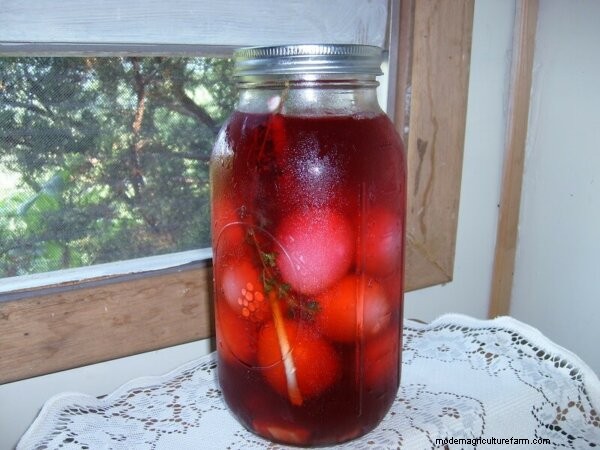 Susan Tipton-Fox / Insteading
Susan Tipton-Fox, along with husband Alan Fox, continues the farming and preserving practices passed down to her by her family. She runs on-farm workshops and overnights in Yancey County, North Carolina. Follow her on Facebook: The Mushroom Hut @ Fox Farms.