
Welcome to Modern Agriculture!

Pests can harm your garden, but there are natural solutions available. A new piece of property, fertile soil, and lots of sun and water is all you should need for a successful vegetable garden. However, there are the invasions that you probably didn’t consider.
For instance, you have the blue jays that peck mercilessly at your tomatoes, and the chipmunks that burrow their way underneath the garden to nibble off the ends of your zucchini.
Likewise, there are the deer and rabbits that always find a way to enjoy your luscious green lettuce. If that’s not enough, the soil you have laboriously cultured and toiled may suddenly become the enemy and strangle your plants roots.
Along with the bigger animals, there’s also bugs, slugs, and whatever other nuisance you can imagine. Bugs can be sprayed, but home remedies are typically best for a veggie garden.
Gardeners around the globe have their own special concoction for their home remedies. Essentially, a combination of dish detergent, cooking oil, and water is the best and safest option, especially when you consider that what you’re spraying is what you’ll be eating.
Alternatively, you can take a page from my grandmother’s book of sage advice: recycle dishwater after hand washing the dishes and spray it over the plants at night.
Are you dealing with slugs? Over the winter, wash your used (uncooked) egg shells, crumble them, and save them for your summer garden.
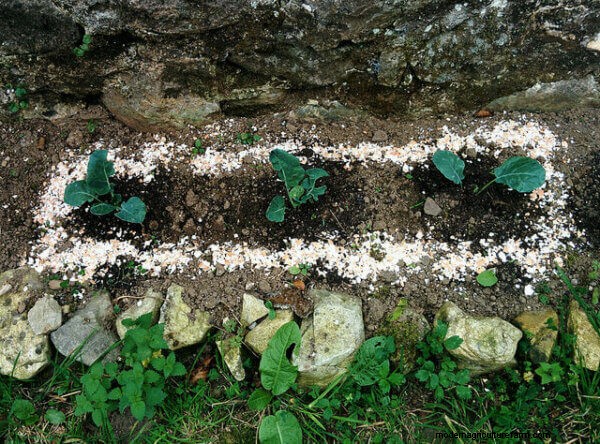 The perfect fence to keep out slugs! Neil Cummings / Flickr (Creative Commons)
After tilling the garden and planting the seeds, sprinkle the crushed eggshells around the plants. Not only will slugs avoid crawling over these sharp objects, but the nutrients left in the eggshells will soak into the soil and enrich the garden produce.
As for squirrels and chipmunks: if there’s a will, there’s a way. Although, keep in mind that it’s an ongoing battle to detract these rodents from your veggie plot. One trick that can work is planting plastic forks, prongs sticking up, around new seedlings and leaving them there during the entire growing season.
This usually generates an interesting conversation during garden etiquette. Recently, a friend commented, “I noticed your plastic forks have reseeded themselves and are doing well.” To which I replied, “Yes, I have a healthy crop of plastic forks every year.”
It’s a simple solution, given that the prickly prongs of the forks poke the invasive rodents, something they don’t particularly like.
As the plants mature, birds, particularly Blue Jays, will take aim at certain produce like tomatoes. Since birds can be easily spooked, a scarecrow may help somewhat.
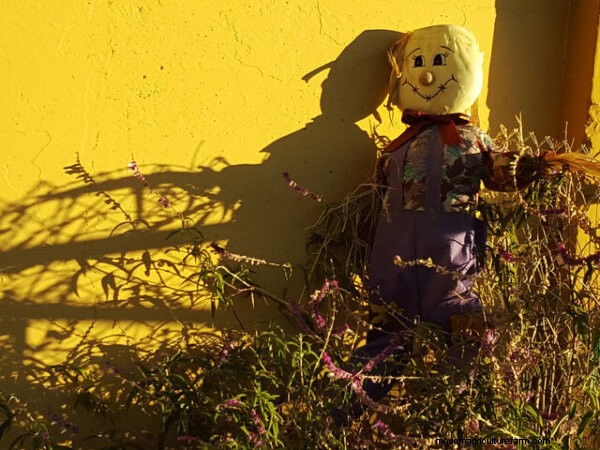 A traditional approach to scaring off birds. Quinn Dombrowski / Flickr (Creative Commons)
Another neat trick is to string a number of aluminum tart shells around your plants. The dangling, shiny objects are sure to scare the birds as the tart shells reflect the light. They will also jingle in the breeze, which adds to the “spook-element.”
Doing all of the above will certainly help, but there are no guarantees. Lots of water, sufficient but not scorching sunlight, and good soil should be the key ingredients to a good veggie patch. Do keep in mind that there are other elements that come into play as well.
After several years of tilling, regular watering, and adding compost, manure, and soil, I thought my veggie garden would grow. Though as the summer progressed and friends started bragging about the produce from their garden, I couldn’t help but feel disappointed.
All I had were very small lettuce leaves, tomato plants still growing with no sign of fruit, zucchini plants half the size they should be, and the list goes on.
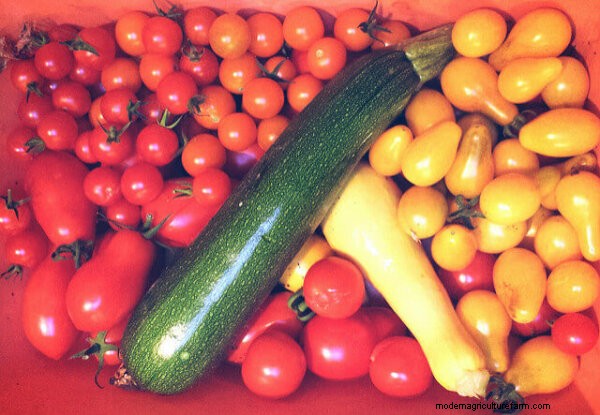 The kind of harvest I wanted, but a far cry from what I actually got. Amy Aletheia Cahill / Flickr (Creative Commons)
I couldn’t help but ask myself what I was doing wrong. I had tilled the earth and fertilized the plants with healthy compost and manure. Additionally, I weeded, watered regularly when the rain clouds wouldn’t assist, and sweat profusely over my labors. I did everything by the book!
Related Post: How To Make the Most of Garden Failure
By late fall, I harvested my meek gifts from the garden only to be more dissatisfied with the flavor – or should I say, lack thereof. The frost eventually came and ended the growing season. I then dug the garden over as I did every spring and fall.
 It was that time of year again. Matthias Ripp / Flickr (Creative Commons)
This time, however, I noticed a distinct problem: the soil had turned into a tightly knit mesh. This was definitely the cause of my plants struggle to survive. The next step was investigating what strangled my roots and why.
I did some research and asked around. What I discovered both amazed and worried me. After a lengthy drought, trees can send root-feelers throughout the rich garden soil and take nourishment from a veggie patch that is watered daily. After all, the trees need water too.
My well-watered veggie patch may well have become the source of nourishment the trees so desperately needed. Trees are important, as they provide shade from the blazing sun, but a balance is necessary. I had to weigh and consider the options.
I pondered my potential solutions, and eventually thought to myself, “why not build a raised garden?” During the winter, as always, I spent time planning my garden. This time, however, I researched and planned a raised garden padded with a garden bed liner to prevent the invasion of tree roots.
I filled the raised garden bed with rich earth, given that most veggies and herbs do not require deep soil. On the other hand, my tomatoes required deep soil, so I decided to place them in very deep pots full of rich soil. Placing a single tomato plant per pot.
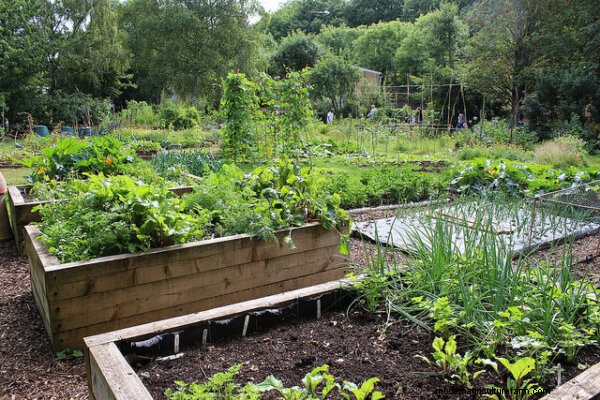 My garden would (hopefully) look like this in no time. Local Food Initiative / Flickr (Creative Commons)
For root crops, such as potatoes, carrots, and onions, I dug deeper into the soil and bordered the space with logs or treated wood boards. Next, I laid out the garden bed liner, making sure that it covered the complete base and sides of the area. Finally, I piled it deep with rich soil so that the root veggies had room to root without being strangled.
Spring arrived along with my fortified determination. I had planted a veggie garden, one that I was proud of and hoped to reap the full rewards of my hard work from. In my experience, for every problem there is a solution. Sometimes, the solution just requires a bit of ingenuity and creative thinking.
I have found you don’t have to pollute your garden and the environment to keep the bugs under control, nor do you have to kill every rodent or intruder to protect your produce. You don’t even have to clear cut trees for miles around in order to prevent the trees from strangling your veggie roots.
There is always a way, always a solution. It may take some time to sort out the problem and remedy the issue, but it can be done and the rewards will be worth the effort!
Today’s post is brought to you by award-winning author and artist, Emily-Jane Hills Orford. When this author isn’t writing, creating collage paintings, working on her needlework or composing, you’ll find her in the garden. Even in the winter, gardening is not far from her thoughts as she plans and prepares for the next season and the next growing adventure. Using pressed flowers from her garden, this author/artist/composer is gardening indoors with multi-faceted garden ideas re-created on canvas.


