
Welcome to Modern Agriculture!

I love puttering about the garden and discovering a ripe strawberry that the resident chipmunk hasn’t yet discovered. You can establish your own strawberry patch by planting bare-root strawberries. In your garden, your landscape, or a container on your balcony, a few well-tended strawberry plants can offer delicious berries throughout the summer. I promise you, what you grow at home is in a whole different taste category than what you find at the grocery store.
In this article, I’ll cover why and how to plant bare-root strawberries, including what bare-root even means. Read on for step-by-step instructions, from preparing the soil to preparing the plants, getting the right spacing and depth, and helping your strawberries get off to the best start.
A bare-root strawberry is just as it sounds. When you purchase bare-root strawberry plants, you are getting a dormant plant with a crown and roots. There’s no soil attached. These plants look like a tentacled mess of roots with a few greenish-brown leaves attached, but once you gently tease them apart, you’ll realize they’re just dormant plants ready for planting.
Some of the benefits to planting bare-root strawberry plants more than plugs include:
Planting bare-root strawberries is not like transplanting a plant with roots in soil. This is a slightly more involved process because you have to be sure the roots have a large enough hole to stretch vertically with a little bit of space to fan out, encouraging the roots to reach. It’s also important to set the bare-root plants at the proper depth, with the crown right at soil level.
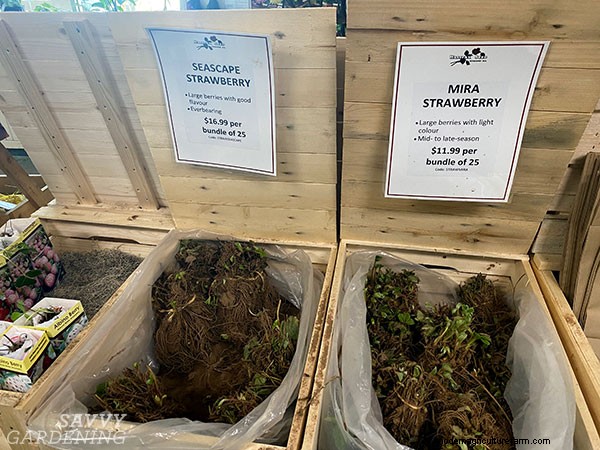 At the garden center, you will find either strawberry plants (more common) or bare-root strawberries, as shown here.
Whether planting bare-root strawberries in a pot, a raised bed, or the ground, these plants want well-drained soil with a pH of 5.8 to 6.8. Mix in compost to improve the soil organic matter and soil drainage. Do a soil test a few weeks before planting so you can apply any recommended fertilizer and let it settle into the soil. If you apply fertilizer right before or right after planting, it can burn the roots.
These bare roots need to be soaked for 30 minutes to several hours before planting so they can be rehydrated. You might start this process in a shallow bucket of water as you gather your tools and prepare the planting holes.
How you space your plants will depend on where you’re planting them.
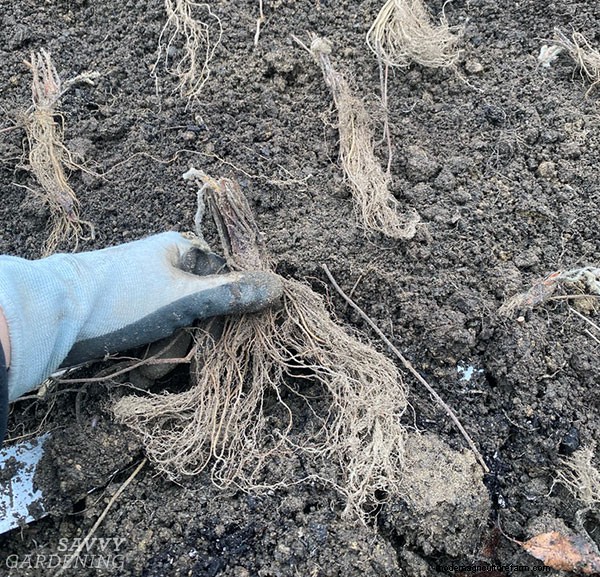 Space your strawberry roots about a foot apart. Lay them out on the soil ahead of time and then plant them all at once.
Getting the right depth when planting bare-root strawberries is important. First, the hole needs to be deep enough to accommodate the length of the roots stretching downward. You can trim back the roots to six inches (15 cm), if needed. Second, be sure the plant is deep enough so the roots and bottom half of the crown are fully covered with soil. The soil line should be at the crown’s midpoint.
With the plant properly oriented and roots fanning downward, replace the soil you removed from the hole. Firm the soil gently around the bottom half of the crown to remove air pockets. Water in the plants to settle the soil and give the roots the moisture they need to become established.
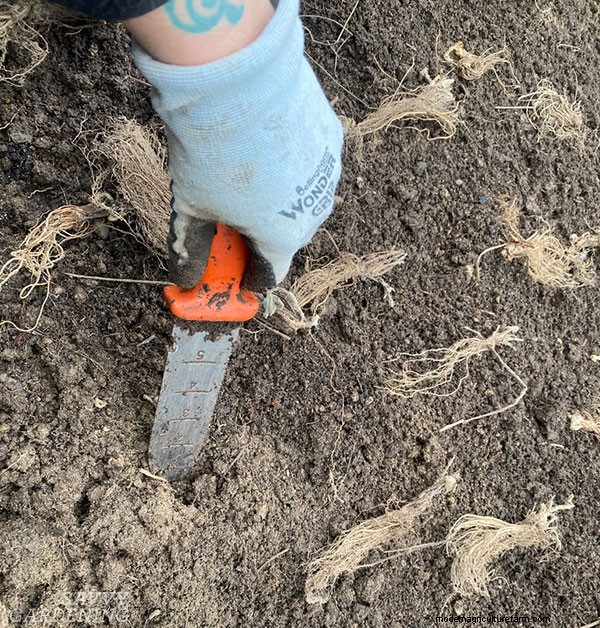 A soil knife can help you measure the correct depth for planting bare-root strawberries.
Strawberries are mostly water, so regular watering will keep them growing. Too much water can make their flavor become diluted, so provide only about 1 inch (2.5 cm) per week.
Mulching with natural materials is also a must. A layer of mulch serves a few purposes:
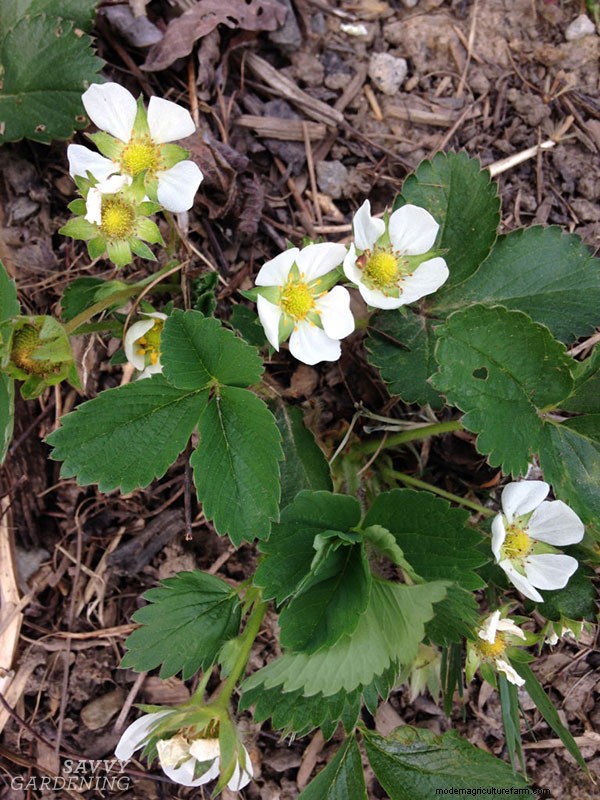 Mulch helps to conserve soil moisture, keep the plants cool in summer, and protect them in winter.
Here are a few more tips for success:
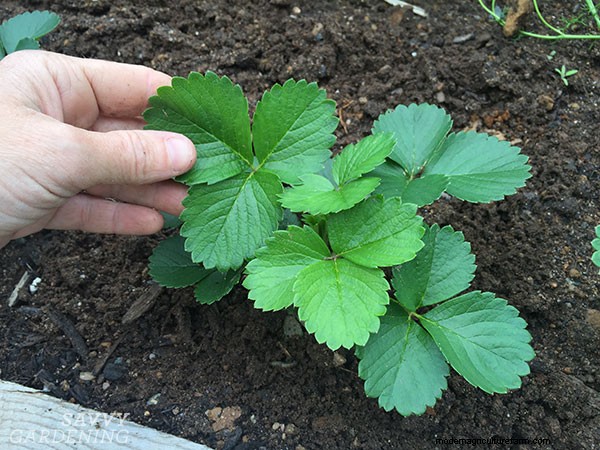 Planting bare-root strawberries is one way to bring more of these favorite fruits into your life. Snacking on the berries that you grow in your own strawberry bed will change your perspective on what strawberries are supposed to taste like.
Now you have the basics to get started with your own bare-root strawberry plants. With these plants taking up so little space, you can easily add them to your garden, landscape, or a pot on your doorstep.


