
Welcome to Modern Agriculture!

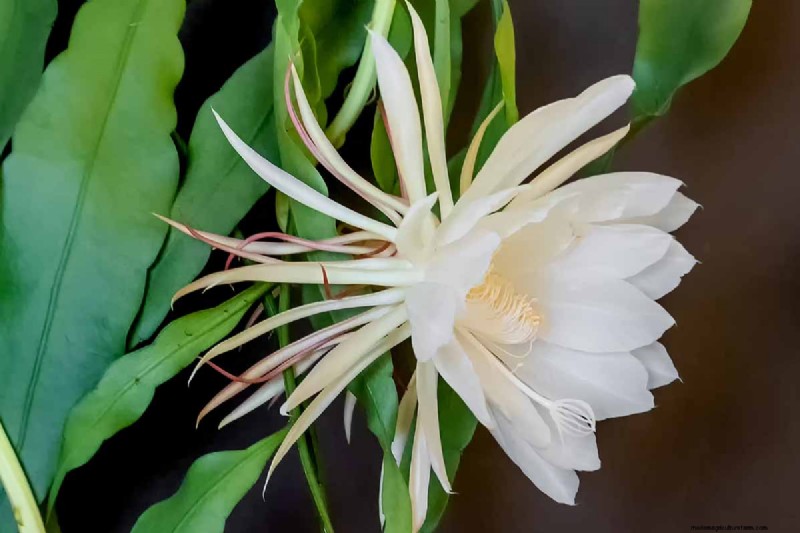
Orchid cacti, or epiphyllums, are forest cacti with long, flat, succulent stems that produce incredible blooms.
These long-lived plants are easy to care for, fun to propagate, and stand up well to neglect!
The world of epiphyllums is a fascinating one – but it can also be somewhat confusing.
We link to vendors to help you find relevant products. If you buy from one of our links, we may earn a commission.
In this article we’ll provide guidance for every step of growing these extraordinary cacti.
I’m going to focus primarily on growing epiphyllums as houseplants here, though I’ll offer care tips for outdoor orchid cacti specimens as well.
Here’s what we’ll cover:
Epiphyllums are primarily epiphytes, but some may also be lithophytes, that hail from tropical or semi-tropical forests.
Epiphytes derive moisture and nutrients from precipitation and the air, and typically live on host plants in the wild, lithophytes grow on rocks.
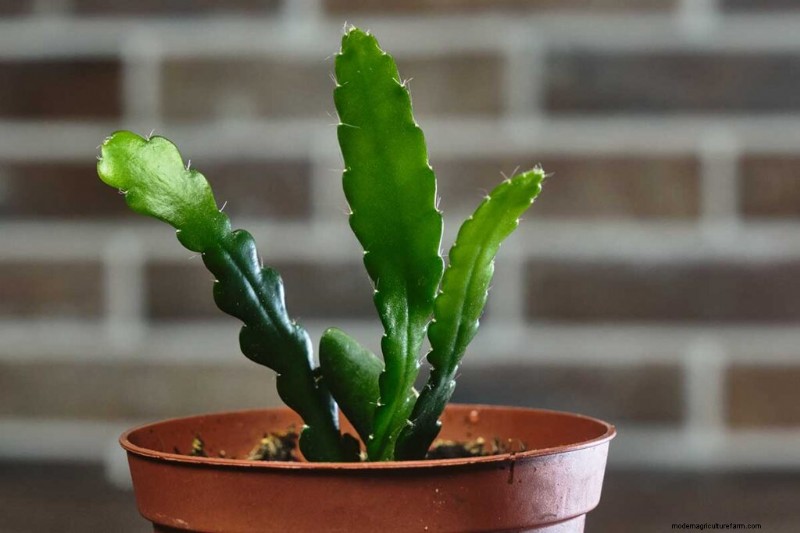
Known as “orchid cacti” these plants are recognizable by their long, succulent, flattened stems which are typically at least a couple of inches wide.
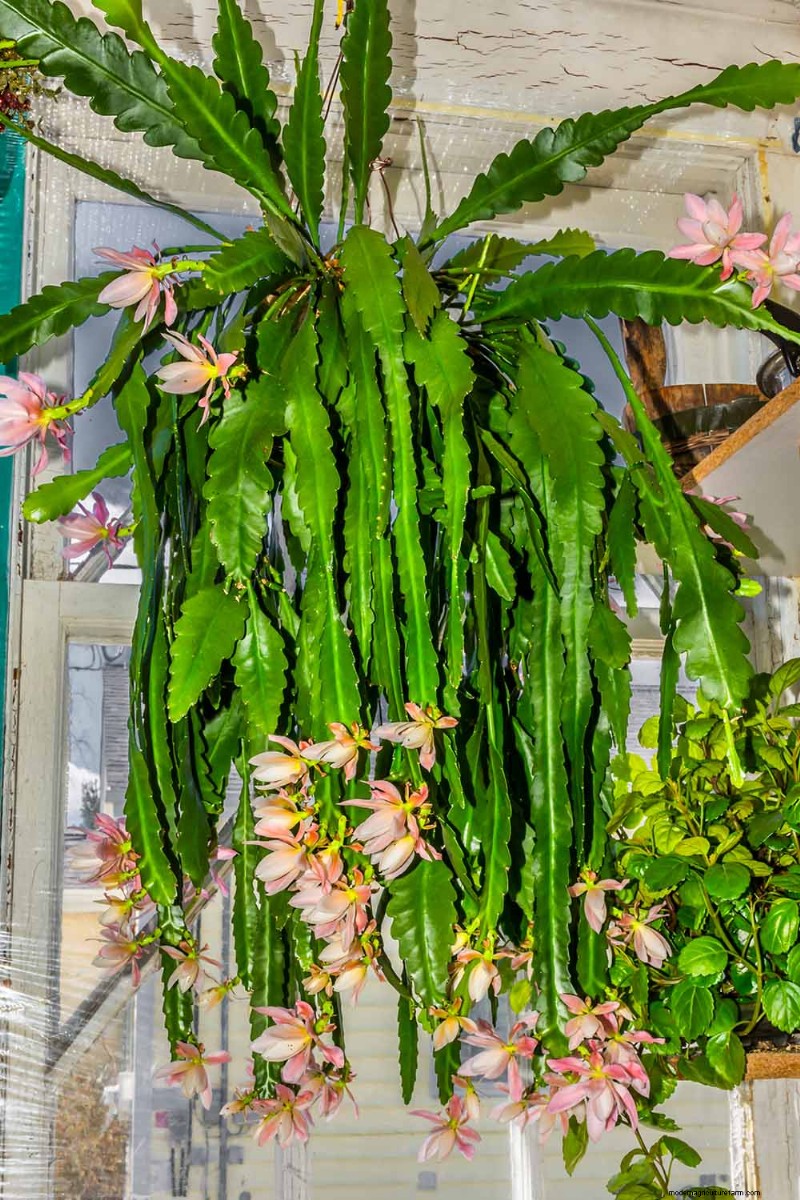
The foliage can grow to impressive lengths, depending on the species or cultivar, reaching two feet to upwards of 10 feet.
The stems generally have an arching, weeping growth habit, making them well-suited to growing in hanging baskets.
Common name(s): Epiphyllums, orchid cacti, epicacti, phyllocacti, leaf or climbing cacti
Plant type: Succulent epiphyte and/or lithophyte
Hardiness (USDA Zone): 10b-12a (outdoors)
Native to: Central America, South America
Bloom time / season: Spring to fall
Exposure: Bright indirect light with some direct morning sun
Soil type: Cactus soil with chunky organic matter added, well-draining
Soil pH: 5.5-6.5, slightly acidic to neutral
Time to maturity: 3-7 years to bloom
Mature size: 2-10 feet tall and wide (depending on variety)
Best uses: Indoor potted succulent collection, stand-alone specimen; outdoor xeriscaping ground cover
Order: Caryophyllales
Family: Cactaceae
Genus: Epiphyllum
Species: Baueri, cartagense, chrysocardium, grandilobum, hookeri, laui, oxypetalum, phyllanthus, pumilum, thomasianum
The leafless stems are smooth and usually flat, though some exhibit three-sided growth. These stems have notched margins, and can produce aerial roots.
The big attraction for fanatics of these spineless cacti is their flowers.
Most blooms are four to eight inches across, though the blooms of some orchid cactus cultivars can reach a staggering 14 inches wide. They are, to put it mildly, rather showy.
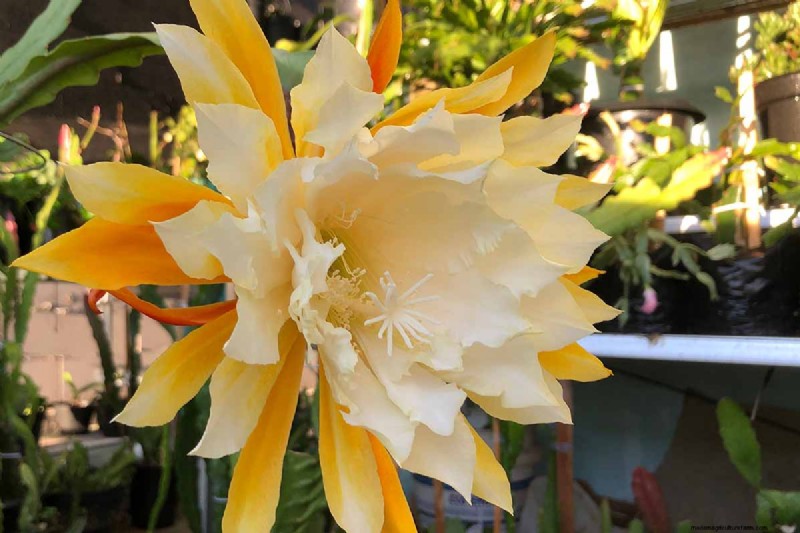 ‘Exotic Dancer’ hybrid.
Some of these jungle cacti bloom only at night and are pollinated by bats or long-tongued moths, while others are day bloomers, attracting diurnal pollinators.
Flowers are produced from the notches in orchid cactus stems, at areolas, and these blooms tend to be short-lived.
When pollinated, they produce edible fruits similar to pitayas, which are sometimes referred to as “pods.”
In addition to producing flowers, areolas produce secondary stems, which may appear to be leaves – but aren’t!
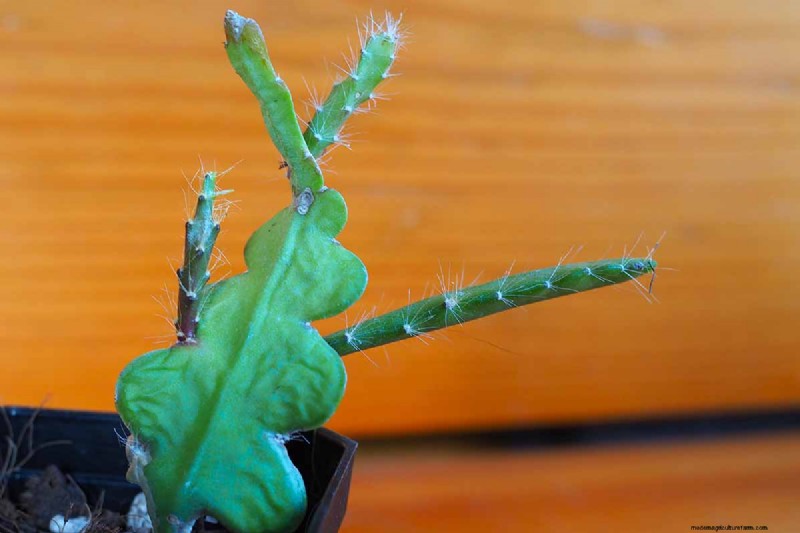 New growth with bristles. Photo by Kristina Hicks-Hamblin.
When new stems first appear, they are often rounded and bristly, only flattening and losing their bristles as they mature.
The term “epiphyllum” refers to three types of cacti. Or four, if you dig deep.
First, it refers to members of the Epiphyllum genus, including species like E. oxypetalum (queen of the night).
Second, it describes certain hybrids that may or may not include Epiphyllum parentage.
Some parent species – formerly classified as Epiphyllum but now placed in Disocactus and Selenicereus – are still commonly called epiphyllums.
Third, these reclassified former Epiphyllum species retain the common name despite their taxonomic reassignment.
Fortunately, care requirements remain similar across these groups.
A fourth, less common usage applies to Schlumbergera, which was once classified under Epiphyllum.
We won’t be covering the Schlumbergera plants in this article – you can learn more about them in our complete guide to growing Christmas cactus.
Species in the Epiphyllum genus are native to Central and South America. They have also naturalized in places like Florida, the Caribbean, and parts of Asia.
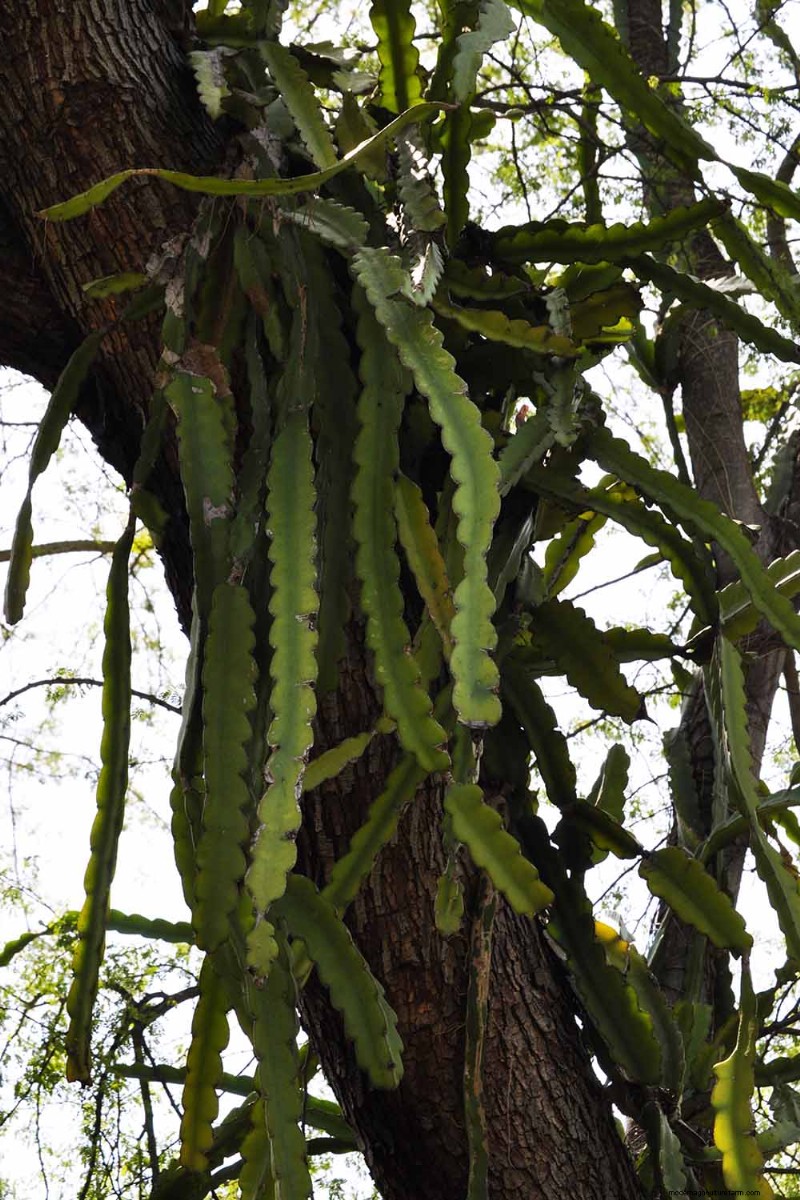
In the wild, epiphyllums grow in tropical or semi-tropical forests in dappled light and warm, humid conditions.
Epiphyllums are related to the Christmas cactus (Schlumbergera spp.), but also to other houseplants such as rat tail cactus (Aporocactus flagelliformis) and the prickly pear.
They are commonly called “phyllocacti,” “climbing cacti,” “leaf cacti,” and sometimes “epicacti.”
And though they are not related to orchids, they are often called “orchid cacti” because of their stunning blooms.
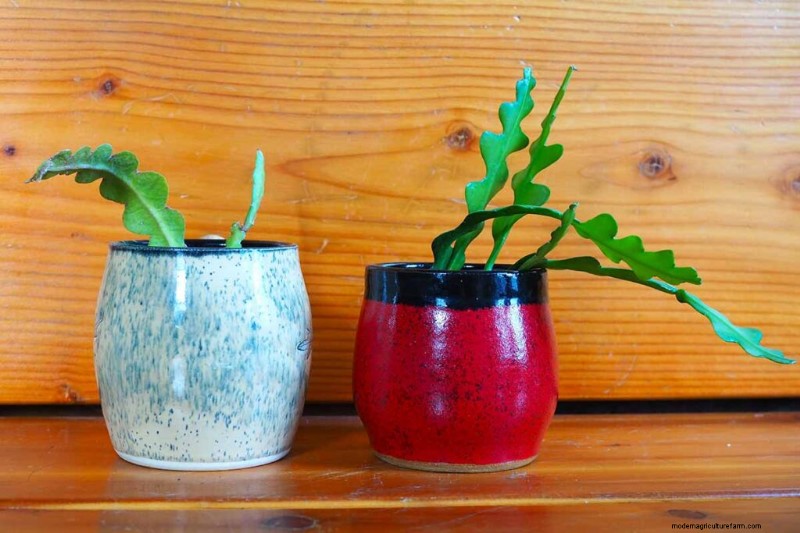 Epiphyllum on left with fishbone cactus (Disocactus anguliger) on right. Photo by Kristina Hicks-Hamblin.
Orchid cacti were first bred to create hybrid cultivars in the 1800s. There are now thousands of different hybrid cultivars with seemingly endless bloom variations.
And while they make great houseplants, epiphyllums can also grow outdoors year round in USDA Hardiness Zones 10b to 12a when provided with the right soil and water conditions.
Orchid cacti are an obvious choice if you are looking for a trailing succulent to display in a hanging basket.
Specimens that are staked or trellised can create dramatic vertical interest.
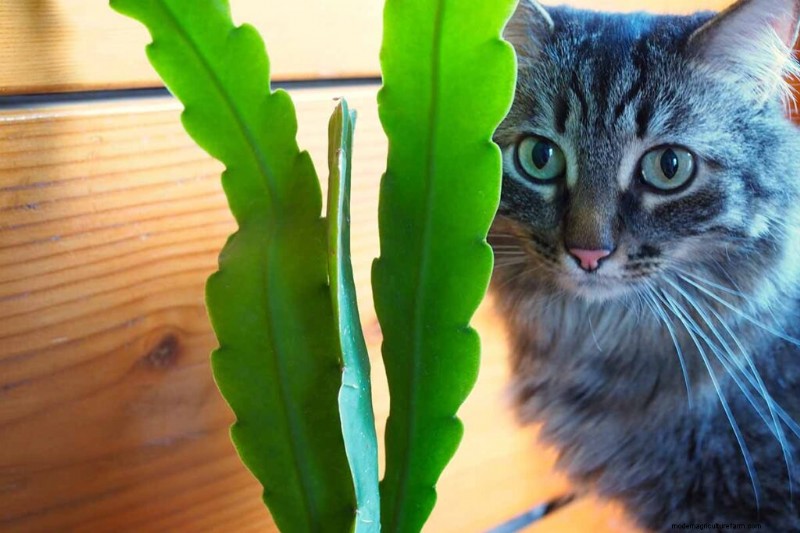 Photo by Kristina Hicks-Hamblin.
These cacti are excellent picks if you are looking for nontoxic houseplants, a feature which will be of special interest for households with curious children or mischievous pets.
Epiphyllums are easy to grow and are quite tolerant of neglectful plant parents.
Here’s everything you need to know:
Epiphyllums grow best in 50 to 75 percent shade. Indoors, this means they should be grown primarily in bright, indirect light.
Outdoors, they should be hung under trees in dappled shade, or grown under laths or shade fabric.
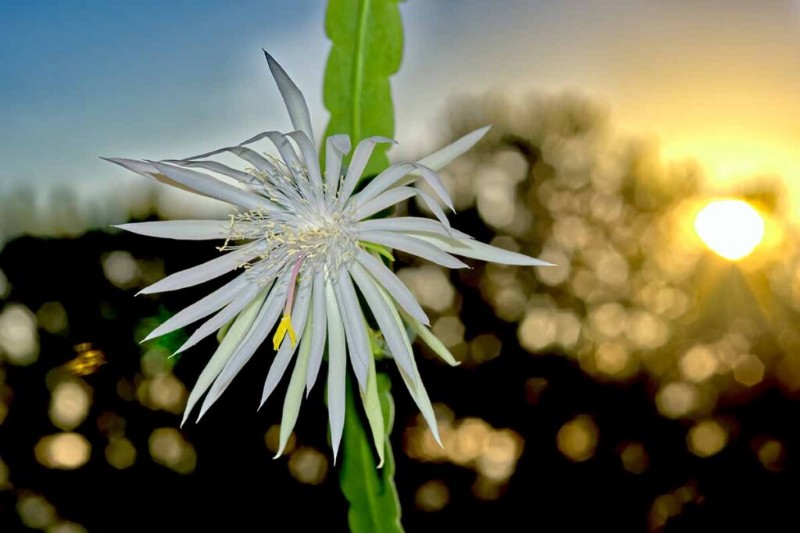
Indoors or out, expose epiphyllums to a few hours of direct sun in the morning which will help promote flowering.
Avoid direct sun during the middle of the day as it can cause sunscald.
When temperatures are particularly hot, err on the side of providing more shade to help the plant resist heat stress.
As epiphyllums are epiphytes or lithophytes, they grow in shallow deposits of organic matter in the wild.
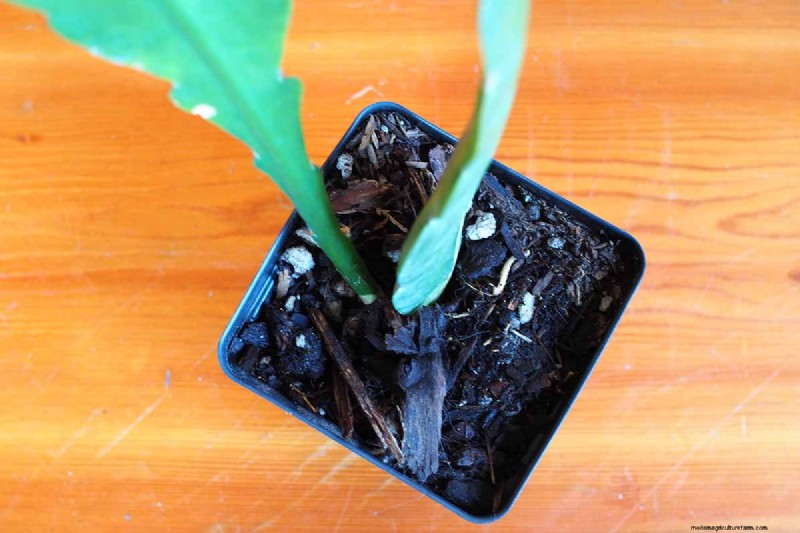 Photo by Kristina Hicks-Hamblin.
That means they don’t need a large amount of soil, but they do need good root aeration, good drainage, and a medium that can retain moisture.
Enthusiasts at the Epiphyllum Society of America recommend potting orchid cacti in a medium that is made up of one-third coarse material.
My premixed growing medium of choice for epiphyllums is De La Tank’s Houseplant Mix. It contains chunky coconut husks, pumice, compost, and fertilizer.

De La Tank’s Houseplant Mix
You’ll find De La Tank’s houseplant mix for purchase in a one-, eight-, or 16-quart bags via Arbico Organics.
Epiphyllums are cacti, but these cacti come from forests, not deserts.
Try to keep the growing medium moist, but not soggy, and avoid letting the medium dry out completely between waterings.
A good rule of thumb is to water when the top third of the soil is dry. You can insert a finger into the growing medium to check this.
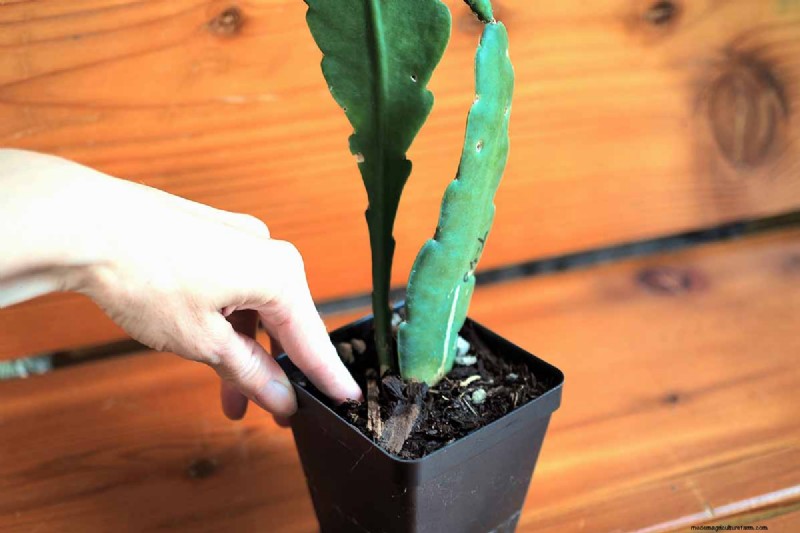 Photo by Kristina Hicks-Hamblin.
Or instead of using a finger to test for dryness, try using a moisture meter to check the growing medium.
If in doubt, err on the side of underwatering rather than overwatering, since too much water can cause plants to rot.
Epiphyllums are most comfortable in a temperature range of about 40 to 80°F.
Specimens sometimes survive freezing temperatures, but it’s best not to push your luck.
They can also tolerate hotter temperatures above 80°F, but with hotter weather it’s best to provide additional water.
During winter, move these plants to cooler locations, where temperatures between 52 and 57°F will help to encourage flowering come spring or summer.
In their natural habitats, ambient humidity would fulfill a portion of their moisture needs, so water vapor is an important element of the environment for these cacti.
Epiphyllums will be happiest in conditions with at least 50 percent humidity.
There are a few different ways you can increase relative humidity, if needed. Misting the foliage with water from a spray bottle is an easy, low budget way to start.
Another method is to situate your houseplants in groupings to create a more humid microclimate.
Finally, if you want to step up your efforts a bit, using a humidifier near orchid cacti is an excellent way to help raise relative humidity.
Starting about a month after flowering, begin fertilizing your orchid cactus with a gentle, balanced fertilizer to encourage foliage growth.
Young orchid cacti that are not expected to bloom can be fertilized this way starting a bit earlier, in early spring.
Dr. Earth’s Pump and Grow Indoor House Plant Food is a gentle fertilizer with a ratio of 1-1-1 (NPK) that will help nourish the cactus and encourage foliage growth.

Dr. Earth’s Pump and Grow Indoor House Plant Food
You’ll find a 16-ounce pump container of Dr. Earth’s Pump and Grow Indoor House Plant Food available for purchase at Arbico Organics.
This or a similar product can be applied every two weeks from spring through autumn.
And to encourage blooming, switch to a low-nitrogen fertilizer in late autumn, then stop fertilizing during winter.
Be sure to follow the manufacturer’s instructions for application.
Any fertilizers with NPK ratios higher than 10-10-10 should be diluted.
Choosing which type of epiphyllum to grow is lots of fun – there are so many choices!
Epiphyllums are sold as potted plants, rooted cuttings, or unrooted cuttings.
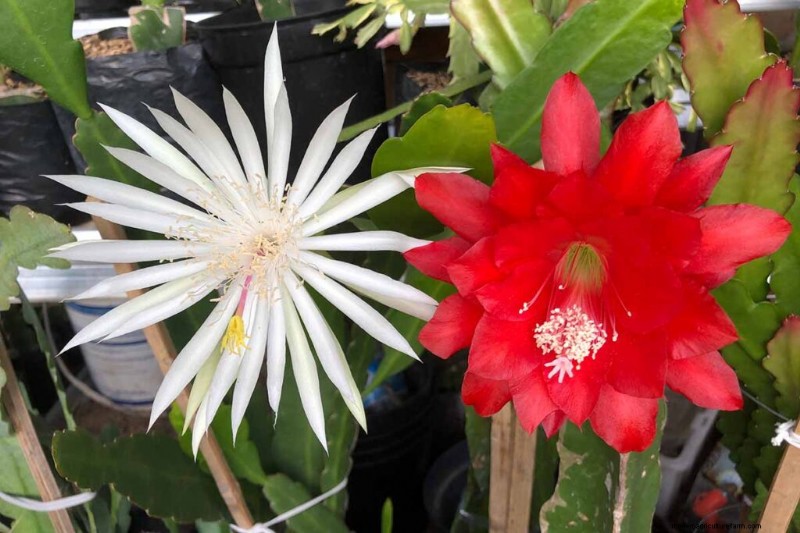
Some nurseries sell specimens that have been identified by their species or cultivar name, while others may just offer selections labeled as “white,” “yellow,” or “red,” in reference to bloom colors.
Now, let’s start looking at a few options!
Commonly known as “red orchid cactus,” Disocactus ackermannii was formerly classified as an Epiphyllum species.
It’s still commonly referred to as E. ackermannii, which is considered a synonym.
This spring-blooming species bears red flowers that reach up to six inches across, remaining on the plant for a few days.
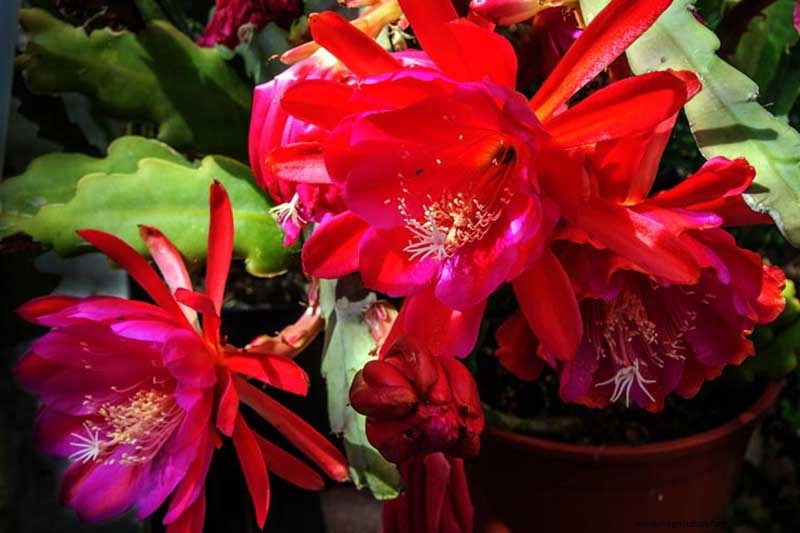 D. ackermannii. Photo by Georgfotoart, Wikimedia Commons, via CC BY-SA.
Stems range from seven inches to three feet long and have prominent veins and undulating margins.
D. ackermannii received the Royal Horticultural Society’s Award of Garden Merit in 2012.
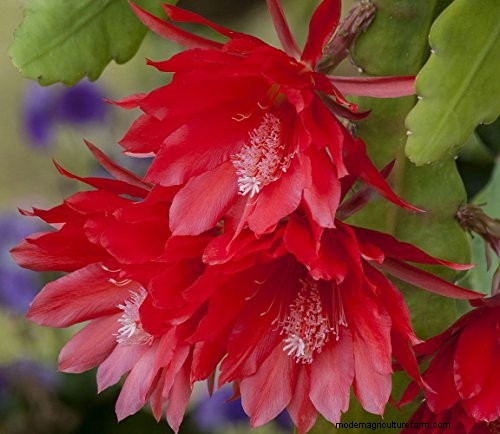
D. Ackermannii Red Orchid Cactus
You’ll find red-flowered D. ackermannii plants in six-inch pots available from Hirt’s Gardens Store via Amazon.
Disocactus anguliger, formerly classified as Epiphyllum anguliger is also known as zig zag or ric rac cactus.
This epiphyte grows up to 18 inches tall and 36 inches wide with unique zig-zagging stems that trail out of hanging baskets or over the sides of pots.
It features large yellow and white flowers that are trumpet-shaped with elongated, funnel-shaped petals.
Learn more about growing fishbone cactus here.
Commonly known as “curly locks orchid cactus,” this naturally occurring subspecies has undulating stems that look like big, wavy locks of hair on older specimens.
Stems have a prominent midvein.
Classified as Epiphyllum hookeri ssp. guatemalense but also sometimes as E. guatemalense, this member of the Epiphyllum genus produces white blooms.
This variety is also sometimes called “curly sue” or Epiphyllum guatemalense ‘Monstrose.’
“Queen of the night” is the common name for the most well-known member of the Epiphyllum genus, E. oxypetalum.
This orchid cactus species, also known as “Dutchman’s pipe cactus,” has funnel-shaped, night-blooming flowers that can reach over seven inches wide.
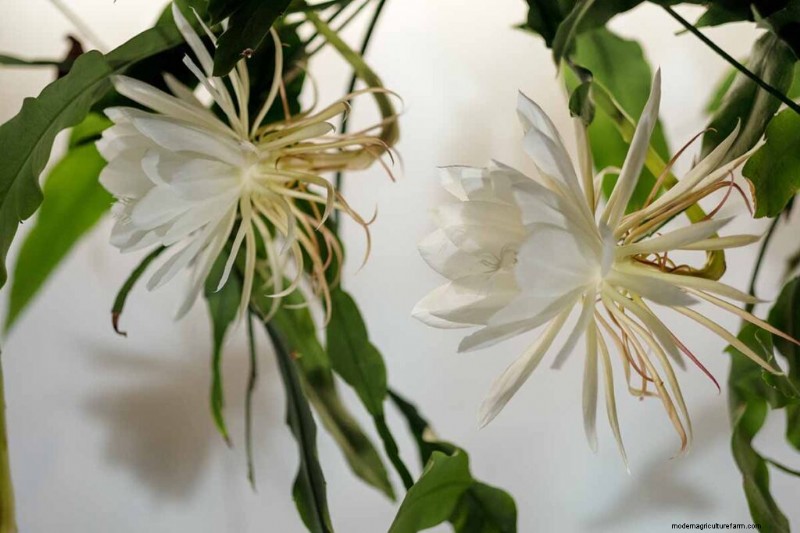 Queen of the Night (E. oxypetalum).
The showy, fragrant blooms are white with gold sepals, and are short-lived, lasting one night only.
E. oxypetalum has stems that can reach up to 10 feet or more.
This species is also known as “lady of the night,” and “night-blooming cereus.” It shares those two names, as well as “queen of the night” with a few types of desert cacti that are members of the Cereus genus, such as C. peruvianus.
You’ll want to be sure you choose the right “queen of the night” for your purposes, since these two types of cacti have different care needs.
You’ll find a queen of the night epiphyllum in two-gallon pots available from Planet Desert.
In general, species plants bloom in the spring, while hybrids bloom in summer or fall.
Epiphyllums can take between three and seven years to produce blooms, depending on the species or cultivar and the growing conditions.
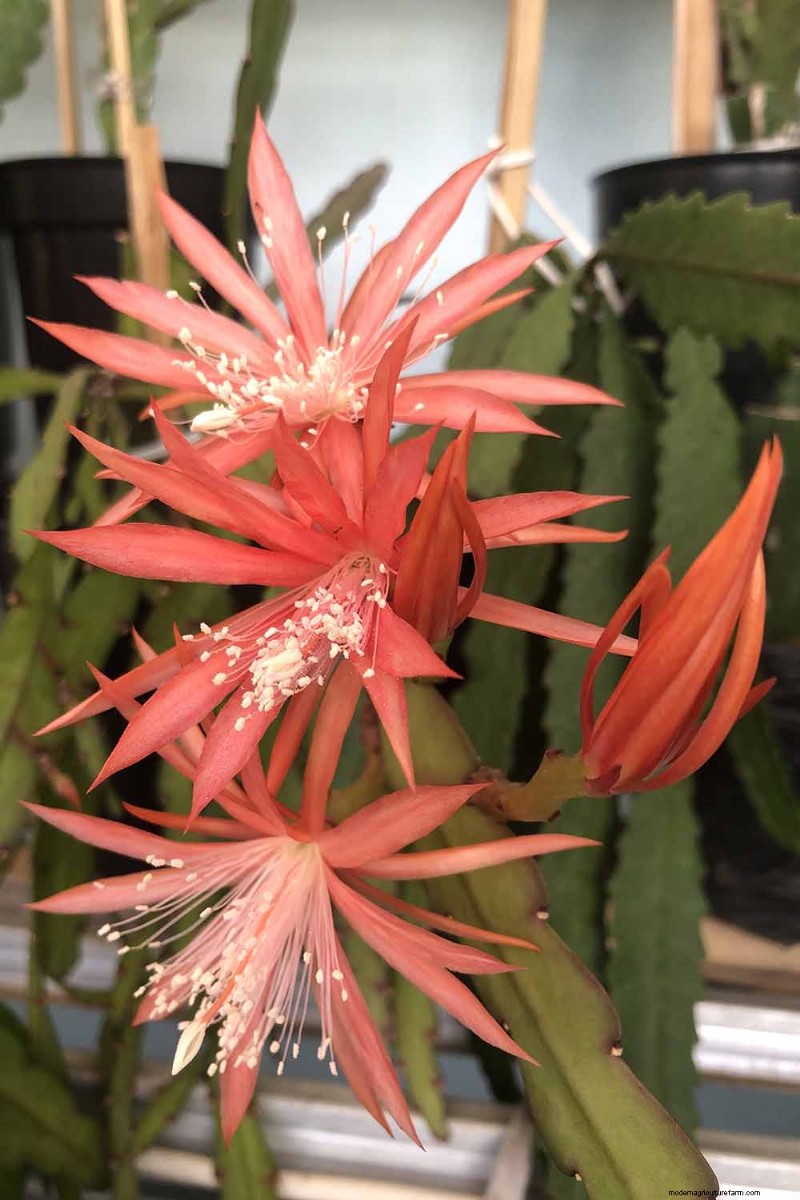
There are several steps you can take to encourage blooming.
First, make sure the cactus is in an appropriately sized pot.
For epiphyllums to set blooms, they need to have enough light. Exposing plants to some direct sunlight in the morning will encourage blooming.
Also, epiphyllums are stimulated to produce flowers after going through a semi-dormant period in the winter when they are exposed to cool, dry conditions and long, uninterrupted nights.
One way to do this is to situate your epiphyllum in a cool, unused or rarely used room on the north side of your home during the winter months.
After flowering, the spent blooms can be deadheaded as needed.
Epiphyllums like to be in a somewhat snug pot, so you may only need to repot every five to seven years.
When it’s time to repot, do so in spring or summer during a period of active growth, and wait until the plant has finished flowering.
Choose a new pot that provides the roots with just a bit more room – and be sure to choose a pot that will support the weight of the plant.
Place a layer of potting medium in the bottom of the new pot.
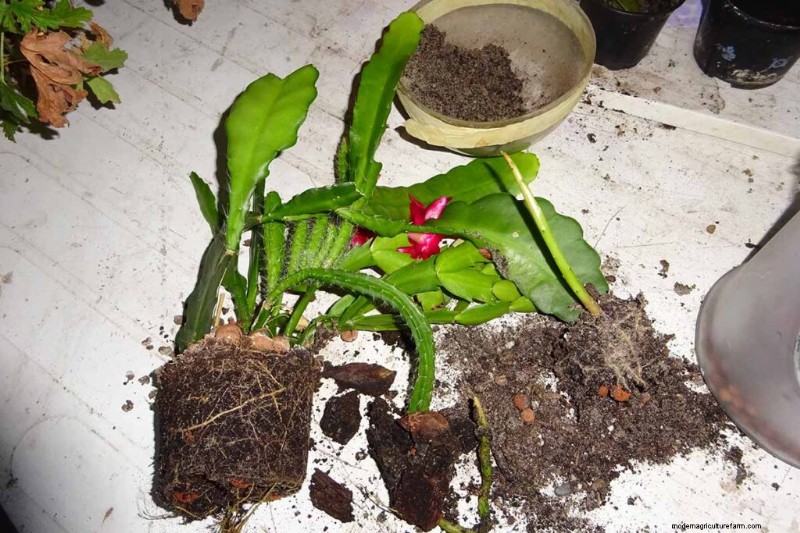
Remove the epiphyllum from its old pot and gently brush some soil off the root ball.
Place the specimen in its new pot, situating it so you leave about an inch of room between the top of the root ball and the rim of the pot to make watering easier.
Fill in around the root ball with potting medium.
Wait a week before watering.
While it’s possible to grow orchid cacti from seed, that method requires sourcing the seed, which in itself is not an easy task – you’ll likely have to grow your own.
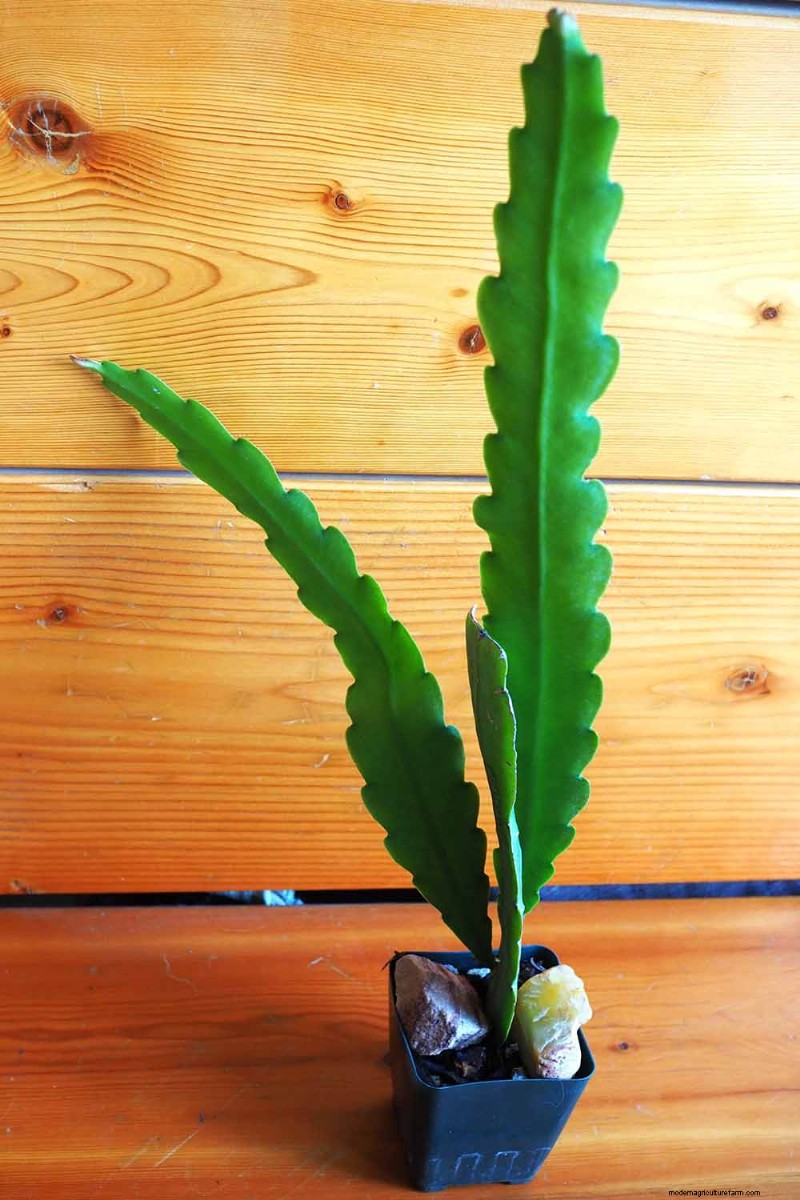 Photo by Kristina Hicks-Hamblin.
So, for the purpose of this article, we’re going to stick to a much easier method : propagating epiphyllums from cuttings.
Here’s what you’ll need for this project: a cutting that is six to nine inches long, growing medium, and a four-inch nursery pot. Rooting hormone can also be used but this is optional.
Use a sterilized pair of scissors to cut the stem cleanly at its base.
Next, you’ll want to allow the cutting to cure. If you’re using rooting hormone, such as Olivia’s Cloning Gel, go ahead and apply it to the cut end of the stem first.

Olivia’s Cloning Gel
You’ll find Olivia’s Cloning Gel in a selection of sizes from Arbico Organics.
Allow the cutting to cure for a week to 10 days in a cool, dark place. You’ll know it’s cured when a callus has formed on the cut end of the stem.
Fill the nursery pot with potting medium, leaving an inch of space between the soil surface and the rim.
Insert the cutting two to four inches deep in the potting medium, so there are two to four areoles beneath the soil.
Wait one to two weeks before watering, and in the meantime, mist the cutting daily (or more often during hot weather) to help keep it hydrated.
Many gardeners grow epiphyllums without encountering pest or disease problems, but it’s always good to know what to be on the lookout for.
Gardeners growing orchid cacti in the yard year-round or placing houseplants outdoors during the warm months may find them munched on by slugs and snails.
In addition there are a few common pests that can cause problems.
Mealybugs suck valuable nutrients from the stems of orchid cacti and leave sticky trails of honeydew, which can foster fungal growth.
If you encounter these pests, I recommend first trying to remove them by spraying them with a strong jet of water to knock them off.
Wait a week or so, and if you find more mealybugs, treat your orchid cactus with nontoxic neem oil, which is safe for humans and pets.
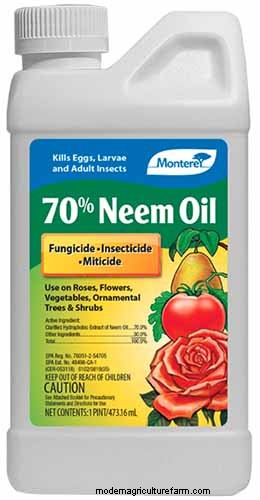
Monterey Neem Oil
Monterey neem oil is available in an assortment of jug sizes at Arbico Organics.
Follow the manufacturer’s instructions for application and repeat as needed.
Learn more about identifying and controlling mealybugs here.
Scale insects often go unnoticed until plants show signs of distress.
These pests look like small, dome-shaped bumps on the foliage.
Like their relatives the mealybugs, scale insects feed on plant sap, gradually weakening specimens and potentially causing death if left untreated.
And as with mealybugs, scale infestations can be treated with neem oil. Apply once a week if needed, continuing treatment until pests are gone.
Learn more about scale insects here.
Spider mites are tiny arachnids feed on plant sap, creating stippled yellow or white spots on foliage. Heavy infestations produce visible webbing on leaves and stems.
These pests typically target stressed plants, so maintain consistent watering, particularly during hot weather.
To control an infestation, spray affected plants with a strong jet of water to dislodge the mites. If this proves insufficient, apply neem oil to eliminate remaining pests.
Learn more about how to deal with spider mites here.
You may get lucky and never have to deal with any disease, but it’s good to keep these on your radar, just in case.
Cactus Virus X (CVX) can affect different members of the cactus family.
Signs of this virus include yellowing stems and dead plant tissue, but plants can also be asymptomatic.
This virus can spread through contact so make sure you wash your hands between handing different specimens and sterilize your tools.
Discarding infected specimens may be prudent for gardeners who wish to prevent disease spread.
Root rot is only likely to occur if the roots stay too wet as a result of poor drainage or overwatering.
Affected plants display yellowing or shriveled stems as damaged roots fail to absorb adequate water. Rotting tissue also harbors bacteria and fungi that compound the damage.
Prevention is the most effective approach. Use a chunky, fast-draining potting mix and select containers sized appropriately for the root system to prevent waterlogging.
Epiphyllums have shallow roots that deteriorate rapidly once rot sets in. If roots are unsalvageable, take stem cuttings to propagate replacement plants.
Various issues – both physiological and pathogenic – can cause spotting on epiphyllum stems, and some causes remain unknown.
Root rot can sometimes cause spotting, so inspect the plant’s roots to see if they look healthy or not, and act accordingly.
Some spotting is caused by leaving branches wet in cool temperatures, so it’s preferable to water in the morning and avoid doing so on cold days.
Equipped with all of this knowledge, you’ll be filled not only with delight and admiration, but also with the triumph of keeping epiphyllums happy and healthy for many years to come.
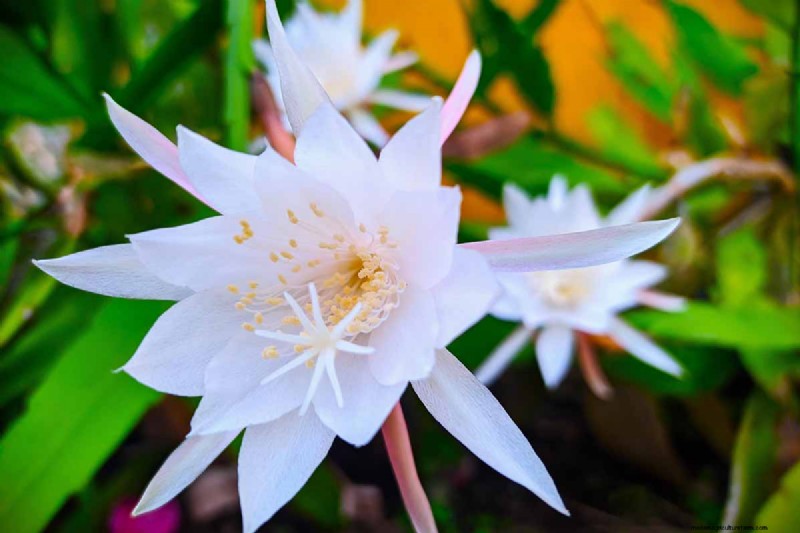
If you’re growing orchid cacti and would like to share your experiences and plant photos or ask a question, feel free to reach out via the comments section below.
And if you’d like to keep exploring the wonderful world of cacti and succulents, you’ll find more to dig into right here:


