
Welcome to Modern Agriculture!

Eggplants are ornamental beauties with their lavender blooms and dark, shiny fruits. They’re a prime fit for containers, featured as a showy specimen and, more importantly, for their versatile culinary uses as young or mature fruits. From bushy and compact to loose and tall, diverse forms and fruits grow in a variety of situations, including pots.
Growing eggplants in containers is a space-saving option that doesn’t compromise yield or flavor. Pots also offer more control over growing conditions like soil quality, sun exposure, and moisture levels. Whether relying solely on containers for the crop or accompanying in-ground or raised beds, eggplants as potted features become a visual and tasty highlight.
Black Beauty Eggplant
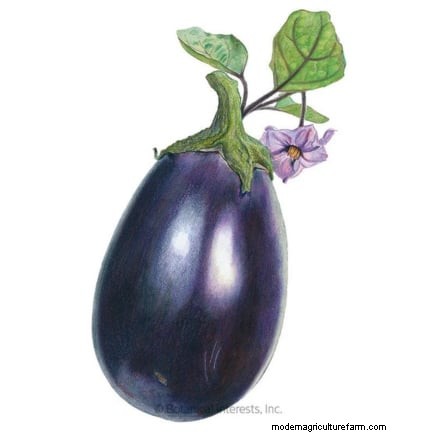
Black Beauty Eggplant Seeds
Jewel Amethyst Eggplant
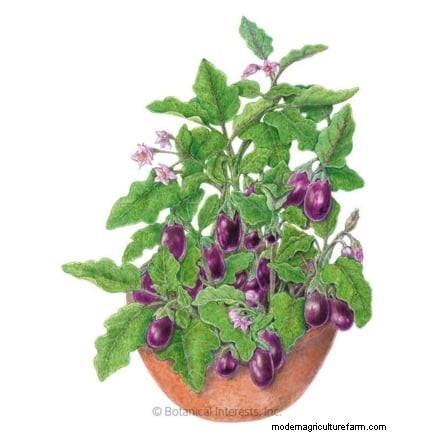
Jewel Amethyst Eggplant Seeds
Long Purple Eggplant
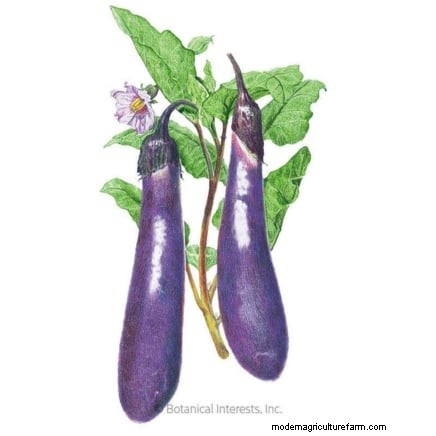
Long Purple Eggplant Seeds
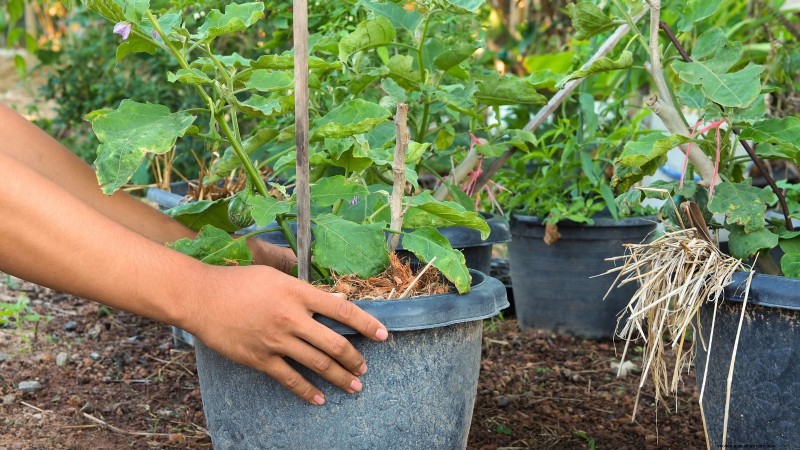 Let the sunshine in—and don’t forget the water!
To set the right foundation for growing eggplants in pots and containers, situate them in full sun. Eggplants require six or more hours of sunlight daily. Good morning and midday sun are best for the sun and heat-loving crop.
The next site consideration is easy access to water. Since containers dry out more quickly than in-ground plantings, especially in summer, plan to check and water frequently. To save effort and conserve water (helpful if you have a number of pots or are away from the garden), a simple drip system helps deliver water directly to the root zone. Set the system on a timer to aim for consistent moisture.
Good air circulation is essential for eggplants in pots. Maintain ample airflow by giving pots space between walls and structures and granting some room between other pots in a cluster.
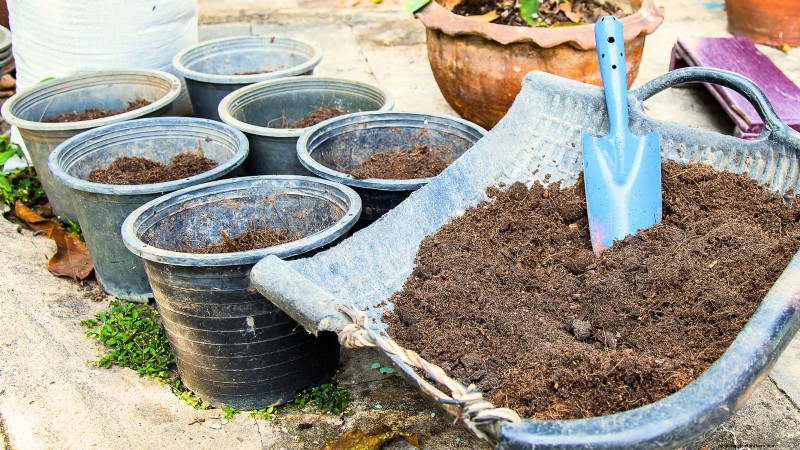 Porous pots breathe easily but dry out super fast.
In pots, tighter spacing than in-ground eggplants is the norm, but strive to maintain air circulation and room for root growth in the container. A 12-inch diameter pot with 12 inches of soil depth is recommended. If you grow two or want to pair the aubergines with companions, go larger. For single plants, five gallons (even a bucket) works. Go larger – 10 gallons or more- for combination arrangements.
Terracotta and clay pots are porous and allow good aeration to the roots. But they dry out faster than some others. Wood, concrete, composite, and metal containers make long-lasting options. Plastic pots hold moisture longer, though with less airflow. Fabric grow bags are good, budget-friendly, portable options. These are all considerations when getting a feel for watering needs. Depending on the variety, eggplants even grow beautifully in hanging baskets.
Whatever your pot choice, make sure they have drainage holes, and use a high-quality potting mix. Organic formulas for container growing are sterile and contain nutrients to foster growth. They also retain moisture and have good aeration. Eggplants prefer rich, organic loamy compositions with good drainage. Potting mix is airier and less dense than garden soil, which lets roots breathe. Amend with compost to boost organic richness and improve drainage even further.
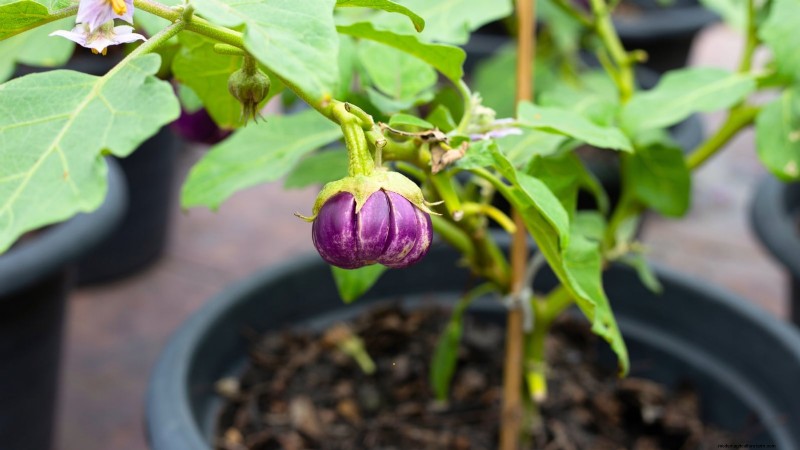 Dwarfs are great when you’re tight on space and time.
With the right-sized container and ideal growing conditions, any eggplant can fit container culture. The distinction in choosing is whether to grow a bushy, compact variety or a taller one (some eggplants reach six to seven feet tall at maturity).
The advantage of dwarf and compact selections is that they remain small and tidy, often with smaller fruits. They don’t require staking that taller forms with a weighty yield might need. They have a bushy form and productive stems. For small spaces and easy container culture, dwarf varieties are a great option.
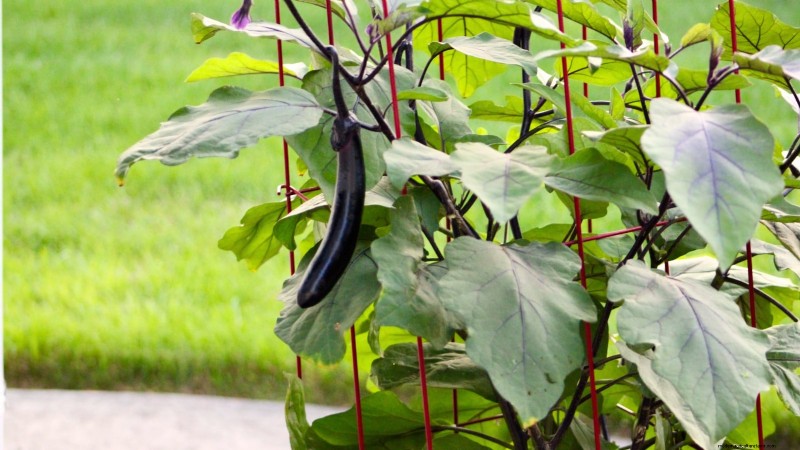 A good stake early saves headaches when the fruit sets in.
To add high vertical interest, small aubergines make ornamental features in hanging baskets. Suspended planters take advantage of added dimension, freeing up ground space and making growing possible in areas like balconies, patios, and porches.
Vertical growth and eggplants also refer to staking and trellising, and standard types in containers may benefit from the support. Stems can flop with heavy yields. The height of the support should be relative to mature plant size (usually around three feet tall but may be up to seven feet). Install the stake at planting to avoid disturbing the roots later. Tie off the stems as they develop.
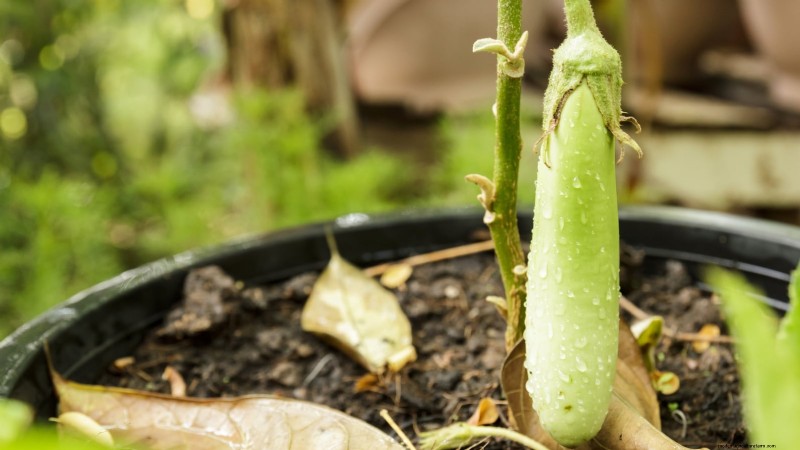 Water when dry below the surface to keep them happy.
Consistent moisture with regular, deep watering is best for potted aubergines. Check the soil moisture regularly, and if it’s dry one to two inches below the surface, it’s time to water.
As heavy producers, eggplants benefit from added nutrients to boost vigor, flowering, and fruiting. At planting, topdress with a balanced organic granular. As they approach flowering, switch to one higher in phosphorus to support blooming and fruit set. Eggplants need less nitrogen at this stage, as the goal is fruit production instead of leafy stem production.
Fish emulsion at planting and seaweed and bone meal during flowering and fruiting are mild organic options. These amendments also add beneficial calcium to the mix. A low-nitrogen fertilizer formulated for tomatoes with an NPK ratio similar to 8-32-16 or 6-24-24 also works well. A higher phosphorus (P) rate and a lower nitrogen (N) level are best to ensure fast flowering and quality fruiting. Too much nitrogen leads to leafy foliage but causes a lack of flowers and other problems.
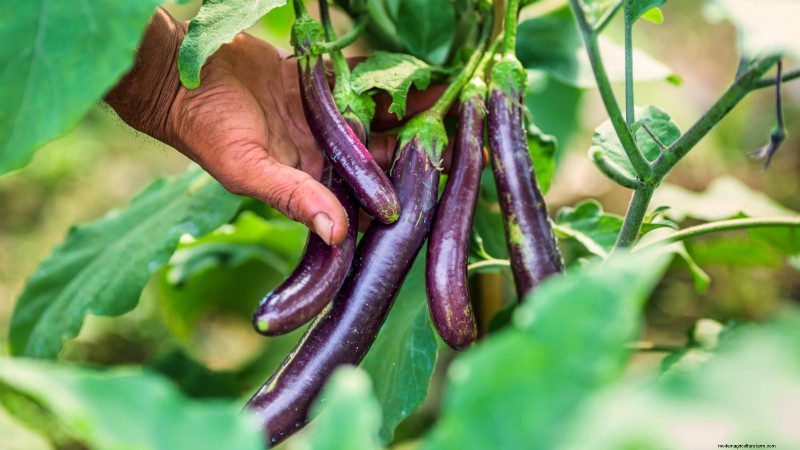 Harvest when the skin is shiny and deeply colored.
Eggplants are low-maintenance in a pot, other than regular watering. Prune away yellowing leaves and stems as they age. Eggplants give cues to gauge ripeness for harvesting at peak flavor, especially when the skin is shiny and dark. Harvest the nightshades young or at their mature size for optimal flavor. Under light pressure, ripe eggplants bounce back.
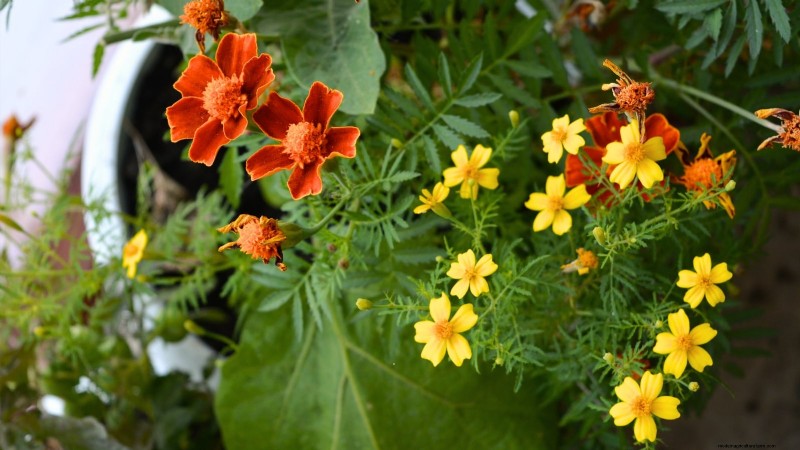 Choose plant friends wisely, and they’ll boost each other.
Companion planting is a way of arranging plants to mutually benefit each other. It works in pots by combining compatible herbs, blooms, and vegetables.
Good partners even improve flavor. With natural substances in roots, leaves, and stems, they enhance their paired crops. As pest-deterrents, these substances have repellent qualities through scent, masking, or attracting beneficial predators.
There are wonderful varieties with compact habits, showy fruits, and a subtle flavor. They’re easy growers in pots and versatile in garden spaces. A few favorites include heirloom and newer varieties with mild, tender fruits.
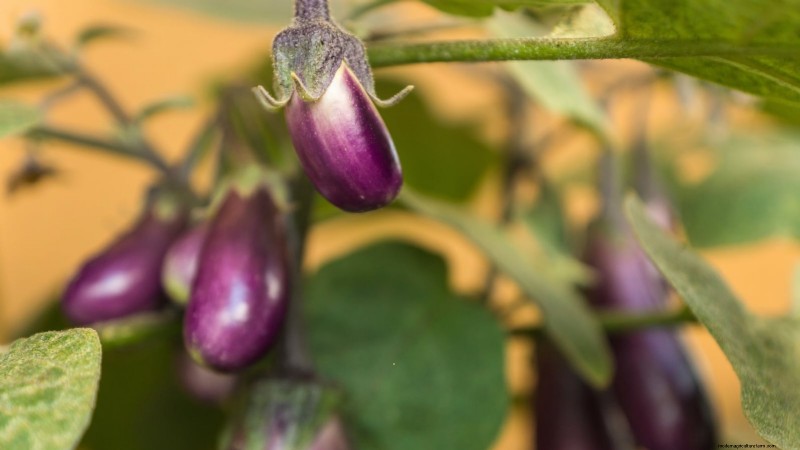 Keep picking these little gems for nonstop fruit production.
‘Jewel Amethyst’ is an ideal eggplant for pots and containers with a tidy, dwarf form. The compact variety produces loads of small fruits with smooth, deep purple, glossy skins.
Pick the little gems at three to four inches long and two inches wide. The more you harvest, the more blooms and fruits it bears until fall. Ready in 80 days, the little aubergines are firm, mild, and creamy.
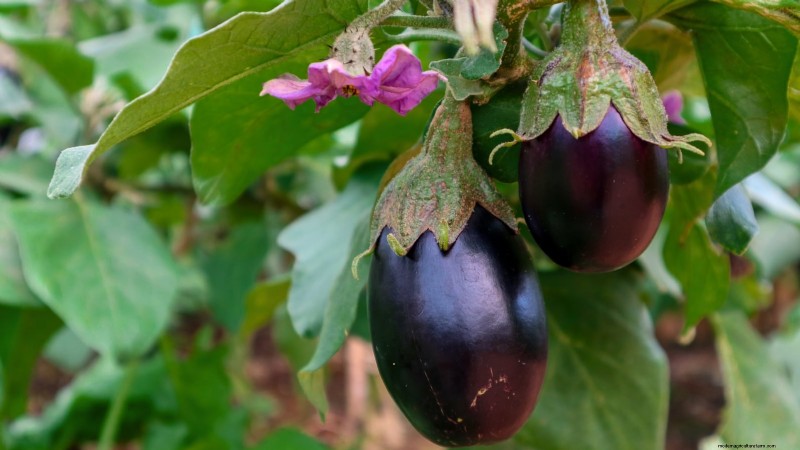 Harvest large, glossy fruits for a taste of history.
‘Black Beauty’ is a striking heirloom from the 1880s and remains a favorite. The shiny, dark purple fruits are large and have a delicate flavor. Bushy, leafy plants showcase their lavender blooms on a compact form.
Each fruit of ‘Black Beauty’ weighs one to three pounds. With tender skin, there’s no need for peeling.
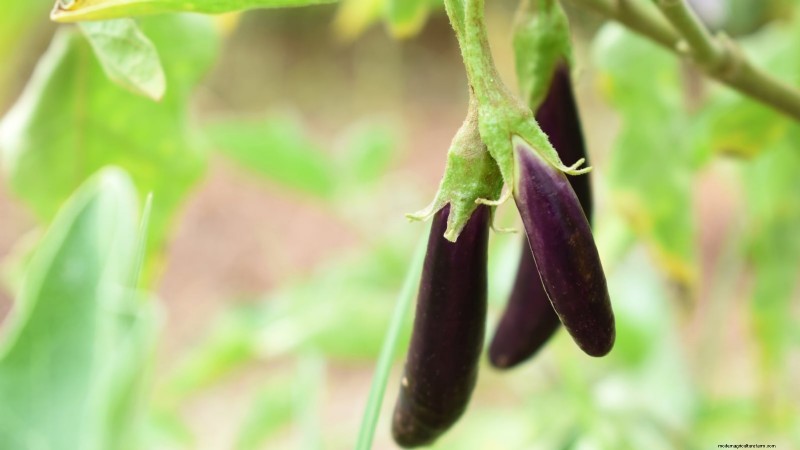 They’re early to fruit and ready for quick summer dishes.
‘Little Fingers’ is an Asian-style eggplant with clusters of slender, two to five-inch fruits. The flesh is creamy and silky with a slightly sweet flavor that’s milder than other eggplants. The small fruits are versatile in the kitchen and easy to incorporate into summer meals with a quick cook time on the grill.
‘Little Fingers’ is a productive and early fruiter. With dark, glossy, thin skins, they don’t need peeling. The tender interior has few seeds.


