
Welcome to Modern Agriculture!

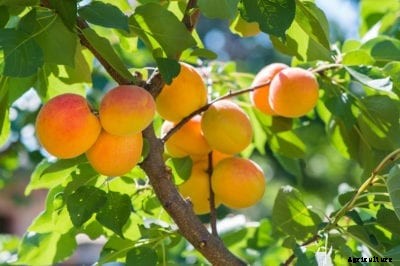
Apricots are one of those wonderful trees that are self-fruitful, meaning you don’t need a pollination partner to get fruit. As you select a cultivar, keep in mind some important apricot tree facts – these early bloomers can be adversely affected by frost in some regions, so select a hardy variety and plant where the tree will get some protection from sudden cold snaps. Additionally, apricots need at least 700 to 1,000 chilling hours to set fruit.
The blushed orange, velvety skinned apricot has been cultivated for centuries and is an important food in many international cuisines. Apricot tree growing is suitable in most western states and regions with plenty of heat and sunshine. As a Mediterranean crop, apricots grow well where spring and summer are warm and plenty of water is available.
Apricots are stone fruits, similar to plums, cherries and peaches. They can be grown from that stone or pit, but trees are not true to the parent and rarely produce fruit. Instead, they are grafted onto rootstock with beneficial attributes. The early spring flowers are spectacular and the brightly colored fruit are decorative. Apricots are either trained to a central leader or open center.
Some excellent winter hardy varieties for cold regions are:
Once you’ve selected your cultivar, you need to know how to grow apricots. Site selection and soil are the most important considerations. The trees need deep, well-drained soil with plenty of organic matter.
Apricot trees bloom early. There are times in apricot tree care where a late frost is a problem, so be sure to plant your trees on higher ground.
Do a percolation test prior to planting by digging a hole one foot deep and wide (30 cm.). Fill with water and wait until the next day. Fill the hole again and lay a stick or straight edge over the top. Measure the water drop every hour. Ideal readings will be around 2 inches (5 cm.) per hour.
Once you have adjusted the soil to have adequate drainage, dig a hole twice as deep and around as the root ball and plant your tree. Water in well.
Apricot tree growing is fairly simple, provided you have the soil, sun, and drainage necessary. Apricots are not tolerant of high levels of salt, boron, chloride and other elements. Feeding of apricot trees will be important in their overall care. They normally get what they need from the soil though, provided it was set up for apricot tree growing beforehand.
The trees will need an inch (2.5 cm.) of water weekly, especially during bloom and fruiting. Use a drip irrigation system to avoid wet leaves, flowers and fruit.
Be sure your apricot tree care includes thinning of the fruit once it comes in; thin the fruits to 1 ½ to 2 inches (3.8 to 5 cm.) apart. This ensures that the fruit will be larger. If you don’t thin the fruits, they will be much smaller.
Apricots need to be pruned and trained annually in early summer to late fall. There are several pests of apricots and numerous fungal diseases. Apply fungicide sprays in spring to avoid such disease issues.


