
Welcome to Modern Agriculture!

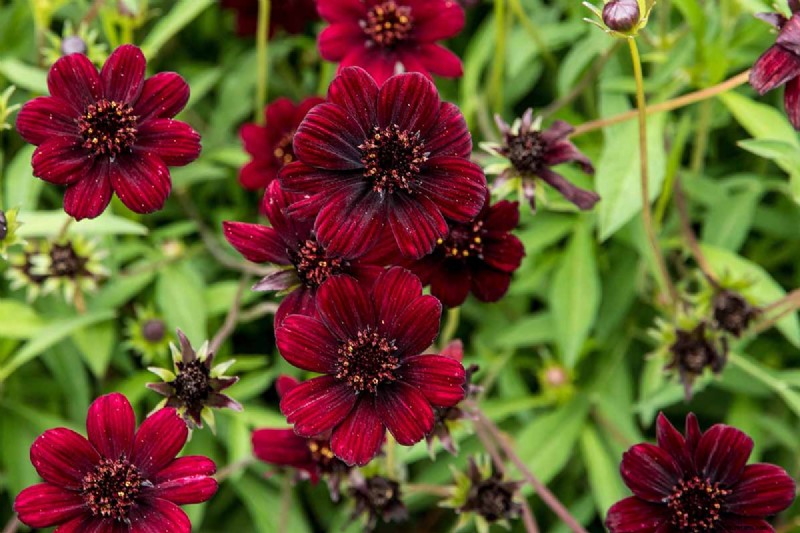
Chocolate cosmos, Cosmos atrosanguineus, once thought extinct in Mexico’s wilds, is thriving and now a favorite for home gardeners.
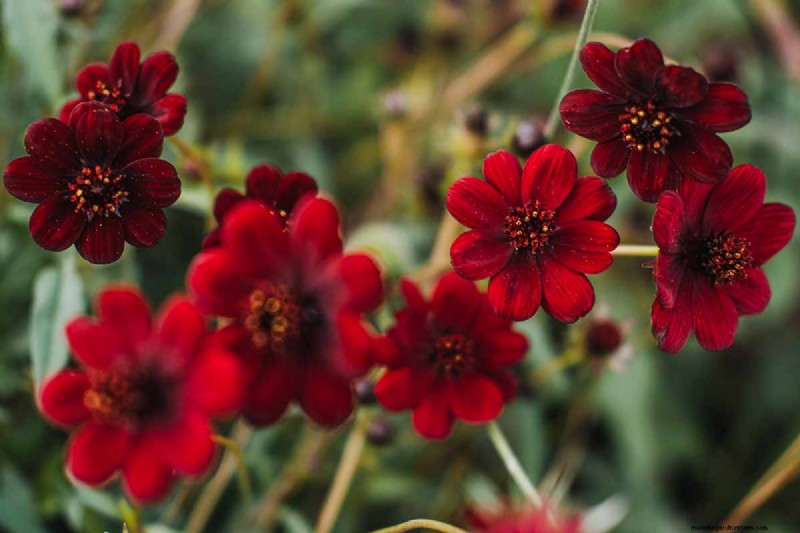
This distinctive species unfurls rich burgundy‑brown petals from mid‑ to late summer, filling the late afternoon with a subtle chocolate aroma.
The scent originates from vanillin, found in the outer rays and central florets.
We link to vendors to help you find relevant products. If you buy from one of our links, we may earn a commission.
Despite its fragrance, chocolate cosmos are toxic and should not be ingested.
Our guide to growing cosmos focuses on seed‑grown annuals and highlights C. atrosanguineus, a tuberous tender perennial with unique care needs.
What you’ll learn:
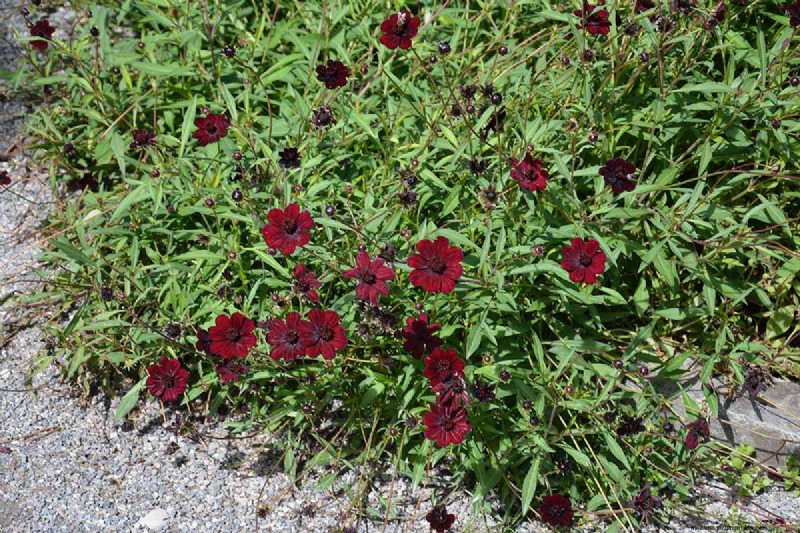
Chocolate cosmos typically reach 24–36 inches tall and wide, shorter than many annual varieties.
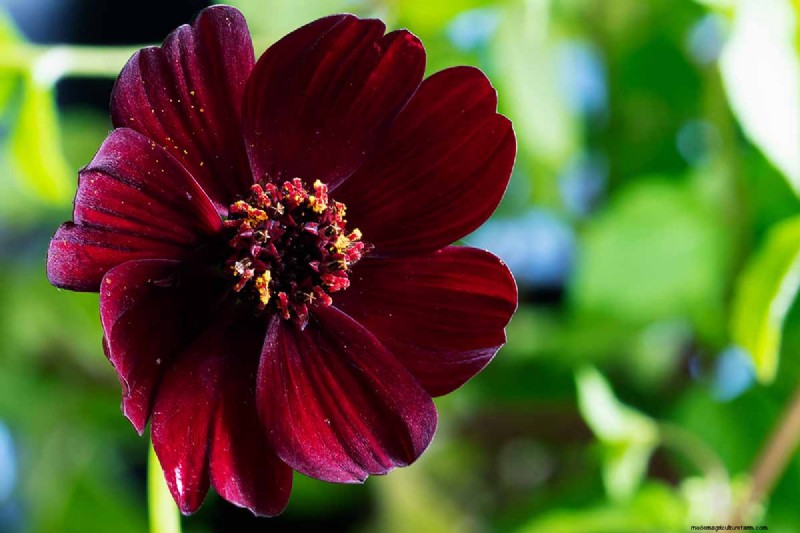
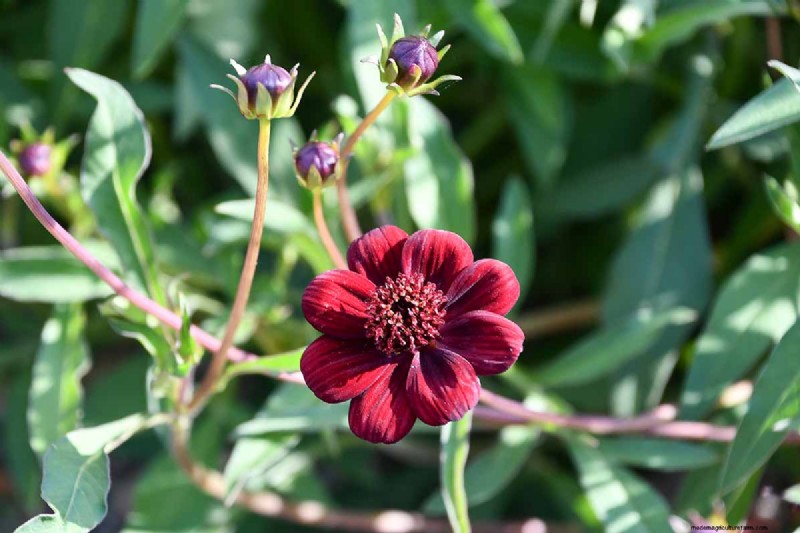
Unlike the airy pastel cosmos, they feature sturdy, elliptical leaves on paired, wiry stems.
Common names: Black or chocolate cosmos, chocolate plant
Plant type: Tender flowering perennial
Hardiness (USDA Zone): 9–11 (perennial)
Native to: Mexico
Bloom season: Mid‑summer to fall
Sun exposure: Full sun
Soil: Loose, low fertility, well‑draining
pH: 6.0–8.0
Time to maturity: 90–110 days from seed
Mature size: 24–36 inches tall, 24 inches wide
Best uses: Beds, borders, containers, cottage gardens, cutting gardens
Order: Asterales
Family: Asteraceae
Genus: Cosmos
Species: arosanguineus
In Zones 9–11, the plant remains perennial, self‑propagating each frost‑free year. In Zones 7–8, mulch can shield tubers from winter chill. For Zones 2–6, grow as an annual and store tubers for the next season.
Chocolate cosmos can brighten any setting—from patio pots to cottage gardens—thanks to their deep hue and fragrant blooms.
Native to the mountainous forests of Hidalgo and Guanajuato, Mexico.
Summer temperatures may exceed 90°F, with ample humidity and rainfall, while winters can dip into the 40s with occasional frost at higher elevations.
Propagate accordingly: in warmer zones keep tubers in‑ground; in cooler zones mulch or lift them for winter storage.
Mandated by its obligate self‑supporting in oak and pine clearings, chocolate cosmos needs full sun—at least six hours of direct light daily.
Average, well‑draining soil with a pH of 6.0–8.0 is optimal. These light feeders thrive in low‑fertility earth.
During establishment, keep soil evenly moist but avoid standing water.
Once established, irrigate deeply when the top 1–2 inches of soil dry out, especially during dry spells.
Maintain this routine through the first growing season. Stop supplemental watering after blooming is complete.
Established perennials are drought‑tolerant, requiring only brief irrigation during prolonged drought.
Not mandatory. If you choose to fertilize, select a slow‑release, low‑nitrogen granular formula to avoid leafy overgrowth.
Apply lightly around, not touching foliage, early in spring.
Learn more about fertilizing cosmos here.
Cosmos stand upright but their wiry stems benefit from subtle support. Avoid dense planting to reduce dampness and fungal risk.
Light trellis netting works invisibly once the plants mature.
Vivosun Trellis Netting—five feet by 30 feet, 6‑by‑6‑inch mesh—works well for propelling cutting‑garden cosmos.
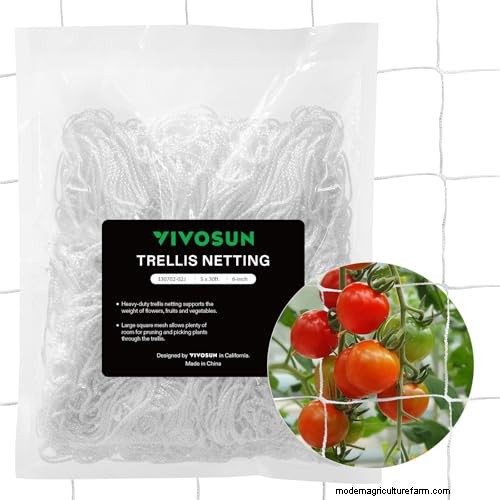
Vivosun Trellis Netting is available from Vivosun via Amazon.
Buy species or cultivars—nursery starts, seeds, or tubers—depending on your preference.
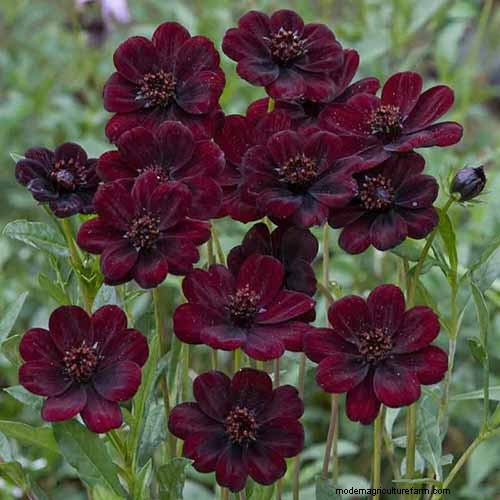
Chocolate Cosmos tubers are available from Eden Brothers.
‘Black Magic’ is a cultivar bred by Dr. Keith Hammett of New Zealand, deepening the color and reinforcing upright stems.
Reaching about two feet tall, it’s compact and ideal for small beds.
Unlike the wild type, it produces a small number of viable seeds.
‘Choca Moca’ stands 10–12 inches tall and wide, sharing the wild‑type maroon shading and perfect for containers or tight spaces.
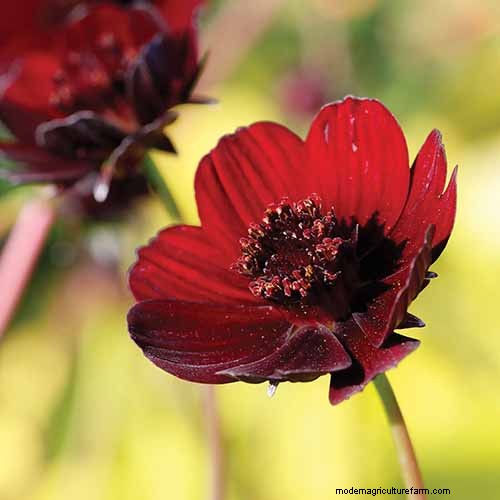
‘Choca Moca’ is available from Burpee.
Other cultivars such as ‘Cherry Chocolate’ and ‘Pinot Noir’ are protected under Plant Breeder’s Rights and require authorized sources.
When plants reach 10–12 inches and develop multiple leaves, pinch back 3–4 inches of the growing tip to promote branching and enhance blooms.
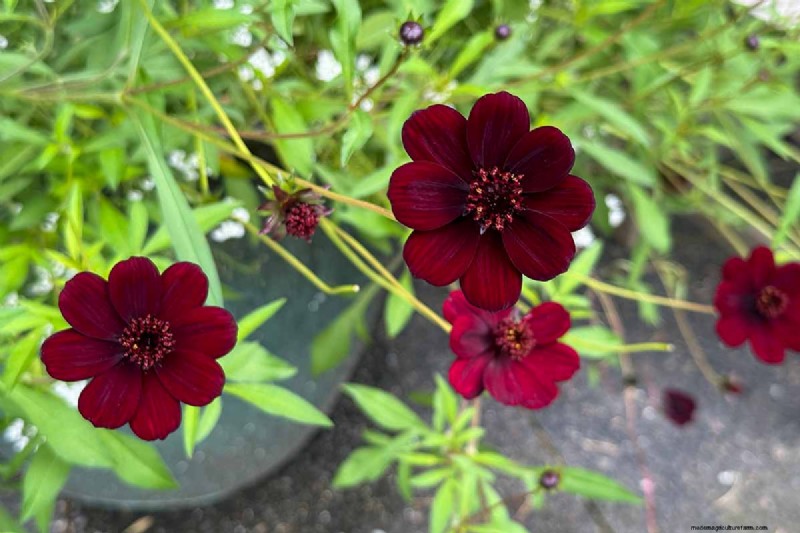
Deadhead spent flowers before color fades to restore vigor and encourage further blooming.
Trim just above a leaf node, removing damaged or diseased tissue.
Cease watering once flowering ends, allowing foliage to wither naturally.
In Zones 2–6, lift tubers in fall and store for next season; in Zones 7–8, apply 3–4 inches of organic mulch to protect wintering tubers.
Beware wet winters that can damage tubers or cause rot; store them in a cool, dry place.
To lift and store tubers:
Container plants can be stored without watering, then re‑planted in spring.
When overcrowded, divide clumps in early spring to create new plantings.
Read more about dividing perennials here.
Chocolate cosmos traditionally propagated by tuber division, but fertile cultivars now produce viable seeds.
Propagation methods include tubers, basal stem cuttings, and nursery starts.
In early spring, purchase or harvest individual tubers. Each tuber must have “eyes”—growth points for shoots.
Plant horizontally two inches deep, placing an eye upward. Space 12–24 inches apart.
Water lightly after planting.
For container growers, use one 12–14 inch pot per tuber.
In spring, select non‑flowering shoots at least four inches tall, with two or more leaf nodes.
Use clean shears to cut the desired stem.
Remove lower leaves to expose two to three inches of bare stem.
Dip the cut end into rooting hormone powder.
Fill a four‑inch pot with loose, well‑draining soil.
Insert the shoot, burying at least two leaf nodes.
Tamp the soil and water until dry.
Allow to dry and secure against moisture damage.
After seedlings develop two true leaves, transplant to a larger pot or garden bed.
Prepare the soil twice as wide and deep as the existing container, ensuring the crown sits at or above the surface.
Water immediately after planting and maintain until all soil layers are established.
Use a moisture meter to monitor moisture levels during the first season.
Chocolate cosmos is generally pest‑resistant but can suffer under stress.
In cool spring conditions, aphids, leaf hoppers, and four‑lined bugs may appear, potentially damaging foliage.
Use floating row covers, hand‑pick, and apply organic neem oil for control.
For severe cases of four‑lined bugs, pyrethrins may be effective.
Aster yellows, caused by infected aster leaf hoppers, manifests as yellowing and witches’ broom. Promptly treat leaf hopper infestations.
Bacterial wilt can arise from beetles feeding on cucumbers and melons, causing stem collapse.
Botrytis blight, or gray mold, prefers wet, overcrowded conditions. Remove affected parts and apply copper fungicide.
Powdery mildew, a fungal condition, thrives in high humidity. Neem oil is an effective remedy.
Keep tubers dry to prevent rot.
The deep burgundy tones and plush texture of chocolate cosmos add elegance to floral arrangements, contrasting beautifully with lighter hues.
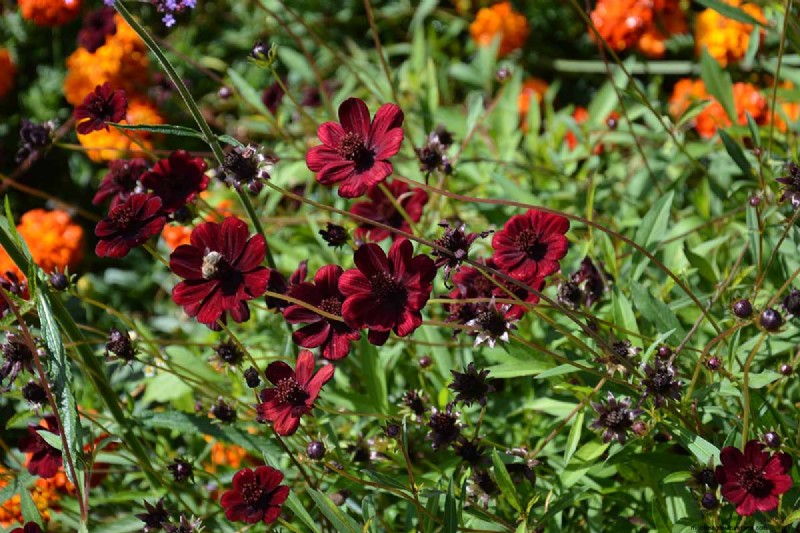
They create depth and formality in both perennials and annuals, invoking the warmth of cocoa and the quiet of winter.
Share your chocolate cosmos experiences in the comments.
Explore related guides:


