Welcome to Modern Agriculture!

Cucumbers are a perennial favorite for home gardens. They’re easy to grow, delicious fresh or pickled, and they keep producing for months. Yet their trailing vines can quickly crowd a bed. The smart solution? Grow cucumbers vertically.
Choose a location that receives at least 6–8 hours of full sun and soil that is rich, well‑draining, and slightly acidic (pH 6.0–6.8). Before planting, amend the bed with 2–3 inches of aged manure or compost and a balanced 10‑10‑10 or 8‑10‑8 fertilizer. Apply a foliar feed every 3–4 weeks during the growing season.
High‑nitrogen fertilizers can create luxuriant foliage but will often yield fewer cucumbers. Stick to a balanced formula and monitor plant response.
Plant seedlings or direct‑sow seeds 2 weeks after the last frost. Use a thick mulch layer to suppress weeds and keep soil warm. If nighttime temperatures may fall below 50 °F, cover the rows with a floating row cover until the first flowers appear—then remove it to allow pollinators in.
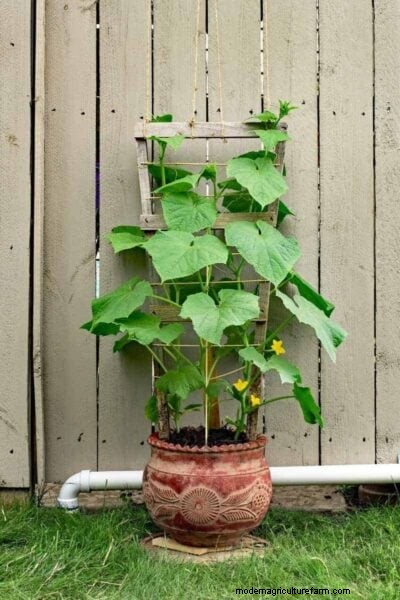
Absolutely. A sturdy trellis that stands 4–5 ft tall with webbing or netting allows the tendrils to climb, freeing up 18 inches of horizontal space per plant.
For a more compact option, choose bush varieties such as Patio Snacker, which stay smaller and thrive in containers or narrow beds.

Maintain about 18 inches between cucumber plants when grown vertically.
Cucumber vines are naturally “tender” and will climb the trellis without support. You can gently prop them against the structure to encourage proper positioning.
Store‑bought cages are often too short. Building your own taller cage can support most cucumber varieties.