
Welcome to Modern Agriculture!

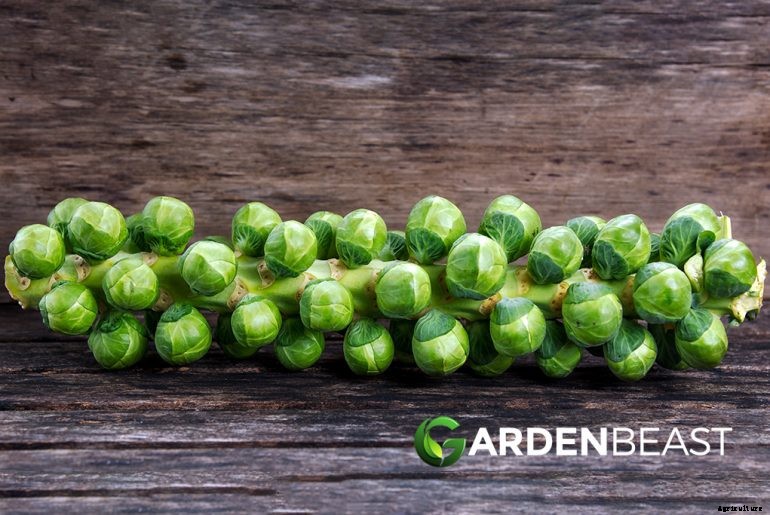
The Brussel sprout gets its moniker from the city of its origin, Brussels, in Belgium. These crunchy green delights taste lovely, roasted, or steamed, and they come packed with plenty of vitamins, minerals, and fiber.
The ‘Brigitte F1’ is the most popular variety of Brussel sprout, and novice gardeners will get excellent results during the growing season when planting this variety. Bridgette does so well because the sprouts stay closed for longer than other types, allowing for multiple harvests at the end of the growing season.
Brussel sprouts are full of dietary fiber, and they’re an excellent source of Vitamin D, C, and folic acid. Brussel sprouts also contain high levels of polyphenol plant compounds known as “glucosinolates.” Nutritional science believes that these compounds could have a preventative effect on cancer.
Brussels will grow slowly throughout the season, reaching maturity in around 26 to 31-weeks, depending on the growing conditions and the climate. These plants like cold conditions, and it’s one of the few vegetables you can harvest from September through to early February.
In this guide, we’ll unpack everything you need to know about growing Brussel sprouts this season.
Choose an area of your garden that gets at least 6 to 8-hours of direct sunlight each day. Planting in a shade house or greenhouse is also ideal, producing large plants that yield plenty of Brussel sprouts.
Brussel sprouts are hardy plants that prefer colder climates. Some varieties do well in warmer regions, but this wintertime plant will do best in the northern states of the US. You’ll need to ensure you stake the plants in the autumn to prevent winds from blowing over the long stems.
Brussel sprouts prefer firm and nutritious soils to produce the tasty sprouts, and it’s best to leave the earth to rest for at least 4 to 6-months before planting.
Sprouts are hardy plants and will grow in most sites but will need to be staked in autumn in exposed areas to prevent blowing over in high winds.
Brussel Sprouts Seeds from Amazon
Brussel sprouts are an excellent choice for succession planting to ensure you get crops through the autumn and winter.
Start planting your first crop in mid-March, and then succession crops in early April and May. Space your succession plantings at least 4-weeks apart.
Start your Brussel sprouts four weeks before your planting date in mid-March. Take a modular planting tray and plant one seed in each module.
Plant the seed at just under an inch deep in the tray, and the seeds should germinate within 7 to 12-days. After germination finishes, the seedlings are ready for transplanting into the garden 4-weeks later.
If you’re using a propagator system or a heat tray to assist germination, make sure that you check that the seedlings don’t turn spindly. After all, your seedlings start to appear, pull out the weaker-looking seedlings, and prepare the more vigorous seedlings for the garden.
Never let your seedlings dry out before transplanting them into the garden. Use a misting spray bottle to ensure the soil remains moist during the germination and early establishment phase.
However, gardeners must ensure the get the right balance when watering. Over-watering your seedlings can also result in stunted growth, and it increases the chances of the seedlings developing root rot.
After planting your Brussel sprouts in the veggie beds, water deeply, and then let the soil dry out over the next two to three days. Allowing the soil to dry out a bit between watering helps the roots grow as they search the ground for water.
If you live in a warm climate, water your sprouts every other day. If your Brussels sprouts are grown in colder climates, twice a week is enough watering to ensure optimal growth.
Overwatering leads to waterlogging of the soil around the plant’s roots. Saturated soil eventually leads to the development of root rot and the death of your Brussel sprouts.
If you start your Brussels indoors, then they need a period of adjustment to outdoor conditions. Take a plastic tent or propagator and place it over the seedling trays to retain the moisture and humidity in the air around the plant.
Never leave the seedling tray in the sun. Keep it in a cool shady area and bring it indoors overnight. Repeat this hardening treatment for 10-days.
Every day remove the plastic tenting from the tray an hour earlier. Keep cutting back the time under the plastic tenting by an hour until it no longer needs the assistance of the cloche or the mini greenhouse.
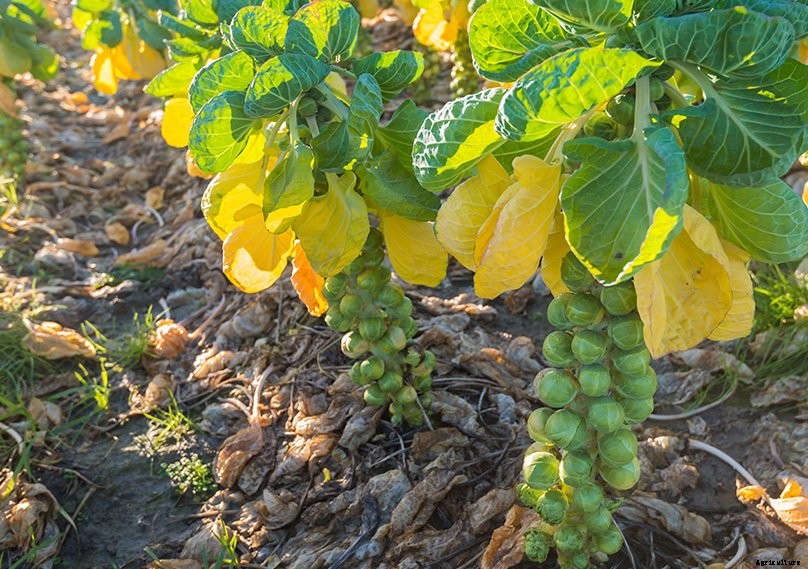
Brussels sprout plants are larger than you think. They develop robust root systems that like to spread horizontally. The taller varieties of Brussel sprouts require up to 30-inches between plants and 30-inches between the rows. Smaller types of Brussel sprouts require 25-inches of spacing between plants, a 25-inches between the rows.
When planting your seedlings, dig a hole around 1-footy wide and work to the soil. Add some perlite and compost to the freshly turned soil for additional nutrients and assistance with water drainage.
Place the seedling in the center of the worked area and press lightly into the soil to remove the air pockets. Water gently to ensure the root ball of the seedling can recover from the stress of the transplant.
All the brassicas prefer growing in moist, fertile soil. Brussels require plenty of nutrients to produce large, tasty sprouts.
Brussel sprouts are an excellent crop to grow in a succession planting schedule throughout the growing season. By starting your planting in mid-March, and adding a new batch every 4-weeks, you’ll have successive harvest throughout the fall and winter.
Rotate your plants in the growing site every season. Brussels draw plenty of nutrients from the ground, so you’ll need to ensure you’re rotating your garden for the best results. Rotating your crops annually also helps to ensure pathogens don’t overwinter in the ground and infect the following year’s crop.
Brussel sprouts are relatively hardy, but they suffer from infection and pests like any other plant in the garden. Some of the common diseases and pests to look out for with your broccoli include the following.
Control pests using an organic pesticide like neem oil. Spray it on the plants and stop treatment at least two to three weeks before harvest.


