Welcome to Modern Agriculture!

Miscellaneous ●
Average garden soil with excellent drainage.
Full sun in spring, partial dry shade in summer.
Excellent. Most large-flowered hyacinths are hardy to -25F (-32C).
Topdress with rich compost in spring, when new growth appears. Fertilize established clumps with a balanced organic fertilizer in the fall.
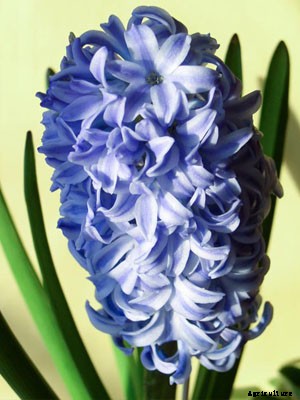
Tulip, Daylily, Echinacea and Lily. Showy and fragrant, hyacinths make great feature flowers in the spring garden. Their naturally upright posture gives them a formal demeanor. Planting hyacinths behind daylilies or other summer-blooming perennials hides the fading foliage from view.
Single Plants: 3" (10cm) each way (minimum)
Rows: 3" (10cm) with 3" (10cm) row gap (minimum)
Set out dormant bulbs the fall. Cover the bulbs to four times their depth with loose soil. Plant in groups of three or more bulbs.
Our Garden Planner can produce a personalized calendar of when to sow, plant and harvest for your area.
Hyacinths can be interplanted with daffodils and tulips, and they are not difficult to force into bloom in pots. Blue is the strongest color, but many others are available.
Cut hyacinths to use as cut flowers when two to three of the lowest florets have opened. The remaining florets will continue to open indoors for several days. As the flowers fade in the garden, trim them off with scissors or pruning shears.
Hyacinths bloom well for only one or two seasons in warm climates with mild winters. When hyacinths are handled as perennials in cold climates, flower size tends to decrease over time.