Welcome to Modern Agriculture!

Miscellaneous ●
Fertile, well-drained soil.
Best grown trained against a sunny, sheltered south or west facing wall, or under cover in cool climates. In warmer climates, kiwis thrive in full sun provided their roots receive midday shade.
Young shoots are vulnerable to frost damage in spring; may require protection.
Mulch with well-rotted organic matter in late winter, and apply a balanced organic fertilizer in early spring, just as new growth emerges.
Marjoram, Lemon Balm and Marigold. Kiwi vines are so vigorous that they dominate their space and require a sturdy trellis.
Single Plants: 9' 10" (3.00m) each way (minimum)
Rows: 9' 10" (3.00m) with 9' 10" (3.00m) row gap (minimum)
Add plenty of well-rotted organic matter when planting. Plant next to a strong trellis for support.
Our Garden Planner can produce a personalized calendar of when to sow, plant and harvest for your area.
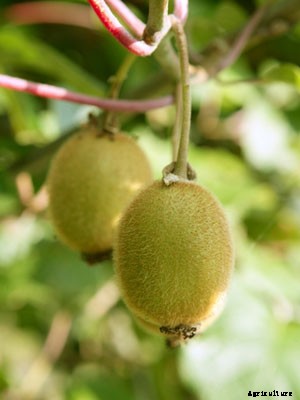
Most kiwi varieties require both male and female plants for successful pollination. One male plant can pollinate up to eight nearby females. Hardy kiwis produce smaller fruits, but are usually self fertile. Healthy kiwi vines trees will bear for ten years or more.
Pick before the first frosts and then ripen indoors if the fruit is not completely ripe.
Will only crop if they are planted in a warm enough position, and may suffer from dieback in cold winters. Japanese beetles can collected by placing sheets beneath plants, shaking the plant and then destroying any fallen beetles in a hot bucket of soapy water.