Welcome to Modern Agriculture!

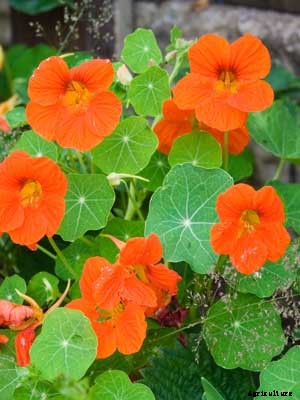
Miscellaneous ●
Any sunny site with good drainage.
Full sun to partial afternoon shade.
Nasturtiums may survive very light frosts, but they are easily damaged by freezing temperatures.
Mix a light application of a balanced organic fertilizer into the soil prior to planting.
Apple, Beans, Cabbage, Kale, Broccoli, Potatoes, Pumpkin, Radish, Squash, Corn, Tomato and Sunflower. Nasturtiums sprawl out over the ground, so they suppress weeds and shade the soil when grown near tall plants like sweet corn, tomatoes or sunflowers.
Single Plants: 11" (30cm) each way (minimum)
Rows: 11" (30cm) with 11" (30cm) row gap (minimum)
Soaking seeds in water overnight prior to planting may speed germination, but nasturtium seeds sprout best when the soil is warm. Poke seeds into the soil about 1 inch (3 cm) deep and 3 inches (8 cm) apart. Thin to 12 inches (30 cm) apart in all directions.
Our Garden Planner can produce a personalized calendar of when to sow, plant and harvest for your area.
Nasturtium blossoms, leaves and immature green seed pods are edible.
Gather nasturtium blossoms in the morning, when they are plumped up with moisture. Snip away the base of each blossom, which may taste bitter.
Nasturtium will often reseed itself in hospitable sites.